Screw holding in MDF vs plywood: what works and what strips
Screw holding in MDF vs plywood: what works and what strips with a clear decision table on grade, thickness, moisture performance, warranty and price factors.
Quick Decision Summary
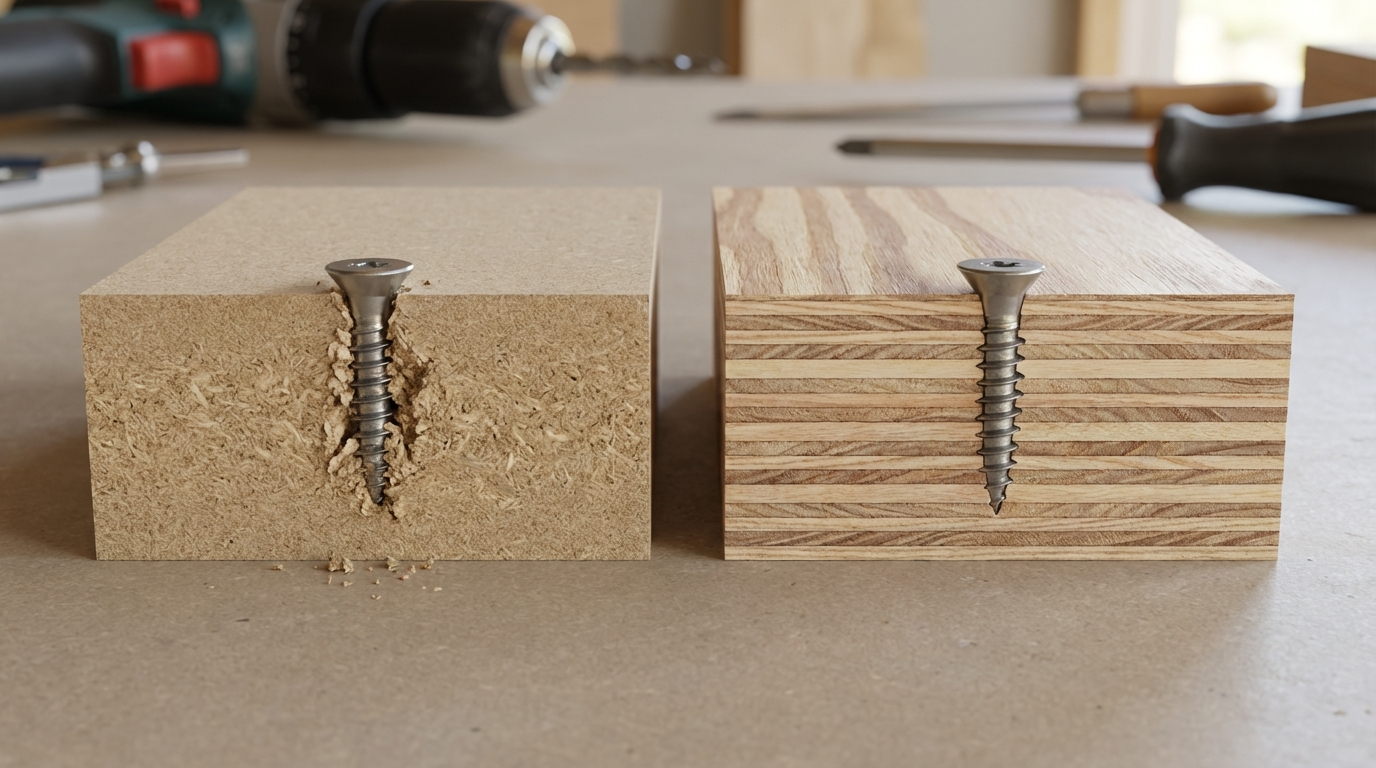
Plywood typically offers superior screw holding, especially on edges, while MDF works well on faces with proper pilot holes but strips easier under load or moisture.
If you're in a hurry: Opt for plywood (BWR grade or higher) for cabinets, shelves, or doors needing repeated screw access or edge fastening. MDF suits painted panels or low-stress faces where smooth finish matters more than strength. Always drill pilot holes in MDF to prevent stripping—use coarse-thread chipboard screws for MDF and wood screws for plywood. In humid Indian sites, plywood resists swelling better, reducing long-term loosening. Verify by testing a scrap piece before full assembly.
- Choose plywood if: Edge screwing, heavy loads, kitchens/bathrooms, or disassembly needed.
- Avoid MDF if: Edge joints, high moisture, or no pilot hole discipline; it crumbles faster.
What Screw Holding Strength Actually Means
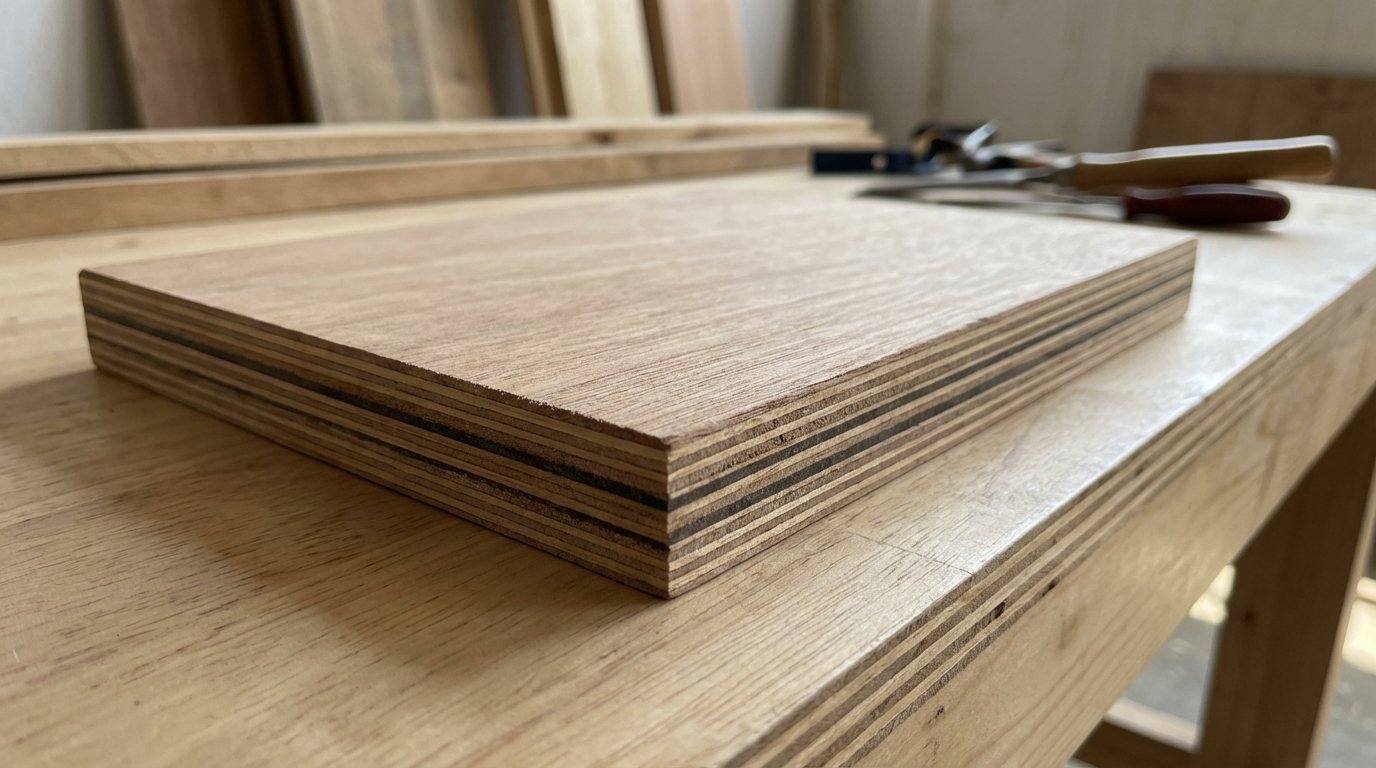
Screw holding refers to how well a board grips a screw's threads without pulling out or stripping under pull-out force, torque, or repeated use. In plywood, cross-layered wood veneers create interlocking fibers that bite threads deeply. MDF, made from compressed wood fibers and resin, provides uniform density for face screwing but lacks edge strength due to exposed particle ends.
Stripping happens when threads shear material around the hole, often from over-tightening, wrong pilot size, or material swelling. Plywood forgives minor errors; MDF demands precision.
Where People Commonly Get Confused on Screw Holding
- Assuming MDF's density means edge strength like plywood—edges crumble without reinforcement.
- Thinking all screws work equally—coarse threads suit composites, fine for hardwoods.
- Ignoring pilot holes in MDF—leads to splitting or weak grip.
- Overlooking moisture: Swollen boards loosen screws over time.
- Believing face holding predicts edge performance—MDF faces hold double the edge pull.
- Confusing HDHMR (dense MDF) with plywood—it improves but doesn't match plywood edges.
India-Specific Reality Check
Monsoon humidity (70-90% RH) swells MDF up to 2-5% if low-grade, loosening screws in cabinets or wardrobes. Coastal areas like Mumbai or Chennai amplify this; store sheets flat, elevated, wrapped. Plywood grades (MR for dry, BWR/BWP for wet) resist better via glue lines. Contractor sites expose boards to rain delays—poor storage causes 20-30% more stripping failures. Workmanship varies: Rural carpenters skip pilots in MDF, leading to callbacks.
Two-Minute Comparison: MDF vs Plywood Screw Holding
| Factor | MDF (incl. HDHMR) | Plywood (BWR+) |
|---|---|---|
| Face Screw Holding | Good with pilots; uniform grip | Excellent; fibers interlock |
| Edge Screw Holding | Poor; crumbles easily | Strong; layered structure |
| Moisture Impact | Swells, loosens faster | Stable in BWR/BWP grades |
| Best Screw Type | Chipboard/confirmat, coarse | Wood screws, coarse/fine |
| Pilot Hole Need | Always, shank-sized | Often, especially edges |
Does HDHMR MDF Hold Screws Better Than Regular Plywood?
HDHMR improves MDF's density for 2-3x better face holding than standard MDF, often matching MR plywood faces. However, plywood edges outperform even HDHMR due to veneers. In kitchens, test HDHMR scraps for your load—dense versions suit modular cabinets if edges get blocking. For heavy shelves, stick to BWR plywood. Always pilot and use deep-thread screws. In India, verify supplier density by tap test (solid thud vs hollow).
Price Range and Cost Drivers (India)
MDF starts lower (Rs 800-1500/sheet for 8x4 ft, 18mm) than plywood (Rs 1200-2500+), varying by city (Delhi 10-15% above Mumbai). Cost drivers: Thickness (12-25mm), grade (HDHMR adds 20-30%), moisture resistance, calibration (flatness aids screwing). Logistics add 5-10% inter-state. Budget tip: For a 10x6 ft kitchen carcass, MDF saves Rs 2000-4000 but risks callbacks; plywood lasts longer.
- How to quote: Specify thickness, grade (HDHMR/BWR), quantity, delivery—confirm calibration.
How to Choose in 5 Steps
- Assess location/load: Wet/high-load? Plywood. Dry/finish-focused? MDF.
- Plan joints: Edge screws? Plywood + blocks. Faces only? MDF ok.
- Select screws/pilots: Coarse for MDF (pilot=shank dia), wood for ply.
- Test scrap: Screw in/out 3x; check pull.
- Reinforce if needed: Dowels/blocks for MDF edges.
Skip testing? Expect 50% higher failure in humid installs.
Why Do Screws Strip Faster in MDF?
Fine fibers shear under torque without pilots, unlike plywood's coarse grains. Edges expose short particles, halving hold. Over-tightening crushes resin bonds. Fix: Pilot to shank size (e.g., #8 screw: 4mm bit), torque slowly. In India, humid storage pre-swells holes—dry boards 24h before. Use confirmat screws for assembly; they expand material. Test: Insert/remove 5x on scrap.
Decision Framework: MDF or Plywood?
| Condition | Best Choice | Verify This |
|---|---|---|
| Edge screwing (cabinets) | Plywood BWR | Layered edge, no gaps |
| Face only, painted | MDF/HDHMR | Uniform tap, no voids |
| Coastal humidity | Plywood BWP | Boil test scrap (no delam) |
| Heavy load shelves | Plywood | Screw pull test on edge |
| Tight budget, dry room | MDF | Pilot holds after 3 cycles |
| Modular/repeat assembly | HDHMR + blocks | Density >900kg/m3 feel |
Trade-offs and Limitations
Plywood: Heavier, pricier, rougher finish needs veneer/lam. MDF: Lighter, smoother, cheaper but edge-weak, swells more. Neither perfect for ultra-heavy without frames. Plywood warps if poor core; MDF sags under point loads.
Can You Screw Directly Into MDF Edges Without Stripping?
Rarely reliable—edges hold 50% less than faces. Use 1.5x thickness screws + pilots, but add hardwood plugs or L-brackets for safety. In furniture, face-frame hides edges. India tip: Monsoon swells weaken further; reinforce all edges. Test pull-out on scrap before commit. Alternatives: Cam locks or dowels for disassembly.
Common Buyer Mistakes and How to Avoid Them
- No pilot in MDF: Splits/crumbles. Do: Shank-sized hole always.
- Wrong screw type: Fine threads slip. Use: Coarse chipboard for MDF.
- Over-tighten: Strips resin. Stop: When head seats flush.
- Edge screws unloaded: Fails later. Test: Pull with weight.
- Ignore humidity: Loose post-monsoon. Store: Dry, vertical.
- Cheap screws: Strip material. Buy: Coated, quality brands.
- No reinforcement: MDF cabinets sag. Add: Blocks/dowels.
- Assume uniform boards: Voids weaken. Tap: Solid sound.
- Forget torque control: Varies by drill. Use: Low speed clutch.
Failure Modes and Fixes
- Symptom: Screw spins loose. Cause: Stripped hole. Prevent: Pilot + coarse screw. Fix: Toothpick/glue fill, redrill.
- Splitting at edge. Cause: No pilot/too close. Prevent: 20mm inset. Fix: Clamp, epoxy dowel.
- Post-install loosening. Cause: Swell/shrink. Prevent: Moisture-grade boards. Fix: Remove, insert anchor.
- Sagging shelf. Cause: Edge hold fail. Prevent: Blocks front/back. Fix: Add cleats underneath.
- Head pull-through. Cause: Thin board/soft screw. Prevent: Countersink + plug. Fix: Larger washer screw.
- Void collapse. Cause: Poor core. Prevent: Knock test pre-buy. Fix: Full panel replace or frame.
- Repeated strip. Cause: Frequent remove. Prevent: Dowel joints. Fix: Thread insert kit.
What Screws Work Best for MDF Furniture in India?
Coarse-thread chipboard or confirmat (4-5mm dia, 30-50mm long) grip fibers without pilot shear. Stainless for coastal. Avoid fine wood screws—they slip. Pilot 80% shank depth. In humid zones, coated variants resist corrosion. For 18mm carcass: #10 x 40mm. Buy packs testing pull on scrap—aim no spin after 3 cycles. Pair with edge banding for longevity.
Quality Checks You Can Do Without Lab Tests
Pre-buy: Tap edges (solid=good core), flex sheet (no sag), check calibration (flat stack). Ask grade proof.
After cutting: Screw test faces/edges on scrap—pull 10kg no slip.
Post-install: Torque hinges monthly first year; check gaps.
Tips for Homeowners: Durability and Cleaning
Use plywood for kitchens—wipe spills fast, no soak. MDF: Laminate edges, avoid water. Do: Tighten screws yearly. Don't: Hang heavy on single screws.
For Carpenters: Cutting, Fastening, Handling
Cut MDF with zero-clearance blade; pilot all, shank size. Edge screw? Glue block first. Handle flat to avoid warp.
Architects/Designers: Specs and Detailing
Spec BWR plywood edges, HDHMR faces. Detail blocks at screws. Wet zones: BWP only.
OEM/Modular Makers: QC and Returns
Batch-test 5% panels for pull-out. Standardize pilots/screws. Log complaints to tweak density.
Is Plywood Always Better for Screw Holding Than MDF?
Not always—MDF faces match/exceed MR plywood if dense (HDHMR). Edges favor plywood. Choose by joint type: Faces/paint=MDF; edges/load=plywood. India modular kitchens lean HDHMR for speed, plywood for custom heavy. Verify: Screw cycle test on both scraps under site humidity.
FAQs
Should I Always Drill Pilot Holes in Plywood?
Yes for edges/thin stock to prevent split; faces optional if coarse screws. In 18mm BWR, #8 wood screw pilots reduce crack risk 80%. Over-skip leads to wavy surfaces. Drill 70% depth, test torque. Humid sites: Essential as swell stresses fibers.
How to Fix Stripped Holes in Installed MDF Cabinets?
Drill out, fill toothpick/glue or dowel, redrill offset. For repeat: Metal thread inserts. Avoid glue-only—weakens. Test new hold before reload. India hack: Matchstick + fevicol works short-term.
Does Board Thickness Affect Screw Holding?
Yes—deeper embed doubles pull resistance. 12mm limits to light; 18-25mm for cabinets. Thicker allows longer screws. Check min 1.5x screw length embed.
Confirmat vs Wood Screws: Which for MDF Assembly?
Confirmat excels in MDF—expands hole, high torque. Wood screws ok faces. Use confirmat for knock-down; wood for permanent. Pilot both.
Humidity's Role in Screw Loosening?
Swell enlarges holes 1-3%; MDF worse. BWP plywood stable. Store/AC install minimizes. Check seasonal torque.
Best Screw Length for 18mm MDF/Plywood?
35-45mm for carcass joints—full embed + bite opposite. Longer risks blowout. Countersink heads.
Can You Reuse Screw Holes in MDF?
1-2 cycles max without fix; fibers compress. Plywood 3-5x. Plan permanent or use dowels.
Edge Banding Helps Screw Holding?
Yes—seals vs moisture, adds lip strength. Essential MDF edges. Glue + clamp tight.
Testing Screw Hold at Site?
Hang 10-20kg on scrap joint; no slip=good. Pull vertically. Do pre-install. Disclaimer: This content is provided for general informational purposes based on industry practices and publicly available information. Product specifications, standards, prices, and availability may vary by manufacturer, region, and time. Readers should independently verify details with manufacturers, dealers, or qualified professionals before making purchase or construction decisions.
Want Plywood Suggestions?
Share a few details and a Duro BOIL specialist will suggest suitable brands and connect you to responsive dealers.