Shuttering Plywood: What It Is, Film-Faced Types, Reuse Cycles & Specs
Learn shuttering plywood basics—film-faced types, reuse cycles, thickness, and what to check so you don’t get low-reuse boards at premium rates.
Quick Decision Summary
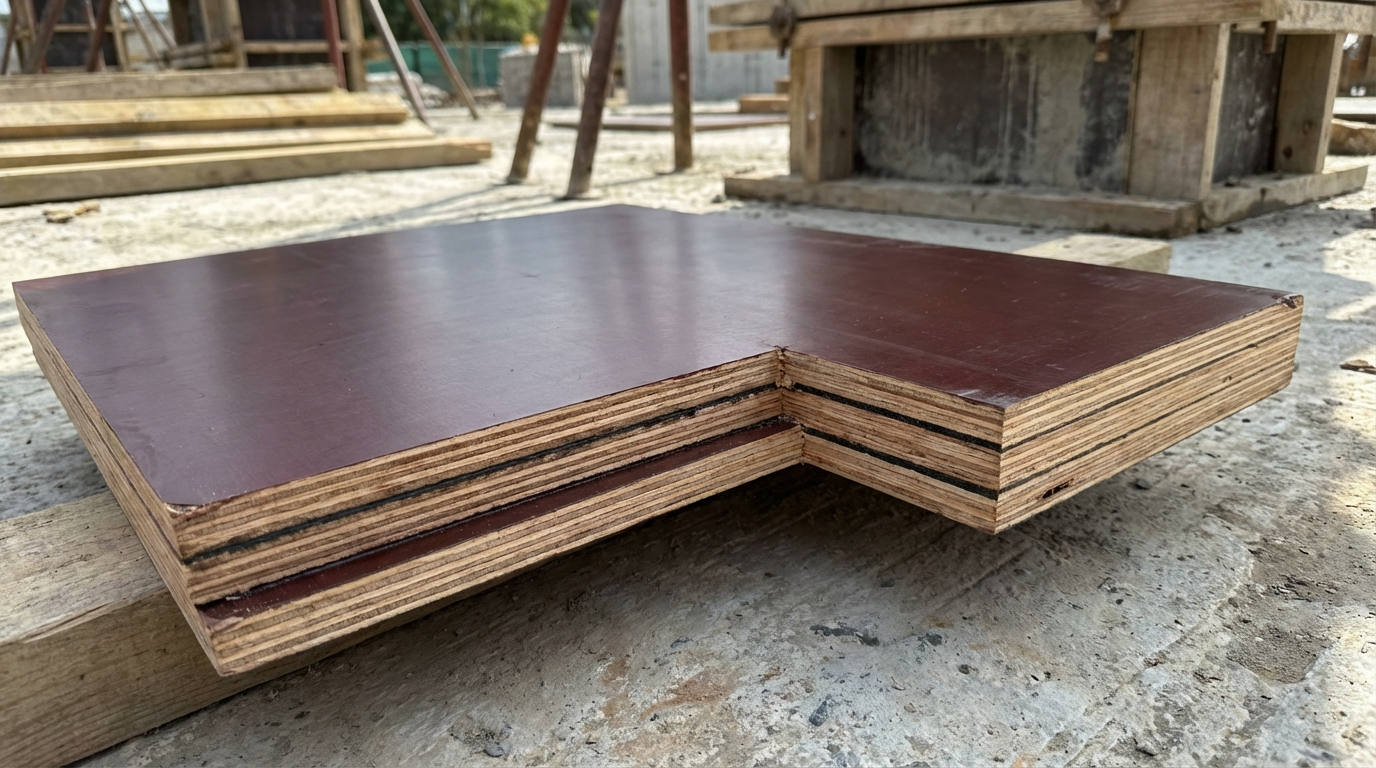
Best answer in one line: Shuttering plywood is construction-grade board designed for repeated concrete pours, with film-faced variants offering 8–25+ reuse cycles depending on core quality and handling.
If you're in a hurry: Shuttering plywood differs from furniture-grade boards in density, bonding, and surface treatment. Film-faced types have phenolic or melamine coatings that resist concrete adhesion and moisture. Reuse cycles depend on core species, film thickness (often 120–220 GSM), edge sealing, and site handling. In India, expect 8–15 cycles for standard grades and 18–30 for premium hardwood-core boards with thicker films. Always check core density by weight, film adhesion by scratch test, and edge quality before bulk purchase. Cheap boards sold as "high-reuse" often fail by cycle 4–6, wasting money and delaying pours.
- Choose this if: You need formwork for RCC columns, slabs, beams, or foundations and want smooth concrete finishes with predictable reuse.
- Avoid this if: You're building furniture or interiors—shuttering plywood is too heavy, costly, and unsuitable for decorative finishes.
What Shuttering Plywood Actually Means
Shuttering plywood is engineered specifically for concrete formwork—the temporary mould into which wet concrete is poured. Unlike interior plywood, it must withstand extreme moisture, chemical attack from cement alkalinity, mechanical stress during pouring and vibration, and the physical impact of de-shuttering. The term "shuttering" comes from the temporary shutter or casing that holds concrete until it cures.
In India, shuttering plywood typically conforms to IS 4990 or equivalent specifications, though many products are sold without proper certification. The key differentiator from regular plywood is the bonding resin (phenol formaldehyde for water resistance), core density (hardwood cores for strength), and surface treatment (film facing for release and durability).
Where People Get Confused About Shuttering Plywood
- Confusing BWP with shuttering grade: BWP (Boiling Water Proof) plywood is water-resistant but lacks the surface treatment and core density needed for formwork reuse.
- Assuming all film-faced boards are equal: Film thickness, adhesion quality, and core species vary dramatically—a 120 GSM film on poplar core performs nothing like 220 GSM on eucalyptus hardwood.
- Believing "marine grade" means shuttering grade: Marine plywood (IS 710) is excellent for boat-building but doesn't have the film facing needed for clean concrete release.
- Thinking higher thickness always means more reuse: A 12mm hardwood-core film-faced board often outlasts an 18mm softwood-core board because core density matters more than thickness for formwork.
- Ignoring edge sealing requirements: Even premium shuttering plywood fails early if cut edges aren't sealed—water enters the core and causes delamination within 2–3 cycles.
- Expecting furniture-finish smoothness: Shuttering plywood prioritises concrete release, not decorative appearance—minor surface imperfections are normal and don't affect performance.
India-Specific Reality Check
Construction sites across India face conditions that accelerate shuttering plywood failure. Understanding these helps you select appropriate grades and plan realistic reuse expectations.
Monsoon and Humidity Challenges
During monsoon months, shuttering plywood on site absorbs moisture even through minor film damage or unsealed edges. Boards left flat on wet ground or stacked without spacers develop fungal growth and core softening within days. Coastal projects face additional salt exposure that attacks both film and core over time. Always store boards vertically or on raised pallets with airflow between sheets.
Site Handling Realities
Labour practices on Indian construction sites often involve dragging boards across rebar, dropping them from height, and using metal tools for de-shuttering. Each impact or scrape damages the film layer, reducing effective reuse cycles. Training site workers on proper handling typically adds 3–5 cycles to board life—a significant cost saving on large projects.
Storage and Transport Issues
Boards transported without protective covering in open trucks arrive with edge damage and film scratches. Storage in direct sunlight causes film brittleness and edge warping. Many contractors report that 15–20% of boards are damaged before first use due to poor logistics—factor this into quantity calculations.
Film-Faced Types: What the Coating Actually Does
The film on shuttering plywood serves three functions: preventing concrete adhesion (clean release), protecting the core from moisture and chemical attack, and providing a smooth surface that transfers to the concrete finish. Film type and thickness directly determine both reuse cycles and concrete surface quality.
What Does Film Thickness (GSM) Mean for Performance?
Film thickness is measured in grams per square metre (GSM). Standard grades use 120–150 GSM films suitable for 6–12 cycles with careful handling. Medium grades at 160–180 GSM typically achieve 12–18 cycles. Premium boards with 200–220 GSM films and hardwood cores can reach 20–30 cycles on well-managed sites. The film must be properly fused to the veneer—poorly bonded films peel within 2–3 cycles regardless of thickness.
To check film quality before purchase, scratch the surface firmly with a fingernail. Quality film resists scratching and shows no whitening or lifting. Poor film immediately shows white scratch marks and may peel at edges. Also check film coverage at board edges—gaps indicate incomplete coating that allows moisture entry.
Phenolic vs Melamine Film: Which Performs Better?
Phenolic films (brown or dark-coloured) offer superior chemical resistance against cement alkalinity and perform better in prolonged moisture contact. They're standard for structural formwork. Melamine films (lighter colours, sometimes white) provide smoother concrete finishes and are popular for architectural concrete where appearance matters. However, melamine is slightly less durable under harsh site conditions. Choose phenolic for general structural work and melamine only when concrete surface aesthetics are critical.
Single-Sided vs Double-Sided Film Facing
Double-sided film-faced boards (both surfaces coated) offer flexibility—either side can contact concrete. Single-sided boards have film on one face only, with the back either uncoated or having a moisture-barrier coating. For column and beam formwork where both surfaces may contact concrete in different configurations, double-sided is practical. For slab formwork where only one face touches concrete, single-sided boards with sealed backs work well and cost less.
Reuse Cycles: What Determines How Long Boards Last
Reuse cycle claims range from 5 to 50+ depending on manufacturer marketing. Realistic expectations require understanding what actually causes board failure and how site conditions affect longevity.
Why Do Reuse Cycle Claims Vary So Much?
Manufacturers test under controlled conditions—careful handling, proper storage, edge sealing, and release agent application before each pour. Real sites rarely match these conditions. A board rated for 25 cycles in testing may achieve 15 cycles on a well-managed commercial site or only 8 cycles on a residential project with untrained labour. Always ask suppliers about reuse performance under actual site conditions, not laboratory testing. Experienced contractors in your region provide more reliable estimates than manufacturer claims.
Core Species Impact on Reuse
The core wood species affects both structural strength and moisture resistance during repeated wet-dry cycles. Eucalyptus and other dense hardwoods maintain integrity through more cycles than poplar or other softwoods. Hardwood-core boards are heavier (a useful quality indicator) and cost more but deliver better per-cycle economics on projects requiring more than 10 pours.
| Core Type | Typical Weight (18mm, 8×4 ft) | Expected Cycles (Good Handling) | Best For |
|---|---|---|---|
| Poplar/Softwood | 28–32 kg | 6–10 cycles | Small residential, limited reuse needs |
| Mixed Hardwood | 34–38 kg | 10–18 cycles | General construction, moderate reuse |
| Eucalyptus/Dense Hardwood | 40–48 kg | 18–30 cycles | Commercial projects, high reuse requirements |
How Edge Sealing Affects Board Life
Cut edges expose raw core wood to moisture, cement paste, and mechanical damage. Unsealed edges absorb water within hours of first use, causing progressive core swelling and delamination. Proper edge sealing with waterproof paint, epoxy, or specialized edge sealant can double effective board life. On large projects, the cost of edge sealing (labour plus materials) is recovered within 2–3 additional cycles. Specify edge sealing in your procurement or establish site protocols for sealing cut edges before first use.
Thickness and Size Specifications
Standard shuttering plywood in India comes in specific thicknesses and sizes optimised for common formwork applications. Understanding the logic helps you select appropriate specifications without over-engineering or under-specifying.
Which Thickness Should You Use for Different Formwork?
Thickness selection depends on span between supports (joist spacing), concrete pressure during pour, and expected reuse requirements. Thinner boards are lighter and cheaper but deflect more under load and wear faster.
- 9mm: Suitable for light formwork, curved surfaces, and applications where boards are fully supported with close joist spacing (150–200mm). Limited reuse potential.
- 12mm: Common for wall and column formwork with moderate joist spacing (250–300mm). Good balance of cost and durability for 8–15 cycle applications.
- 15mm: Popular for slab formwork with standard joist spacing (300–400mm). Offers improved flatness and reuse potential.
- 18mm: Standard for heavy-duty applications, wider joist spacing (400–500mm), and high-reuse requirements. Most specified thickness for commercial projects.
- 21mm: For demanding applications with maximum joist spacing or heavy concrete loads. Premium cost but longest service life.
Standard Sheet Sizes Available in India
The most common size is 8 feet × 4 feet (2440mm × 1220mm), matching standard formwork dimensions and scaffolding systems. Some suppliers offer 7 feet × 4 feet or custom sizes. Larger sheets reduce joint lines in concrete but are heavier and harder to handle. For column formwork, smaller cut pieces from standard sheets are typical. Calculate cutting patterns to minimise waste—shuttering plywood costs make offcuts expensive.
Quality Checks You Can Do Without Lab Tests
Before Buying: What to Inspect at the Supplier
- Weight check: Weigh a sample board and compare to specifications. Hardwood-core 18mm boards should weigh 40+ kg for 8×4 ft size. Significantly lighter boards indicate softwood core or voids.
- Film scratch test: Scratch firmly with fingernail across multiple areas. Quality film resists without whitening or lifting. Peel testing at corners reveals bonding quality.
- Edge inspection: Check factory edges for film coverage continuity. Gaps or peeling at edges indicate poor coating process.
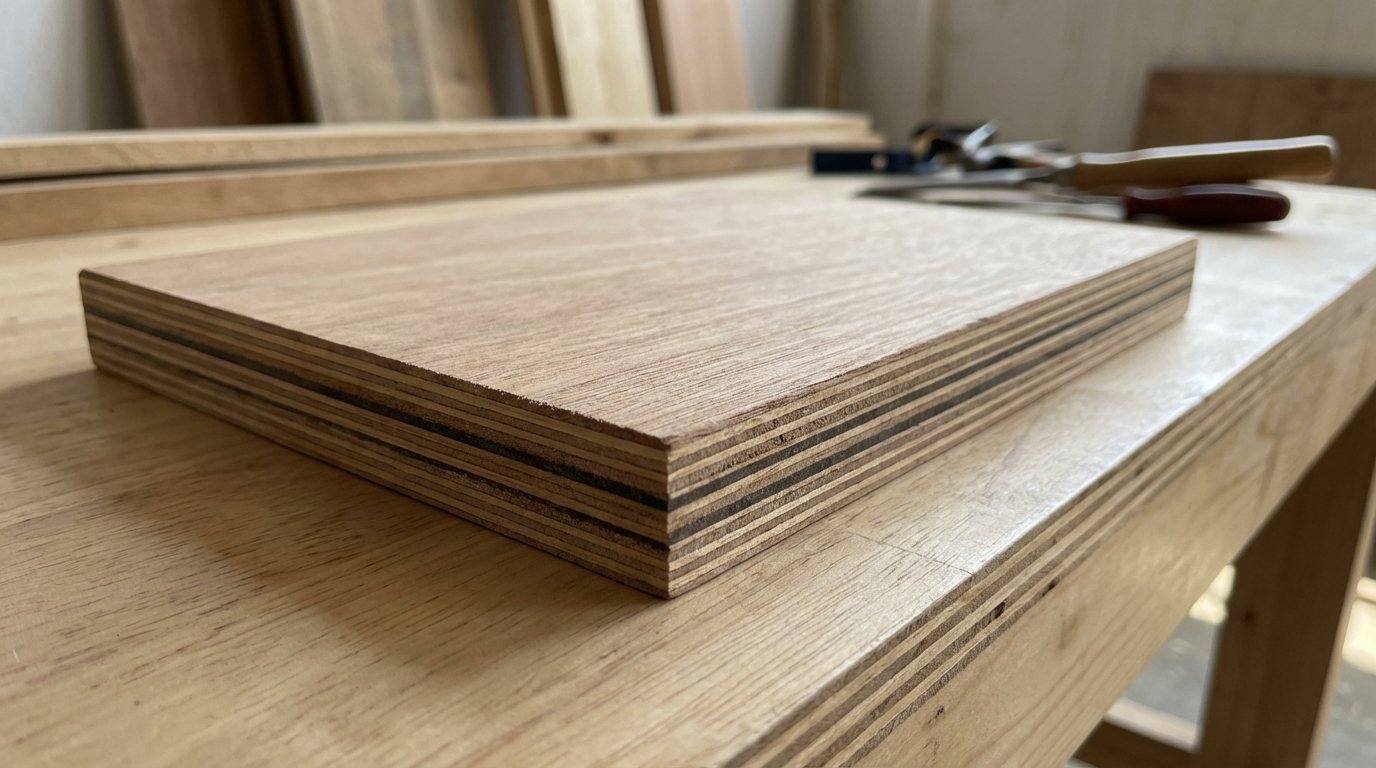
- Core examination: If cut samples are available, inspect core layers for gaps, overlaps, or voids. Tap the board—hollow sounds indicate delamination or voids.
- Flatness check: Lay board on flat surface and check for warping or twisting. Significant deviation indicates poor manufacturing or storage damage.
- Moisture meter: If available, check moisture content. Boards above 12–14% moisture have been improperly stored and will warp or delaminate faster.
Questions to Ask Before Bulk Purchase
- What is the core wood species? (Avoid "mixed" without further specification)
- What is the film weight in GSM? (Get specific number, not just "premium")
- What reuse cycles do your current customers achieve? (Ask for contractor references)
- Does the price include edge sealing or protective packaging?
- What is the replacement/return policy for manufacturing defects?
- Can you provide IS 4990 test reports or equivalent quality documentation?
Red Flags That Indicate Low-Quality Boards
- Boards significantly lighter than expected for stated core type
- Film that scratches white or peels easily at edges
- Inconsistent film colour or texture across the sheet
- Visible core gaps or delamination at cut edges
- Strong chemical odour indicating poor resin curing
- Supplier unwilling to provide sample boards for testing
- Reuse claims dramatically higher than industry norms without supporting evidence
After Cutting: Workmanship Checks on Site
- Inspect cut edges for core quality—uniform layers without gaps or soft spots
- Check that cutting hasn't caused film delamination around edges
- Verify board dimensions match specifications (poor quality boards may have uneven thickness)
- Ensure all cut edges are sealed before first use
After Installation and Striking: Monitoring Board Condition
- Inspect film condition after each pour—note areas of wear, peeling, or damage
- Check board flatness—warping indicates moisture damage or core failure
- Monitor edge condition—swelling or softening requires repair or board retirement
- Clean boards properly after each use—dried concrete accelerates film damage on next pour
- Apply release agent before each pour—skipping this step dramatically reduces film life
Price Range and Cost Drivers (India)
Shuttering plywood prices in India vary significantly based on core species, film type and thickness, board dimensions, supplier location, and order quantity. Use ranges below for budgeting, but always get current quotes from multiple suppliers.
Indicative Price Ranges by Grade (18mm, 8×4 ft, 2024–25)
| Grade Description | Price Range (₹ per sheet) | Expected Cycles |
|---|---|---|
| Economy (softwood core, 120 GSM film) | ₹1,400–1,800 | 5–8 |
| Standard (mixed core, 150 GSM film) | ₹1,900–2,400 | 8–14 |
| Premium (hardwood core, 180 GSM film) | ₹2,500–3,200 | 14–22 |
| High-Performance (dense hardwood, 200+ GSM) | ₹3,400–4,500 | 20–30+ |
What Drives Price Differences?
- Core species: Hardwood cores cost 30–50% more than softwood but deliver 2–3× reuse cycles
- Film thickness: Each 20 GSM increase typically adds ₹100–200 per sheet
- Board thickness: 12mm boards cost roughly 65–70% of 18mm equivalents
- Certification: IS 4990 certified boards command 10–15% premium over uncertified
- Location: Prices in metro cities typically 8–15% higher than manufacturing regions (typically North and East India)
- Quantity: Bulk orders (50+ sheets) may receive 5–10% discount
- Season: Prices often rise 10–15% during peak construction season (October–March)
How to Calculate True Cost Per Pour
The cheapest board rarely offers lowest total cost. Calculate cost per pour by dividing total board cost (including transport, edge sealing, and handling losses) by realistic reuse cycles. Example: A ₹2,800 premium board achieving 20 pours costs ₹140 per pour, while a ₹1,600 economy board achieving 6 pours costs ₹267 per pour—the "expensive" board saves 48% per pour.
How to Ask for a Quote: Specification Checklist
When requesting quotes, specify these details to ensure comparable pricing:
- Board thickness (mm) and size (feet or mm)
- Core species requirement (hardwood, eucalyptus, or specific species)
- Film type (phenolic/melamine) and weight (GSM)
- Single or double-sided film facing
- Quantity required and delivery timeline
- Delivery location (affects transport cost)
- Whether edge sealing is included or separate
- Required certifications or test documentation
Trade-offs and Limitations
Shuttering plywood offers excellent value for formwork applications but has inherent limitations that affect project planning and cost calculations.
Weight vs Handling
Higher-density boards that offer more reuse cycles are heavier and harder to handle on site. An 18mm hardwood-core board weighing 45+ kg requires two workers to position safely, increasing labour time. For multi-storey work with manual lifting, lighter boards may be practical despite lower reuse.
Initial Cost vs Total Cost
Premium boards have higher upfront cost but lower cost per pour over project duration. However, this only applies if the project has enough pours to utilise the reuse potential. For small projects with 3–5 pours, economy boards may offer better value despite faster wear.
Surface Quality vs Durability
Boards optimised for maximum concrete surface smoothness (architectural concrete) often use thinner, smoother films that wear faster than textured phenolic films. Specify based on concrete finish requirements, not maximum reuse.
Standardisation vs Flexibility
Standard 8×4 ft boards optimise manufacturing cost but may generate significant cutting waste on projects with non-standard dimensions. Custom sizes cost more but may reduce waste enough to offset premium.
Storage Requirements
Proper storage requires covered, ventilated space with boards stacked flat or vertical with spacers. Sites lacking suitable storage will experience faster board degradation regardless of initial quality.
Common Buyer Mistakes and How to Avoid Them
Mistake 1: Buying Based on Price Per Sheet Only
Why it happens: Budget pressure leads to comparing sheet prices without considering reuse cycles or per-pour economics.
What to do instead: Calculate cost per pour using realistic cycle estimates. Request references from contractors using each grade to understand real-world performance.
Mistake 2: Ignoring Core Species When Comparing Quotes
Why it happens: Suppliers emphasise film quality and reuse claims but downplay core species differences.
What to do instead: Always specify and verify core species. Weigh sample boards—weight is the most reliable indicator of core density.
Mistake 3: Accepting "Premium" Claims Without Verification
Why it happens: Marketing terms like "premium," "high-reuse," and "marine-grade" are used loosely without standards.
What to do instead: Request specific GSM ratings, IS 4990 test reports, and contractor references. Test sample boards before bulk orders.
Mistake 4: Neglecting Edge Sealing
Why it happens: Edge sealing adds labour cost and time pressure on sites leads to skipping this step.
What to do instead: Include edge sealing in procurement specifications or establish mandatory site protocols. The cost is recovered within 2–3 additional cycles.
Mistake 5: Improper Storage Reducing Board Life Before First Use
Why it happens: Limited site space and weather exposure damage boards during storage.
What to do instead: Plan storage before ordering. Use protective covers, raised pallets, and proper stacking. Factor 10–15% wastage into quantity calculations if storage conditions are poor.
Mistake 6: Using Wrong Thickness for Span
Why it happens: Cost pressure leads to specifying thinner boards than appropriate for joist spacing.
What to do instead: Follow span tables from formwork design guides. Deflection during pour causes concrete honeycombing and reduces board reuse—false economy.
Mistake 7: Skipping Release Agent Application
Why it happens: Labour assumes film coating alone provides release, or release agent is unavailable on site.
What to do instead: Treat release agent as essential consumable, not optional. Include in project materials list and verify application before each pour.
Mistake 8: Not Accounting for Cutting Waste
Why it happens: Quantity calculations based on required area without considering cutting patterns and waste.
What to do instead: Plan cutting layouts before ordering. Standard waste factor is 8–12% for regular shapes, higher for complex formwork. Optimise dimensions to use standard sizes efficiently.
Failure Modes and Fixes
Failure Mode 1: Film Peeling or Delamination
Symptom: Film separates from veneer surface in patches or at edges.
Likely root cause: Poor film bonding during manufacturing, moisture damage from unsealed edges, or physical damage during de-shuttering.
Prevention: Test film adhesion before bulk purchase. Seal all cut edges. Use proper de-shuttering technique without metal tools scraping the surface.
If already happening: Sand affected areas smooth and apply additional release agent. For severe delamination, retire the board or restrict to areas where concrete finish is non-critical.
Failure Mode 2: Core Swelling at Edges
Symptom: Board edges become soft, swollen, or spongy after a few uses.
Likely root cause: Moisture entry through unsealed cut edges or damaged film at edges.
Prevention: Seal all edges before first use. Inspect and reseal any edge damage between pours. Store boards to prevent edge contact with water or wet ground.
If already happening: Trim swollen edges back to sound material and reseal. Severely swollen boards should be cut smaller or retired.
Failure Mode 3: Board Warping or Cupping
Symptom: Board develops permanent curve or twist that prevents flat placement.
Likely root cause: Uneven moisture exposure (one side wetter than other), improper storage (boards standing unsupported), or manufacturing defect.
Prevention: Store flat with weight distribution or vertical with full support. Avoid one-sided sun exposure or moisture contact.
If already happening: Minor warping may flatten under formwork pressure. Severe warping requires board replacement—warped boards cause uneven concrete surfaces and poor joint alignment.
Failure Mode 4: Concrete Sticking Despite Film
Symptom: Concrete adheres to board surface, damaging film during de-shuttering.
Likely root cause: Insufficient or missed release agent application, film damage allowing concrete paste into surface texture, or incompatible release agent.
Prevention: Apply release agent before every pour without exception. Use release agents compatible with phenolic or melamine films. Inspect film condition and repair damage before reuse.
If already happening: Clean concrete residue carefully without metal scrapers. Heavy pressure-washing may help. Apply extra release agent on affected areas for subsequent pours.
Failure Mode 5: Board Deflection During Pour
Symptom: Board bends excessively under concrete weight, causing uneven surfaces or honeycombing.
Likely root cause: Board thickness insufficient for joist spacing, core degradation from repeated use, or excessive concrete vibration pressure.
Prevention: Match board thickness to span requirements. Retire boards showing signs of core softening. Ensure proper joist spacing and secure fixing.
If already happening: Add intermediate supports for current pour. Replace with appropriate thickness for subsequent pours.
Failure Mode 6: Fungal Growth on Stored Boards
Symptom: Black or green discolouration on board surfaces or edges, musty odour.
Likely root cause: Boards stored in damp conditions without airflow, wet boards stacked without drying.
Prevention: Store in covered, ventilated areas. Dry boards before stacking. Use spacers between boards for airflow.
If already happening: Clean affected areas with mild fungicide solution, dry thoroughly before use. Surface fungal growth typically doesn't affect structural performance but may transfer to concrete surface.
Decision Framework: Which Grade for Which Situation
| Your Condition | Recommended Option | What to Verify |
|---|---|---|
| Small residential project, 3–5 pours needed | Economy grade (softwood core, 120 GSM) | Film adhesion, no visible core defects |
| Multi-storey residential, 10–15 pours | Standard grade (mixed core, 150 GSM) | Weight indicates hardwood content, edge sealing protocol |
| Commercial project, 20+ pours planned | Premium hardwood core (180–200 GSM) | IS 4990 certification, contractor references for actual cycles |
| Architectural concrete requiring smooth finish | Melamine film, calibrated surface | Surface smoothness, film consistency, release agent compatibility |
| Coastal or high-humidity site | Dense hardwood core, phenolic film | Core density (weight), comprehensive edge sealing, proper storage |
| Tight budget, limited storage facility | Mid-grade with realistic cycle expectations | Calculate per-pour cost including expected wastage |
| Curved or complex formwork | Thinner boards (9–12mm) for bendability | Support spacing adequate for thickness, film flexibility |
Tips for Homeowners Overseeing Construction
If you're building a home and want to ensure your contractor uses appropriate shuttering plywood, focus on verification rather than specification. Ask to see the boards being used and compare weight to expected ranges. Check that edge sealing is being done on cut pieces. Observe storage conditions—boards lying flat on wet ground or exposed to rain indicate poor practices that will affect concrete quality. Request to see the concrete surface after de-shuttering to verify smoothness and absence of honeycombing.
Tips for Carpenters and Formwork Teams
Handle boards by edges, not surfaces—fingerprints and palm oil transfer affects film performance. Use wooden or rubber mallets for positioning, never metal tools. Apply release agent in thin, even coats—excess release agent can cause surface defects in concrete. When cutting, support both sides to prevent edge splintering. Seal cut edges immediately if site protocol allows, or mark for sealing before use. Stack used boards with spacers and inspect for damage before each reuse. Report boards showing delamination, warping, or edge swelling for retirement or restricted use.
Tips for Architects and Structural Engineers
When specifying shuttering plywood, include core species, film type and weight, thickness, and required certification in tender documents. Specify edge sealing requirements and release agent type for architectural concrete applications. Include board inspection and retirement criteria in quality plans—subjective "good condition" assessments lead to disputes and quality failures. For exposed concrete finishes, consider specifying sample pours with proposed materials to verify acceptable surface quality before main work. Document formwork system details including board specifications for project records.
Tips for Contractors and Project Managers
Calculate quantity requirements including cutting waste (8–15% depending on formwork complexity) and handling damage allowance (5–10% for typical sites). Establish receiving inspection procedures—check weight, film adhesion, and flatness before accepting delivery. Create storage protocols and designated storage areas before boards arrive. Train formwork teams on handling, release agent application, and damage reporting. Track board usage and condition to build data on actual reuse cycles with different grades—this informs future procurement decisions. Consider board purchase as investment rather than consumable—per-pour cost analysis usually favours higher-grade boards for projects with significant pours.
FAQs
What is the difference between shuttering plywood and regular plywood?
Shuttering plywood is specifically engineered for concrete formwork applications with features that regular interior plywood lacks. The bonding resin is phenol formaldehyde for waterproofing (vs urea formaldehyde in MR grade), the core uses denser hardwood species for strength and screw-holding, and the surfaces are coated with phenolic or melamine film for concrete release. Regular plywood would fail within 1–2 pours due to moisture damage and concrete adhesion, making it unsuitable and uneconomical for formwork despite lower initial cost.
How many times can shuttering plywood be reused?
Reuse cycles vary dramatically based on board quality, site handling, storage conditions, and edge sealing practices. Economy grades with softwood cores typically achieve 5–8 cycles. Standard grades reach 10–15 cycles with proper care. Premium hardwood-core boards with thick films can achieve 20–30+ cycles on well-managed sites. Manufacturer claims often represent laboratory conditions—realistic expectations should be based on contractor experience with similar grades in comparable site conditions. Proper edge sealing and release agent application typically add 3–5 cycles to any grade.
Why is film thickness important in shuttering plywood?
Film thickness, measured in GSM (grams per square metre), directly affects board durability and concrete release quality. Thicker films (180–220 GSM) provide better abrasion resistance during de-shuttering, longer protection against moisture penetration, and more consistent release properties over multiple cycles. Thinner films (120–150 GSM) wear through faster, especially at edges and high-contact areas, leading to concrete sticking and core exposure. However, film thickness alone doesn't determine quality—proper film bonding to the veneer is equally important.
Can I use BWP plywood instead of shuttering plywood for formwork?
BWP (Boiling Water Proof) plywood resists moisture but lacks the film facing essential for concrete release and surface durability in formwork applications. Using BWP for formwork results in concrete adhesion, difficult de-shuttering, surface damage after first use, and rough concrete finishes. The cost saving from using BWP is false economy—you'll need to replace boards frequently and deal with poor concrete quality. For occasional, small formwork needs where finish doesn't matter, heavily oiled BWP might work for 2–3 pours, but shuttering plywood is the appropriate choice for any meaningful formwork application.
What is IS 4990 certification for shuttering plywood?
IS 4990 is the Indian Standard specification for concrete shuttering plywood, covering requirements for core veneer quality, glue bond strength, dimensional tolerances, moisture resistance, and physical properties. Boards meeting IS 4990 have been tested for structural adequacy in formwork applications. However, IS 4990 is a minimum standard—boards may exceed these requirements significantly. The presence of IS 4990 certification indicates basic quality assurance but doesn't guarantee premium performance. Always verify certification authenticity and supplement with physical checks and contractor references.
How should I store shuttering plywood on site?
Proper storage significantly extends board life and prevents pre-use damage. Store boards in covered, ventilated areas protected from direct rain and sun. Place on raised platforms or pallets at least 150mm above ground to prevent moisture absorption from below. Stack flat with weight distribution or store vertically with full support to prevent warping. Use spacers (25–50mm) between boards for airflow when stacking. Avoid storing with film surfaces facing each other—use back-to-back orientation with spacers. Rotate stock to use older boards first. Budget 5–10% quantity allowance for storage damage under typical Indian site conditions.
What release agent should I use with film-faced shuttering plywood?
Use release agents specifically formulated for film-faced plywood—typically emulsion-based products that don't attack phenolic or melamine films. Avoid diesel, used engine oil, or grease that can damage films and stain concrete. Apply thin, even coats using spray or roller before each pour—excess release agent causes concrete surface defects. Some premium films have release properties built-in but still benefit from light release agent application. Check release agent compatibility with your specific film type, especially for architectural concrete where surface quality is critical. Clean boards of concrete residue before applying release agent for next pour.
Why do some shuttering plywood boards fail before expected cycles?
Premature failure typically results from a combination of factors rather than single causes. Common contributors include poor edge sealing allowing moisture entry, skipping release agent application causing concrete adhesion and film damage during striking, physical damage from rough handling or metal tools, improper storage leading to warping or fungal growth, and manufacturing defects not detected at purchase. Quality boards can also fail early if supporting formwork system causes excessive deflection or if concrete vibration is excessive. Site discipline and handling practices often matter as much as initial board quality in determining actual reuse performance.
How do I calculate how much shuttering plywood I need for a project?
Start with total formwork area required for each pour type (slabs, columns, beams, walls). Add 8–15% for cutting waste depending on complexity. Divide by expected reuse cycles to determine total boards needed across project. Add 5–10% for handling damage and storage losses. For phased projects, calculate peak simultaneous requirement including curing time between pours. Example: 1000 sq ft formwork area with 10% waste factor needs 1100 sq ft per pour. If boards achieve 15 cycles and you have 45 pours, you need roughly 3 complete sets plus contingency—approximately 38–42 boards of 8×4 ft size. Adjust based on actual project scheduling and storage capacity.
Is there a difference between Indian and imported shuttering plywood?
Imported shuttering plywood (commonly from Malaysia, Indonesia, or China) may use different core species, film formulations, and manufacturing processes. Some imported boards use tropical hardwoods with excellent density, while others use plantation species similar to Indian production. Quality varies significantly by source and price point—imported boards aren't inherently better or worse than Indian production. Key considerations include consistent availability for replacement orders, warranty and return handling logistics, and compliance with Indian construction standards. Test samples from any source before bulk commitment, regardless of origin claims.
Disclaimer: This content is provided for general informational purposes based on industry practices and publicly available information. Product specifications, standards, prices, and availability may vary by manufacturer, region, and time. Readers should independently verify details with manufacturers, dealers, or qualified professionals before making purchase or construction decisions.Want Plywood Suggestions?
Share a few details and a Duro BOIL specialist will suggest suitable brands and connect you to responsive dealers.