Types of Plywood in India: Complete Classification Guide (2026)
All types of plywood explained - MR, BWR, BWP, Marine, Calibrated, Flexible & more. Learn IS standards, applications & prices for each plywood type.
Quick Answer
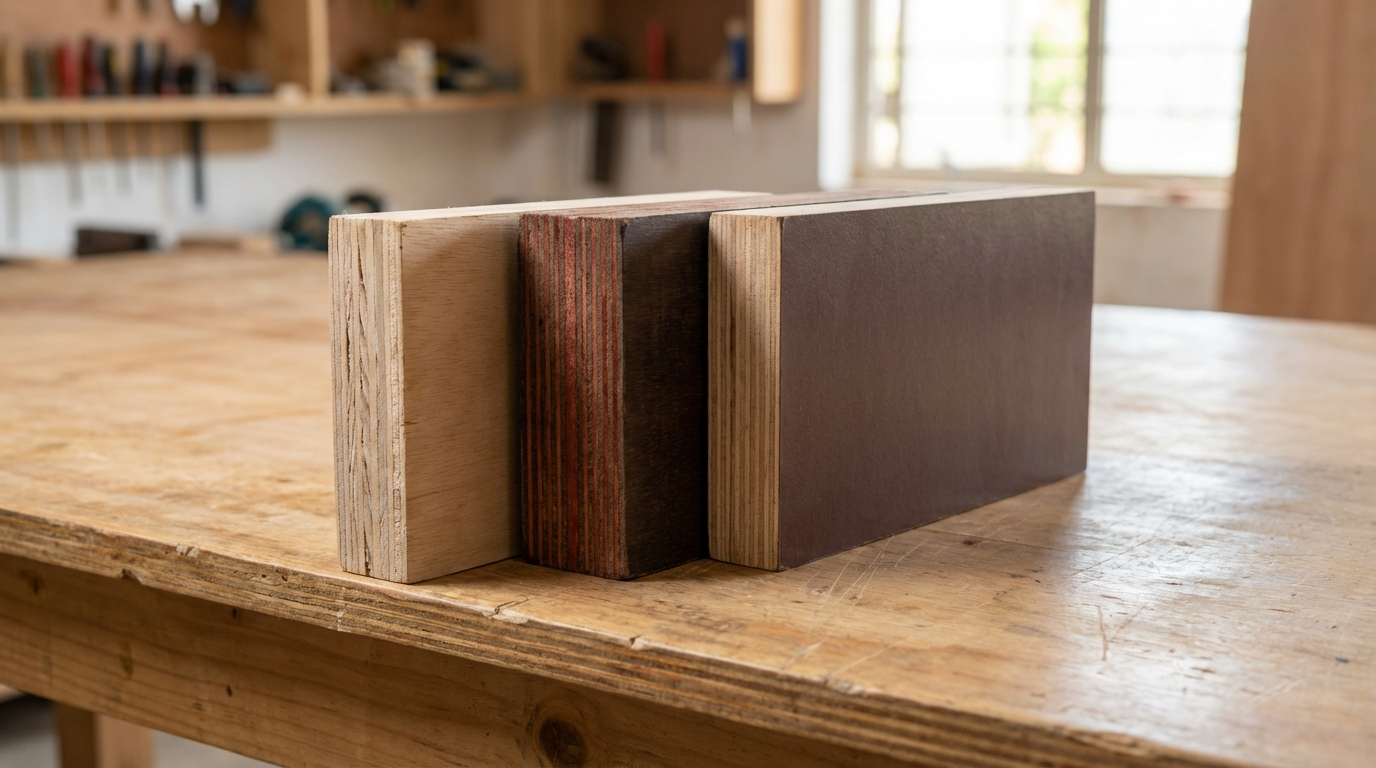
Plywood in India is classified into three major grades based on water resistance: MR (Moisture Resistant), BWR (Boiling Water Resistant), and BWP/Marine (Boiling Water Proof). As per Indian standards, IS 303 plywood specification stands for Moisture resistant and Boiling Water Resistant grades of plywood, while IS 710 specification stands for marine-grade plywood.
In simple terms, plywood is an engineered wood product made by glueing thin layers of wood veneer together, with each layer's grain direction perpendicular to the previous one. This cross-grain construction adds strength, stability, and screw-holding capacity compared to MDF or particle board. Understanding the different types of plywood available in India helps you make informed decisions whether you're building kitchen cabinets, wardrobes, or outdoor furniture.
- MR Grade plywood uses urea and formaldehyde resin and is the most preferred choice for residential use
- BWP plywood offers complete waterproofing and is made using high-quality phenolic resin that can withstand continuous water exposure
- Marine grade plywood is much stronger than both MR and BWR grade plywood and has superior waterproof quality
- Standard sizes in India include 8x4 feet sheets with thicknesses ranging from 4mm to 25mm
- Price range varies from ₹50-100 per sq ft for MR grade to ₹80-200 per sq ft for BWP/Marine grade
- Always look for ISI certification marks (IS 303 or IS 710) before purchasing
What Exactly is Plywood?
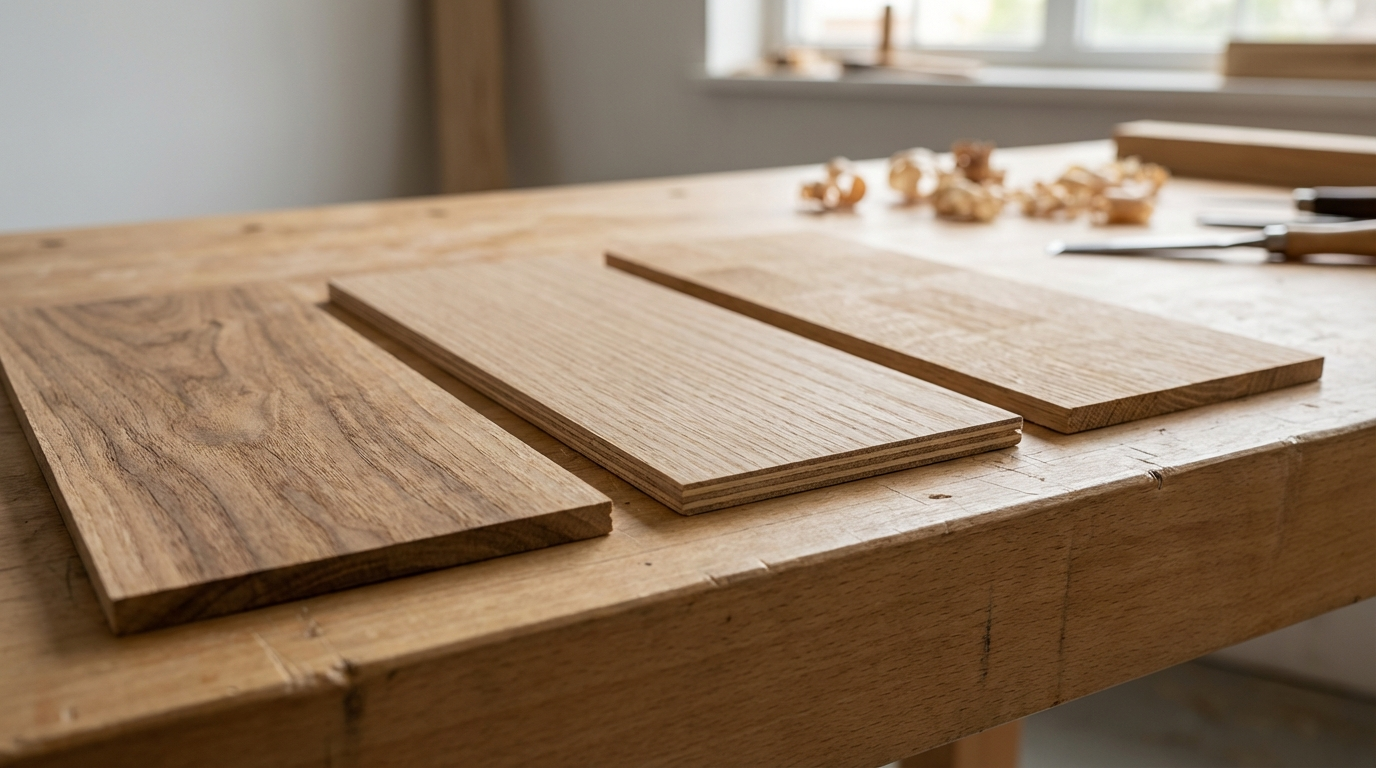
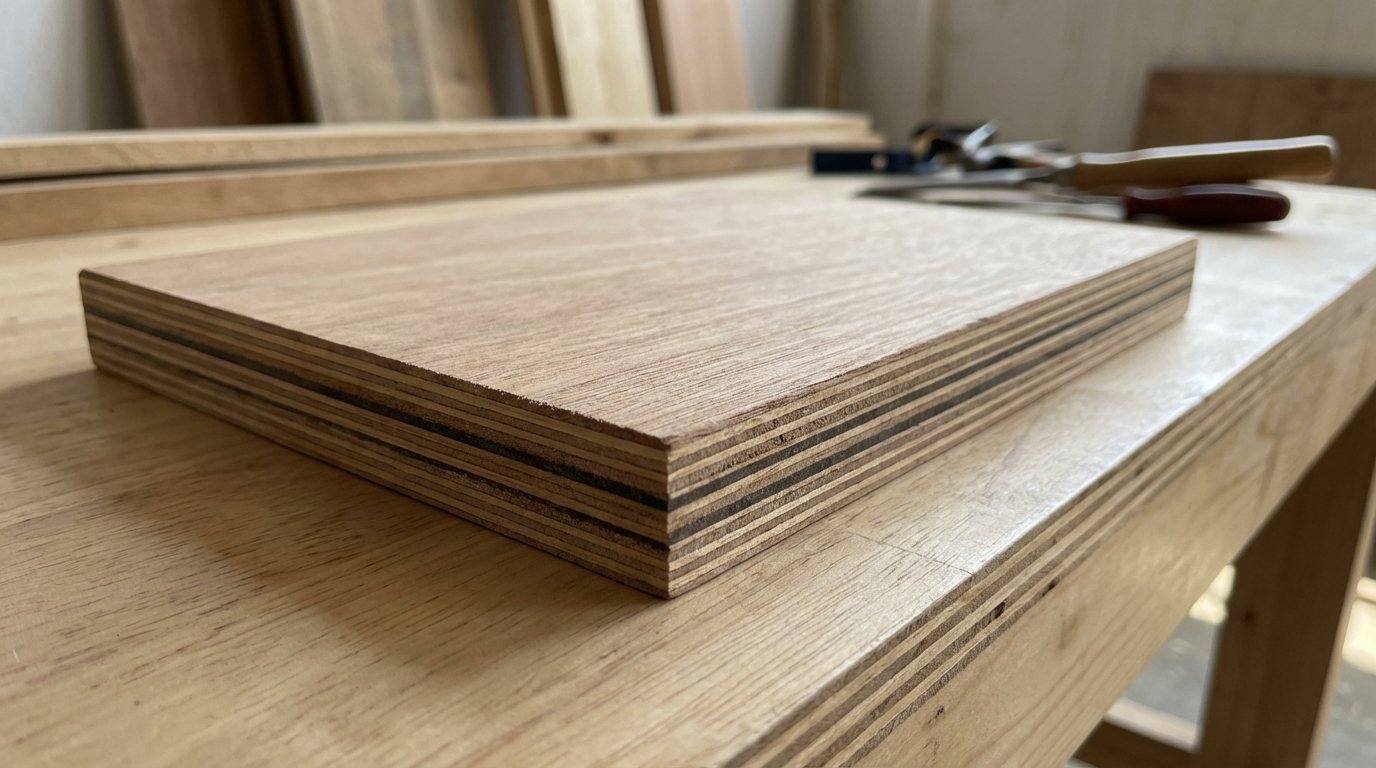
Plywood is manufactured from thin layers or "plies" of wood veneer that are glued together with adjacent layers having their wood grain rotated up to 90 degrees to one another. This cross-lamination process creates a strong, stable panel that resists warping, cracking, and twisting far better than solid wood.
Plywood is available in multiple thicknesses ranging from 2 mm to 39 mm. In India, the most common thicknesses for furniture applications are 6mm, 8mm, 9mm, 12mm, 16mm, 18mm, and 19mm. The standard sheet size is 8 feet x 4 feet (2440mm x 1220mm), though smaller sizes like 7x4 feet are also available.
The manufacturing process involves peeling logs into thin veneers, drying them, applying adhesive, and pressing multiple layers together under heat and pressure. The type of adhesive used—urea formaldehyde, melamine urea formaldehyde, or phenol formaldehyde—determines the plywood's water resistance and grade classification.
Full form: What do MR, BWR, and BWP stand for?
BWR denotes boiling water resistant grade plywood, while BWP stands for boiling water proof grade plywood. MR stands for Moisture Resistant grade. These terms refer to the adhesive bonding quality and water resistance capability of the plywood.
The glue used to manufacture BWP and BWR is synthetic plastic resin i.e. phenol formaldehyde which is said to be better than urea formaldehyde resin used to make MR grade commercial plywood. Understanding these terms helps you select the right plywood for specific applications.
Types of Plywood Available in India
The Indian plywood market offers various types classified by water resistance, special treatments, and specific applications. According to duroboil.com's material experts, choosing the right type depends on where the plywood will be used, expected moisture exposure, and budget considerations.
| Plywood Type | IS Standard | Best For | Moisture Resistance | Price Range (₹/sq ft) | Availability |
|---|---|---|---|---|---|
| MR Grade (Commercial) | IS 303 | Dry interiors, wardrobes, false ceiling | Moderate (humidity only) | 50-100 | Widely available |
| BWR Grade | IS 303 | Kitchen cabinets, bathroom vanities | High (boiling water resistant) | 65-150 | Widely available |
| BWP/Marine Grade | IS 710 | Outdoor furniture, boats, heavy moisture areas | Excellent (waterproof) | 80-200 | Available at major dealers |
| Calibrated Plywood | IS 303/710 | Modular kitchens, machine-made furniture | Varies by grade | 70-180 | Select dealers |
| Fire Retardant (FR) | IS 5509 | Commercial spaces, kitchens, public buildings | Varies by base grade | 105-250 | Specialty dealers |
| Flexible (Flexi) Plywood | BWP grade | Curved furniture, columns, arches | High | 40-120 | Major cities |
| Film Faced Shuttering | BWP grade | Concrete formwork, construction | Excellent | 60-150 | Construction suppliers |
MR Grade Plywood (Moisture Resistant)
MR grade plywood means moisture-resistant plywood and is also known as commercial plywood. In moisture-resistant plywood, urea-formaldehyde resin bonds the plies with each other.
'Moisture-resistant' does not mean 'waterproof'. It means that the plywood is capable of resisting humidity and moisture, and it is not resistant to water. So, this type of plywood is unfit for making furniture continuously in contact with water.
MR grade plywood is an interior grade plywood; therefore, it is suitable for indoor use, not for the exterior. This makes it ideal for bedroom wardrobes, study tables, TV units, false ceilings, wall panelling, and office furniture where water exposure is minimal.
BWR Grade Plywood (Boiling Water Resistant)
BWR-grade plywood means Boiling Water-Resistant plywood. It is a waterproof plywood that can resist water better than MR plywood. BWR plywood is glued using phenol formaldehyde adhesive (phenolic resin), which is a synthetic plastic resin.
It is not 100% waterproof as compared to BWP plywood. Boiling Water-Resistant plywood is an exterior grade plywood. Therefore, it is best suited for furniture that is likely to get wet, i.e. kitchen cabinet, lawn chairs, garden tables, etc.
The Indian Standards specification number for BWR plywood is IS:303. Often marketed as Boiling Water Proof, BWR which stands for Boiling Water Resistant plywood is inferior to BWP but superior to MR. It is given the IS 303 grade but some of its specifications would exceed that of MR plywood making it slightly superior.
BWP/Marine Grade Plywood (Boiling Water Proof)
BWP-grade plywood stands for Boiling Water Proof plywood, popularly known as Marine Grade plywood. BWP plywood is made up of single select hardwood species and bonded with boiling waterproof synthetic undiluted phenol formaldehyde adhesive. It is a superior grade of plywood that is higher in quality and strength as compared to both MR and BWR plywood.
Marine plywood can be submerged in water for 72 hours without any kind of damage. To test its durability, you can take a piece and drop it in boiling water. A good quality BWP can withstand boiling water for up to twenty hours.
BWP plywood is given the IS 710 grade and is recommended to be used on surfaces which can have reasonable amount of water exposure like your Kitchen's units below the granite or your bathroom units.
Which type for kitchens and bathrooms?
For kitchen cabinets, especially sink units and areas below cooking counters, BWR or BWP grade plywood is mandatory. Kitchen humidity during cooking reaches 75-85% in Bangalore, making BWP's superior water resistance essential for longevity. Duroboil.com recommends using BWP/Marine grade (IS 710) for all kitchen base cabinets and sink units.
For bathroom vanities and cabinets, always use BWP/Marine grade plywood. The constant moisture exposure, steam from hot water, and potential splashing make anything less than waterproof plywood unsuitable. Seal all exposed edges with edge banding or waterproof sealant for maximum protection.
Which type for wardrobes and bedrooms?
MR grade plywood is excellent for bedroom wardrobes. Bedrooms maintain 50-65% humidity, well within MR plywood's tolerance. This saves Rs. 200-800 per sheet compared to BWP without compromising quality.
For dry area applications like wardrobes, study tables, TV units, and bookshelves, MR grade offers excellent value. However, if your home is in a coastal area with high humidity or you live in a region with extended monsoon seasons, consider upgrading to BWR grade even for bedroom furniture.
Special Purpose Plywood Types
Calibrated Plywood
Calibrated plywood is precision-engineered plywood with uniform thickness, ideal for applications requiring exact measurements. Calibrated ply has uniform thickness with a tolerance level of +/- 0.2 mm. It has an absolutely smooth surface and that makes it an excellent item for post-forming and post lamination for making furniture.
Uniform thickness facilitates excellent post-lamination. Calibrated Plywood is the best material for post-forming furniture, modular kitchens, etc. High-quality modular furniture-making machines can work on calibrated ply only.
Calibrated Plywood has uniform thickness, and is commonly used for manufacturing modular kitchens and wooden cabinets. This type is essential for factory-made modular furniture where CNC machines require precise, uniform material thickness.
Fire Retardant (FR Grade) Plywood
Fire retardant plywood is a type of plywood which is treated with special fire retardant chemicals at the time of manufacture, so that it becomes better at resisting fires. It is also known as FR grade plywood.
Look for certifications like IS:5509 for reliable fire retardancy. Greenply FR plywood, engineered with advanced technology, delays the spread of fire by an impressive 90 minutes, offering twice the fire resistance of standard plywood.
Fire retardant plywood is commonly used in public places, where the risk of fire must be reduced, such as for woodwork in the kitchens of large restaurants, or for interior woodwork in public theaters and halls, and in railways. This certification ensures the rate of burning of the plywood should be more than 20 minutes, and the time taken for flames to penetrate the plywood has to be more than 30 minutes.
Flexible (Flexi) Plywood
Flexible plywood, often known as Flexi plywood, is a type of plywood that can be bent without fracturing. This is useful for creating curved-surfaced furniture.
This gives it unmatched flexibility and makes it the perfect choice for curved columns, arches and any residential and commercial furniture that is a departure from straight lines. This natural product can be easily flexed by hand, without the need for any special machines. Once the flexible plywood is glued, laminated or veneered, it will hold its shape without any additional support or structure.
Duro Flex is a range of Flexible plywood that provides unmatched flexibility. It can be moulded and bent into any shape without chipping, cracking, peeling, or staining. Applications include curved reception counters, round pillars, designer furniture, staircase banisters, and architectural elements.
Film Faced Shuttering Plywood
Film-Faced Shuttering Plywood is an engineered wood product with a durable film coating on both sides. This coating, made of phenolic resin, provides outstanding protection against moisture, chemicals, and abrasion.
Film Faced Shuttering Plywood is primarily used for shuttering works for constructing RCC floor levels. It is being used widely for shuttering in construction of bridges, flyovers, metro projects, shipbuilding, water tanks, cooling towers, all high rise buildings which need maximum strength and security.
The fact that it can be reused multiple times makes film faced plywood a cost-effective option for contractors and builders. Instead of replacing materials after every use, film-faced plywood can last for several cycles, saving on costs.
Technical Specifications
| Specification | MR Grade | BWR Grade | BWP/Marine Grade |
|---|---|---|---|
| IS Standard | IS 303 | IS 303 | IS 710 |
| Adhesive Used | Urea Formaldehyde | Phenol Formaldehyde | Undiluted Phenol Formaldehyde |
| Boiling Water Test | Not applicable | 8 hours without delamination | 72 hours without delamination |
| Standard Thickness | 4-25mm | 4-25mm | 6-25mm |
| Standard Sizes | 8x4 ft, 7x4 ft | 8x4 ft, 7x4 ft | 8x4 ft |
| Weight (19mm, 8x4) | 32-38 kg | 35-42 kg | 38-45 kg |
| Typical Lifespan | 8-12 years | 12-18 years | 18-25+ years |
MR grade lasts 8-12 years in dry areas with proper maintenance. BWP marine grade lasts 18-25+ years even in high-humidity areas.
Understanding Thickness Requirements
| Application | Recommended Thickness | Why This Thickness |
|---|---|---|
| Cabinet backs, loft backs | 4-6mm | Non-load bearing, cost-effective |
| Shelves (light load) | 8-9mm | Adequate for books, clothes |
| Wardrobe sides, partitions | 12mm | Good structural support |
| Kitchen cabinet carcass | 16-18mm | Heavy load bearing, moisture exposure |
| Table tops, heavy shelving | 18-19mm | Maximum strength required |
| Doors, structural panels | 19-25mm | Premium strength and durability |
Plywood Core Types: Understanding the Inside
The core material of plywood significantly affects its strength, weight, and price. In India, three main core types dominate the market:
Gurjan Core (Premium)
Gurjan/Hardwood Core features dense hardwood veneers with high screw-holding and impact resistance. It's a premium choice for heavy-use cabinets and doors.
Gurjan Wood is imported in India from south-east Asian countries which also increases cost of wood. Plywood which is made from this wood core is premium and expensive than all other plywood types available in Indian market.
Gurjan timber generally is reddish brown and darker in colour than Eucalyptus, plus it has a granular texture while Eucalyptus has a much more smoother finish.
Eucalyptus Core (Best Value)
Eucalyptus plywood is made of timber obtained from the Eucalyptus tree and is one of the most commonly used plywoods in India. Uttar Pradesh, Haryana, Punjab, and Uttrakhand are the main growers of this species. Moreover, Eucalyptus is a very dense and robust kind of wood which makes it durable and it also matures in about 10 years making it highly suitable for quick and large-scale production.
Eucalyptus made plywood has identical strength, density & performance capability as a Gurjan made Plywood. Gurjan made plywood is atleast 50% more expensive than Eucalyptus made Plywood as Gurjan Timber is now only imported from Burma or Laos.
Poplar Core (Budget)
Also known as 100% Poplar, this variety of plywood is low-density, lightweight timber. It is usually not that durable and has a weaker disposition. It also has low screw holding and shear strength.
Alternate plywood combines hardwood and softwood, typically Eucalyptus and Poplar. It is easy to recognize this variety of plywood as you can see alternate layers having alternate colours like reddish and whitish. The Poplar variety bends and warps easily so durability may get compromised in Indian conditions.
| Core Type | Strength | Weight (19mm 8x4) | Price Level | Best For |
|---|---|---|---|---|
| Gurjan/Hardwood | Excellent | 42-48 kg | Premium (50% higher) | Doors, heavy-duty cabinets |
| Eucalyptus | Excellent | 39-42 kg | Mid-range | Most furniture, kitchens |
| Alternate (Euca+Poplar) | Good | 32-36 kg | Budget | Office furniture, partitions |
| 100% Poplar | Moderate | 28-32 kg | Lowest | Temporary works, packaging |
Common Misconceptions Cleared
Myth 1: BWR and BWP are the same thing
Reality: Technically there's very small difference with regards to technology and treatment between BWR and BWP, but BWP uses undiluted phenol formaldehyde resin providing superior waterproofing. BWR resists water, BWP is proof against it.
Myth 2: Higher thickness always means better quality
Reality: Thickness determines load-bearing capacity, not quality. A well-made 12mm plywood from a reputed brand will outperform a poorly manufactured 19mm plywood. Focus on grade, core type, and brand reputation.
Myth 3: Gurjan plywood is always the best
There is an Indian myth that Gurjan is the best wood for plywood which falls through when you take into consideration Cost vs Performance vs Environmental Impact. Eucalyptus offers identical performance at significantly lower cost.
Myth 4: All plywood with ISI marks is genuine
Reality: Unfortunately, fake ISI marks exist. 90% of the plywood in the Indian market is sold under the name of Gurjan Plywood while only about 20% of them actually contain Gurjan Timber. Always verify with authorized dealers and check for hologram marks.
Myth 5: MR plywood cannot be used in slightly humid areas
Reality: MR plywood handles normal household humidity (50-70%) well. It fails only with direct water contact or prolonged high humidity (above 80%). For cities like Mumbai or Chennai, consider upgrading to BWR for added safety.
Myth 6: Marine plywood is only for boats
Reality: BWP plywood can also be used in places in the house interior where exposure to water is almost continuous - kitchen sinks, bathroom cabinets, outdoor furniture, and doors.
Advantages and Limitations
Advantages of Plywood
| Advantage | Explanation |
|---|---|
| Cross-grain strength | Alternating grain direction provides uniform strength in all directions, unlike solid wood |
| Dimensional stability | Less prone to expansion, contraction, warping, and splitting than solid wood |
| Cost-effective | Provides wood-like performance at fraction of solid wood cost |
| Large panel sizes | 8x4 ft sheets allow seamless furniture construction impossible with solid wood |
| Excellent screw-holding | Cross-laminated layers grip screws firmly from all directions |
| Grade options | Multiple grades (MR, BWR, BWP) allow matching material to application |
| Easy to work | Cuts, drills, and machines easily with standard woodworking tools |
| Finishing friendly | Accepts laminates, veneers, paint, and other finishes excellently |
Limitations of Plywood
| Limitation | Workaround |
|---|---|
| Exposed edges look raw | Use edge banding, lipping, or veneer strips |
| MR grade swells with water | Use BWR/BWP for moisture-prone areas, seal edges |
| Quality varies by manufacturer | Buy only ISI-marked products from reputed brands |
| Can delaminate if poorly made | Conduct boiling water test on samples before bulk purchase |
| Formaldehyde emissions | Choose E0 or E1 rated low-emission plywood |
| Heavy weight | Use alternate core for non-structural applications |
Best Applications in Indian Homes
Kitchen Applications
As detailed in duroboil.com's research, kitchens are the most demanding environment for plywood in Indian homes. Steam from cooking, water splashes, heat from gas burners, and high humidity require careful material selection.
- Base cabinets and sink units: BWP/Marine grade (IS 710), 18mm thickness, calibrated plywood preferred
- Wall cabinets: BWR grade minimum, 16-18mm thickness
- Cabinet backs: BWR grade, 6mm thickness
- Shutters: BWP grade for base units, BWR acceptable for wall units
Bedroom Furniture
Bedrooms typically have controlled humidity, making them suitable for MR grade plywood:
- Wardrobes (carcass): MR grade, 16-18mm for sides, 12mm for shelves
- Wardrobe backs: MR grade, 4-6mm
- Study tables: MR grade, 18mm top, 16mm for structure
- Bed headboards: MR grade, 12-18mm
Living Room Furniture
- TV units: MR grade sufficient, use 18mm for main structure
- Display cabinets: MR grade, consider BWR if near windows with condensation
- False ceiling: MR grade, 6-8mm thickness
- Wall panelling: MR grade, 4-6mm with frame support
Bathroom Applications
Bathrooms require the highest water resistance:
- Vanity cabinets: BWP/Marine grade mandatory, 18mm, seal all edges
- Storage units: BWP grade, avoid placement directly under showerheads
- Door frames: BWP grade or WPC alternatives
Climate Considerations for Different Regions
Coastal areas (Mumbai, Chennai, Kolkata, Kochi): High humidity year-round requires BWR minimum for all applications, BWP preferred. Salt air accelerates degradation of MR grade.
North India (Delhi, Punjab, Haryana): Extreme temperature variations from hot summers to cold winters. MR grade works for dry areas; BWR recommended for kitchens due to extended monsoons.
South India (Bangalore, Hyderabad): Moderate humidity but extended monsoon periods. BWR grade offers good balance of performance and cost for most applications.
Quality Verification (Without Lab Tests)
When purchasing plywood, you can perform these checks at the dealer's shop:
Visual Inspection
- Edge examination: Check side profile for gaps, overlaps, or voids between layers. Uniform, tight layers indicate good manufacturing.
- Surface flatness: Place the sheet on a flat surface. Any warping, bowing, or twisting indicates poor quality or storage issues.
- Colour consistency: Uniform golden-brown or light brown shade throughout indicates quality. No lumps or warping - flat surface without dents or wave patterns.
- Veneer quality: Tight Veneer - no peeling or separating veneers at edges.
Physical Tests
- Weight test: Higher the weight of the ply, better its density, and therefore better its strength and performance. A normal full red core plywood of Eucalyptus timber should weigh 39+Kgs for a 19mm 8×4 Plywood Sheet.
- Tap test: Tap the surface with knuckles. Solid, consistent sound indicates good core. Hollow sounds suggest voids or gaps.
- Bend test: Slight flex is okay, but too much = weak core.
- Scratch test: Use your fingernail on the edge. Easily crumbling core indicates low-quality material.
Documentation Checks
- Clear Markings: Brand name, thickness, grade, batch number clearly printed.
- Proper Packaging: Factory-sealed with protective covering.
- ISI certification mark with licence number
- Manufacturer's warranty card
Red Flags to Avoid
- Unusually low prices (30%+ below market rate)
- Missing or unclear ISI marks
- Dealer unable to provide warranty documentation
- Visible gaps or overlaps in core layers
- Strong chemical smell (indicates excess formaldehyde)
- Peeling or separating face veneer
Care and Maintenance
Daily Care
- Wipe spills immediately, especially on MR grade plywood
- Use dry or slightly damp cloth for cleaning
- Avoid placing hot vessels directly on plywood surfaces
- Use coasters and mats to prevent water rings
Cleaning Methods
- Regular cleaning: Dust with dry microfiber cloth weekly
- Stain removal: Mild soap solution, immediately dry after wiping
- Grease (kitchen): Diluted dish soap, wipe with damp cloth, dry immediately
- Avoid: Harsh chemicals, abrasive cleaners, excessive water
Damage Prevention
- Install exhaust fans in kitchens and bathrooms to reduce humidity
- Ensure proper ventilation behind cabinets
- Apply edge banding or sealant on all exposed plywood edges
- Use quality laminates as protective layer
- Fix water leaks promptly—even BWP grade will eventually fail under constant water exposure
- Apply polish or wax on exposed plywood surfaces annually
Termite and Borer Prevention
- Buy only chemically treated plywood from reputed manufacturers
- During installation, apply anti-termite solution on floor and wall surfaces
- Avoid ground contact for plywood furniture
- Regular inspection for signs of pest activity
Frequently Asked Questions
Is plywood waterproof?
Not all plywood is waterproof. MR Grade Plywood is made to resist humidity in dampness. However, that doesn't mean that this particular grade in plywood is also waterproof. Only BWP/Marine grade plywood (IS 710 certified) is truly waterproof and can withstand prolonged water exposure. BWR grade offers good water resistance but is not completely waterproof. For areas with water contact, always choose BWP/Marine grade and seal all exposed edges for maximum protection.
Is plywood termite resistant?
Standard plywood is not inherently termite resistant. However, quality manufacturers treat their plywood with anti-termite and anti-borer chemicals during manufacturing. Leading manufacturers produce plywood with termite and borer resistance. Always look for "Termite and Borer Treated" marking on plywood and buy from reputed brands. Additional anti-termite treatment during installation provides extra protection, especially in termite-prone areas like South India.
How long does plywood last?
MR grade lasts 8-12 years in dry areas with proper maintenance. BWP marine grade lasts 18-25+ years even in high-humidity areas. Lifespan depends on installation quality, humidity control, and maintenance. Premium variants like Century Club Prime come with 20+ year warranties. Proper care, sealing exposed edges, and using appropriate grade for the application significantly extend plywood life.
Can plywood be used in kitchen?
Yes, plywood is the most commonly used material for modular kitchens in India, but the correct grade selection is crucial. BWR or BWP plywood is recommended for kitchen cabinets due to their water-resistant properties. Use BWP/Marine grade (IS 710) for base cabinets and sink units, and minimum BWR grade for wall cabinets. For most kitchen cabinets, 16mm to 18mm thickness works well. BWR-grade plywood is recommended due to its moisture resistance.
Plywood vs MDF – which is better?
Plywood offers superior strength, screw-holding capacity, and moisture resistance compared to MDF. It's the better choice for structural applications like cabinet carcasses, door frames, and load-bearing furniture. MDF provides smoother surfaces ideal for painted finishes and is preferred for decorative elements. For Indian conditions with high humidity and temperature variations, plywood is generally the safer choice. MDF works well for wardrobe shutters and decorative applications where structural strength is less critical.
What is the price of plywood in India?
Plywood prices vary significantly based on grade, core type, thickness, and brand. As of 2026, approximate price ranges are: MR grade is available at a price range of Rs. 50-100/sqft with higher prices charged by premium brands. BWP/Marine grade is available in the price range of Rs. 80-180/sqft. Calibrated plywood costs 15-25% more than non-calibrated versions. Prices vary by city—metro cities typically have higher prices due to transportation and demand.
Where to buy plywood in India?
Plywood can be purchased from authorized brand dealers, plywood mandis (wholesale markets), building material stores, and increasingly through online platforms. For quality assurance, duroboil.com recommends buying from authorized dealers of reputed brands like CenturyPly, Greenply, Duroply, Austin, Kitply, or Archidply. Local timber markets offer competitive prices but require more careful quality verification. Always ask for proper invoices and warranty documentation.
How to identify quality plywood?
Quality markers include: BIS Certification Mark - clear ISI mark with IS:303 or IS:710 specification; uniform golden-brown or light brown shade throughout; flat surface without dents or wave patterns; tight veneer with no peeling or separating veneers at edges; brand name, thickness, grade, batch number clearly printed. Weight test: Gurjan and eucalyptus sheets feel heavier. Poplar feels light. Ask dealers to cut a small sample and check core quality.
Can plywood be painted or laminated?
Yes, plywood accepts both painting and lamination excellently. For painting, sand the surface lightly, apply primer, and use wood paint or enamel. For lamination, calibrated plywood provides the best results due to its uniform thickness and smooth surface. Calibrated plywood has an absolutely smooth surface and that makes it an excellent item for post-forming and post lamination for making furniture. Standard plywood may require additional sanding before lamination. HPL and decorative laminates are the most common finishes for plywood furniture in India.
Is plywood eco-friendly?
Plywood made from plantation-grown timber like eucalyptus is relatively eco-friendly as these are fast-growing, renewable species. Eucalyptus is a fast growing timber species which is cultivated and grown at managed forests and therefore does not contribute towards any deforestation. On the other hand Gurjan is a slow growing timber species usage of which directly results in deforestation and therefore is NOT Sustainable. Look for FSC (Forest Stewardship Council) certified plywood for verified sustainable sourcing. Low formaldehyde emission (E0/E1) plywood is healthier for indoor use.
What is the difference between IS 303 and IS 710 plywood?
As per the standards, 303 plywood is Moisture resistant and Boiling water-resistant plywood. On the other hand, 710 plywood is Boiling waterproof plywood, it is also called Marine Plywood. 303 plywoods are water resistant and not waterproof. Such plywood can withstand only a certain level of humidity and dampness. 710 plywoods, on the other hand, are completely waterproof as they are tailor-made for marine applications. IS 303 covers MR and BWR grades for general purposes, while IS 710 covers BWP/Marine grade for high-moisture and marine applications.
Note: This is independent editorial content. Duroboil.com is not affiliated with any plywood brand mentioned in this article. Prices and specifications are indicative and vary by region, dealer, and market conditions. Always verify current prices and specifications with authorized dealers before purchase.
Disclaimer: This content is provided for general informational purposes based on industry practices and publicly available information. Product specifications, standards, prices, and availability may vary by manufacturer, region, and time. Readers should independently verify details with manufacturers, dealers, or qualified professionals before making purchase or construction decisions.
Want Plywood Suggestions?
Share a few details and a Duro BOIL specialist will suggest suitable brands and connect you to responsive dealers.