Warping and bending in plywood: causes & prevention
Warping and bending in plywood: causes & prevention: a practical India-focused guide with checklists, FAQs and quick tables to help you choose the right board
Quick Decision Summary
Prevent plywood warping by selecting moisture-resistant grades, sealing all edges, and storing flat in controlled humidity.
If you're in a hurry: Warping happens mainly from uneven moisture changes across plywood layers, common in India's monsoons or coastal homes. Opt for BWR or BWP grades with tight glue lines for wet areas. Always acclimate sheets 48-72 hours before use, seal edges with putty or tape, and avoid direct ground contact during storage. Check for straightness by sighting along edges before buying. This cuts failure risk by focusing on site realities like poor ventilation or carpenter shortcuts.
- Choose BWP/marine-grade if: high humidity, kitchens, bathrooms, or coastal regions.
- Avoid MR grade if: exposed to moisture, direct rain, or steam-prone spots.
Core Causes of Warping and Bending in Plywood
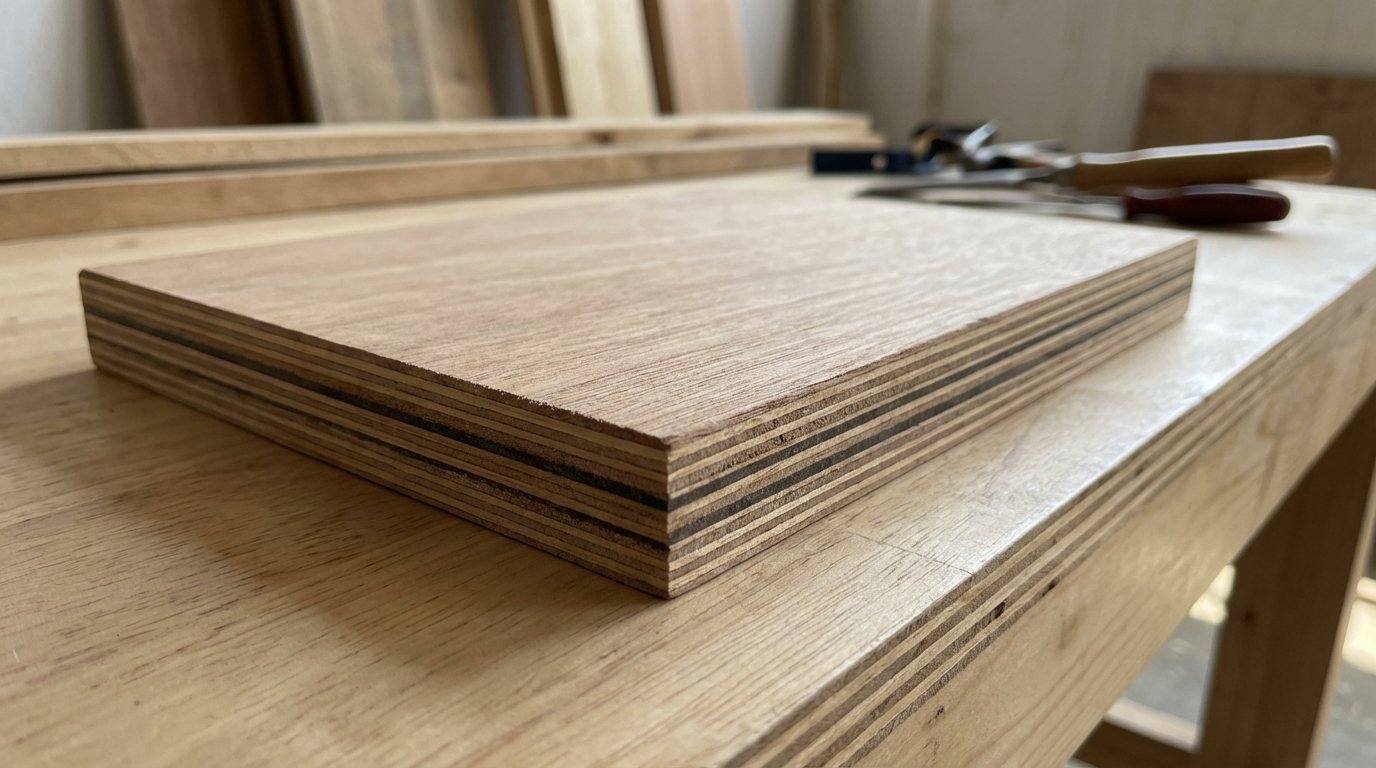
Plywood warps when its thin veneer layers expand or contract unevenly due to moisture shifts. Made from cross-grained veneers glued together, it resists bending under load but loses stability if moisture penetrates one side more than the other, creating internal stress.
Common triggers include humidity swings, water exposure, or heat drying one face faster. Poor core quality—like gaps or uneven veneers—amplifies this, as does weak glue that delaminates under stress.
Where people get confused:
- Thinking all plywood warps the same—thicker sheets (18mm+) warp less than thin ones.
- Blaming only humidity, ignoring installation gaps that trap moisture.
- Assuming sealing fixes manufacturing flaws—it doesn't.
- Overlooking storage: vertical stacking causes bowing.
- Confusing warping with sagging—heavy loads cause the latter.
Why does plywood warp more in Indian monsoons?
Plywood warps in monsoons because high relative humidity (80-100%) causes veneers to absorb moisture unevenly, especially if uncoated edges face rain splash or poor ventilation. Coastal areas like Mumbai or Chennai see amplified effects from salt-laden air corroding glue lines. Unlike dry interiors, monsoon plywood faces rapid wet-dry cycles during power cuts or open-site storage. Nuance: well-made boards with phenolic glue hold up better, but site handling often decides fate. Next step: inspect for edge swelling pre-purchase and insist on 48-hour indoor acclimation.
India-Specific Reality Check
In India, plywood battles relentless humidity from June-October monsoons, plus coastal salt spray in places like Kerala or Goa. Godowns often lack climate control, leading to pre-warped stock. Contractor workflows—rushing cuts without sealing or stacking wet sheets—worsen it. Urban apartments trap steam in kitchens, while rural sites expose boards to ground moisture. Result: 20-30% higher warp complaints vs drier climates.
Does plywood warp faster in coastal vs inland India?
Yes, coastal plywood warps faster due to constant 70-90% humidity and salt accelerating glue breakdown, unlike drier inland spots like Delhi (40-60% post-monsoon). Salt crystals form in pores during evaporation, stressing layers. Trade-off: marine-grade costs more but survives 2-3x longer. Check: rub a damp cloth on edges—if it darkens unevenly, skip it. Verify locally with carpenters who've handled both.
How to Prevent Warping: 5 Practical Steps
- Pick the right grade: MR for dry rooms, BWR for bathrooms, BWP for outdoors/kitchens. Skip if core feels spongy.
- Acclimate on-site: Stack flat indoors 48-72 hours, covered loosely to match room humidity.
- Seal everything: Apply oil-based putty or waterproof tape to all cut edges before assembly.
- Store properly: Flat on pallets, off ground, under tarps—not vertical or exposed.
- Install smart: Leave 2-3mm expansion gaps, use SS screws, avoid clamping too tight.
Skipping any doubles warp risk, especially with monsoon delays.
Decision Framework: Match Plywood to Your Conditions
| Condition | Recommended Grade + Key Verifies |
|---|---|
| High humidity/coastal | BWP (IS 710 style); check glue line count (7+ for 18mm), no core gaps |
| Indoor dry rooms | MR or BWR; sight along edge for straightness, tap for solid sound |
| Heavy use/kitchen | BWR+ calibrated; measure thickness uniformity (±0.5mm), face veneer consistency |
| Tight budget/fast project | BWR basic; confirm batch date <3 months, no stored-water marks |
| Scratch-prone kids' room | HDHMR alternative; test edge hardness with fingernail, seal-ready |
| Monsoon site storage | BWP sealed edges; insist on plastic wrapping, stack <10 sheets high |
Can you fix warped plywood after buying?
Minor warping fixes with weighted flattening and edge sealing, but severe cases need replacement to avoid cracks. Clamp flat under sandbags 24-48 hours in dry air, then seal. Nuance: heat speeds it but risks delamination in humid India. If core gaps show, discard—glue won't hold. Practical step: test post-fix by sighting edge; if bow exceeds 5mm over 2m, return it. Prevention beats fixes every time.
Trade-offs and Limitations
BWP resists warp best but costs 30-50% more than MR, with heavier weight complicating handling. Thicker plywood (18-25mm) warps less but increases load on frames. Sealing adds time (1-2 hours/sheet) and hides defects—always check first. No plywood is 100% warp-proof; even premium grades fail under prolonged flooding or zero ventilation.
Tips for Homeowners: Everyday Durability
- Wipe spills immediately; use coasters under hot pots.
- Ventilate kitchens—exhaust fans cut steam buildup.
- Avoid dragging furniture; use felts to prevent edge stress.
- Don't overload shelves beyond 20kg/m; reinforce spans.
- Annual check: reseal edges if gaps appear.
Tips for Carpenters: On-Site Handling
- Cut with fine blade; sand edges before sealing.
- Fasten 30cm apart in hinge zones for flex allowance.
- Pre-drill to avoid veneer splits that invite moisture.
- Stack cut pieces flat, covered, till assembly.
- Test fit doors pre-finish—adjust for humidity swell.
Tips for Architects: Spec Writing
- Detail 3mm gaps at frames; specify BWP for wet zones.
- Call out acclimation + edge sealing in drawings.
- Use calibrated plywood for modular fits.
- Specify SS hardware to match plywood expansion.
- Avoid flush doors in steam areas—opt for paneled.
Is warping covered under warranty?
Warranties often exclude site handling or moisture issues, focusing on manufacturing defects like core voids. India variations mean coverage differs—typically 1-5 years against delamination, not warp from humidity. Check policy for "boiling water resistance" clauses. Next: document storage/install photos; test glue by boiling scrap (BWP survives 3+ hours). Push for replacement if defects confirmed, but prevention via grades saves hassle.
Common Buyer Mistakes and How to Avoid Them
- Mistake: Buying cheapest MR for everywhere. Why: Fails in humidity. Fix: Match grade to room.
- Mistake: Storing vertical. Why: Gravity bows it. Fix: Flat on pallets.
- Mistake: No acclimation. Why: Humidity shock. Fix: 48 hours indoors.
- Mistake: Ignoring core gaps. Why: Traps water. Fix: Shine light through edges.
- Mistake: Skipping edge seals. Why: Fastest moisture path. Fix: Seal all cuts.
- Mistake: Tight frame fits. Why: No swell room. Fix: 2mm gaps.
- Mistake: Wet cutting. Why: Swells layers. Fix: Dry tools/site.
- Mistake: Overlooking batch age. Why: Old stock pre-warped. Fix: Ask production date.
Failure Modes and Fixes
- Symptom: Cupped edges. Cause: One-side moisture. Prevent: Seal both faces. If happening: Weight flat + dry air.
- Symptom: Bowed center. Cause: Storage sag. Prevent: Even stacking. If happening: Discard if >3mm bow.
- Symptom: Delamination bubbles. Cause: Weak glue. Prevent: Tap-test buy. If happening: Cut out + patch.
- Symptom: Twisting corners. Cause: Uneven heat. Prevent: Shade storage. If happening: Reinforce frame.
- Symptom: Edge swelling. Cause: Water wicking. Prevent: Putty seal. If happening: Sand + reseal.
- Symptom: Cracks on bends. Cause: Forced curves. Prevent: Steam-bend only calibrated. If happening: Replace section.
Quality Checks You Can Do Without Lab Tests
Before buying:
- Sight down 8ft edge—should be straight, no waves.
- Tap center—hollow sound means gaps.
- Press core with thumb—no sponginess.
- Check face/back match—consistent grain/color.
After cutting:
- Measure thickness at 4 corners—variation <0.5mm.
- Flex gently—no creaks or face cracks.
- Smell—musty = moisture history.
After install:
- Check gaps even; door swings free.
- Run wet finger on edges—no darkening.
- Monitor 1 month for bows in humid spots.
Why does new plywood warp after installation?
New plywood warps post-install from site humidity mismatch—acclimated poorly or gaps trap steam. Kitchens swell first from cooking vapor. Nuance: thin laminates hide it till too late. Step: ventilate + check weekly; if bowing, loosen screws for flex. Long-term: BWR+ with melamine faces resists best.
Does thickness prevent warping?
Thicker plywood (18-25mm) warps less due to more glue lines stabilizing layers, but doesn't eliminate moisture issues. 6-12mm bows easily under load. In India, balance with weight—thick suits shelves, thin for partitions. Verify: stack weights on sample; no sag >2mm. Trade-off: higher cost, harder cuts.
FAQs
How long does plywood take to warp?
Plywood can show warp signs in 1-2 weeks under constant 90% humidity without seals, but often takes months in milder conditions. Monsoon accelerates to days if stored wet. Factors like grade matter—MR fails faster than BWP. Homeowners see it post-rains on cabinets. Prevent by acclimating and sealing; monitor edges monthly in wet zones for early fixes like tightening or resealing.
Can paint stop plywood warping?
Paint helps by blocking surface moisture but fails on unsealed edges or cuts, where wicking starts. Oil-based paints outperform water-based in humidity. Limitation: doesn't fix poor core. Apply 2 coats post-seal, but test compatibility—some react with glue. In coastal homes, combine with BWP for best results; repaint edges yearly.
What's the best plywood for no warping?
No plywood is warp-free, but BWP (boiling water resistant) with 100% phenolic glue and tight cores comes closest for wet India conditions. Verify by edge straightness and solid tap. Alternatives like HDHMR warp less in humidity but scratch easier. Choose based on use—dry rooms tolerate MR. Always seal and acclimate for real-world performance.
Does heat cause plywood to bend?
Heat alone bends plywood minimally but combines with moisture for warp—dry heat shrinks one side. Direct sun on stored sheets or near stoves causes it. India summer godowns hit 50°C, stressing thin faces. Prevent with covers and shade; if bent, cool slowly under weight. Avoid steam-bending without pro clamps.
Why do doors warp more than shelves?
Doors warp more from edge exposure to air currents and bottom ground moisture, unlike enclosed shelves. Vertical hanging adds gravity pull. Flush doors worst without frames. Fix: tower bolts at top/bottom, edge grooves for seals. In monsoons, coastal doors fail first—spec BWP + SS hinges.
Can you straighten warped plywood?
Slight warps straighten by weighting flat in controlled humidity 3-7 days, with heat/moisture to relax layers. Severe needs steam + clamps. Success drops if delaminated. Test post-fix; repeat if needed. Better: prevent with grades and handling—warped stock rarely performs long-term.
Does veneer quality affect warping?
Yes, thick uniform face veneers (1.5mm+) resist cracking and moisture better than thin patchy ones, stabilizing the sheet. Mismatch face/back causes twist. Check visually for consistency; flex test for brittleness. India mills vary—premium faces cost more but pay off in humid use.
Disclaimer: This content is provided for general informational purposes based on industry practices and publicly available information. Product specifications, standards, prices, and availability may vary by manufacturer, region, and time. Readers should independently verify details with manufacturers, dealers, or qualified professionals before making purchase or construction decisions.Want Plywood Suggestions?
Share a few details and a Duro BOIL specialist will suggest suitable brands and connect you to responsive dealers.