Waterproof Plywood: What It Really Means + How to Test Before Buying
‘Waterproof plywood’ is often misunderstood. Learn what it really means, the grades to look for, and simple checks to avoid overpaying for wrong plywood.
Quick Decision Summary
Best answer in one line: "Waterproof plywood" usually means BWP or Marine grade with phenolic resin bonding—always verify by checking for IS 710 marking and performing a simple boil test before bulk purchase.
If you're in a hurry: Most plywood sold as "waterproof" in Indian markets is actually only moisture-resistant (MR grade), which handles humidity but fails under prolonged water exposure. True waterproof plywood carries IS 710 certification and uses phenol formaldehyde resin that survives repeated boiling without delamination. Before buying, ask for a small sample and boil it for two hours—if layers separate or edges swell significantly, it's not genuinely waterproof. For kitchen sink units, bathroom vanities, or coastal homes, insist on BWP or Marine grade with edge sealing. For dry interiors, BWR often suffices and costs less.
- Choose waterproof (BWP/Marine) if: continuous water contact expected, coastal or high-humidity location, under-sink cabinets, outdoor furniture under shade, or bathroom wet zones.
- Avoid overpaying for waterproof if: using in bedrooms, living rooms, or any consistently dry interior where MR or BWR grade performs adequately at lower cost.
What "Waterproof Plywood" Actually Means
The term "waterproof plywood" is one of the most misused phrases in Indian building material markets. Understanding the technical reality behind this label helps you avoid paying premium prices for inadequate performance—or conversely, overspending on grades you don't need.
Plywood's water resistance depends primarily on the adhesive (resin) used to bond veneer layers together. The veneer wood itself absorbs water regardless of grade; what differs is whether the glue line survives moisture exposure without failing. Three broad categories exist in the Indian market:
- MR (Moisture Resistant): Uses urea formaldehyde resin. Handles indoor humidity and occasional surface dampness but delaminates under prolonged water contact. Conforms to IS 303.
- BWR (Boiling Water Resistant): Uses phenol or melamine-fortified resin. Withstands steam, condensation, and occasional water splashes typical in kitchens. Also under IS 303 but with stricter adhesive requirements.
- BWP/Marine (Boiling Water Proof): Uses high-quality phenol formaldehyde resin with superior hardwood veneers. Survives continuous water exposure and repeated boiling cycles. Conforms to IS 710.
Where People Get Confused About Waterproof Plywood
Misunderstandings about waterproof plywood lead to either unnecessary expense or premature failure. Here are the most common confusions:
- "Waterproof" means the wood won't absorb water: False. All wood absorbs moisture. "Waterproof" refers only to the glue bond surviving water exposure—the plywood won't delaminate, but exposed surfaces and edges still absorb water unless sealed.
- BWR and BWP are the same thing: They're not. BWR resists boiling water for limited periods (typically 2-4 hours in test conditions), while BWP withstands extended cycles without bond failure.
- Marine plywood is for boats only: Marine grade is simply the highest waterproofing standard. It's ideal for any application with continuous moisture—bathrooms, under-sink units, outdoor furniture, coastal interiors.
- Any plywood with "710" written on it is waterproof: IS 710 certification requires specific testing and marking protocols. Stamps can be faked. Always verify through sample testing.
- Waterproof plywood doesn't need edge sealing: The face veneers and edges still absorb water. Edge banding or sealing with PU/epoxy is essential even for genuine BWP grade.
India-Specific Reality Check
Laboratory standards and real-world Indian conditions differ significantly. Understanding local factors helps you select the right grade and prevent failures that lab tests don't predict.
How Does Monsoon Humidity Affect Plywood Selection?
India's monsoon season creates prolonged humidity levels of 80-95% across most regions for 3-4 months annually. Even "dry" interiors experience significant moisture load during this period. MR grade plywood in poorly ventilated rooms can develop edge swelling and face veneer bubbling within 2-3 monsoon seasons. BWR grade handles this better but still requires proper ventilation and edge protection. For ground-floor apartments, basement storage, or homes without climate control, upgrading to BWR minimum is advisable even for bedroom furniture.
What About Coastal and High-Humidity Zones?
Coastal cities like Mumbai, Chennai, Kolkata, Kochi, and Visakhapatnam face salt-laden air and year-round humidity above 70%. Salt accelerates corrosion of metal hardware and creates a persistently moist environment. In these locations, even wardrobes and bedroom furniture benefit from BWR grade, while kitchen and bathroom applications demand BWP/Marine. Hardware should be stainless steel or marine-grade, not standard zinc-plated options that rust within months.
Storage and Handling Issues That Void "Waterproof" Claims
Plywood often sits in open warehouses or poorly covered truck beds during transport. Even genuine BWP plywood, if stored damp and then installed without acclimatization, can develop fungal growth or dimensional changes that cause warping. Before accepting delivery, check for water stains, musty smell, or visible edge discoloration. Insist on covered storage and 48-72 hours of acclimatization in the installation environment before cutting.
How to Test Waterproof Claims Before Buying
Laboratory certification provides baseline assurance, but market realities require buyer verification. Here are tests you can perform without specialized equipment.
The Boil Test (Most Reliable)
This is the definitive field test for waterproof claims:
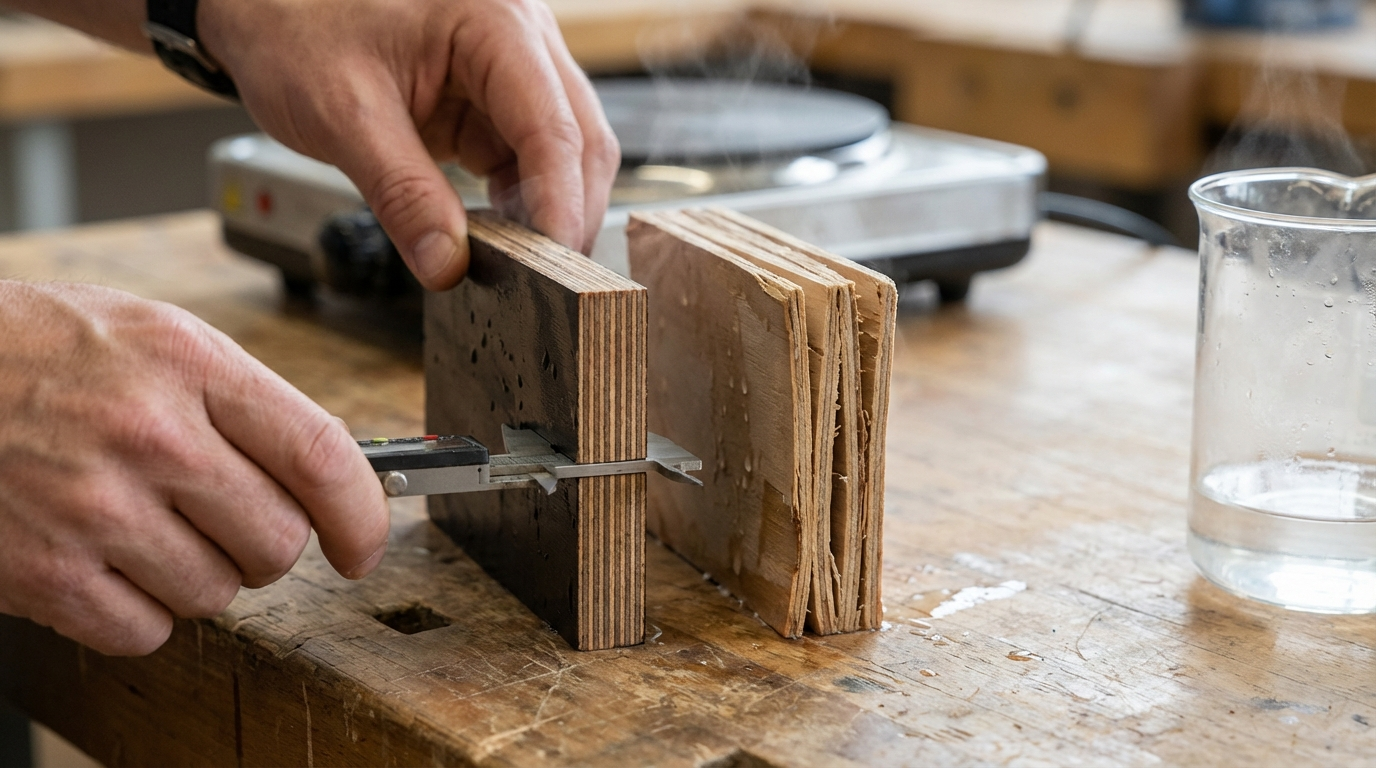
- Request a sample piece (at least 15cm × 15cm) before placing bulk orders.
- Submerge in boiling water for 2 hours minimum. Genuine BWP should survive 8+ hours.
- Remove and check for delamination—any separation between layers indicates failed waterproofing.
- Check edge swelling—measure thickness before and after. Swelling beyond 5-8% indicates inferior adhesive.
- Let it dry naturally and check if layers remain bonded and surface remains flat.
If the dealer refuses to provide samples for testing, consider that a significant red flag.
Visual and Physical Checks Before Purchase
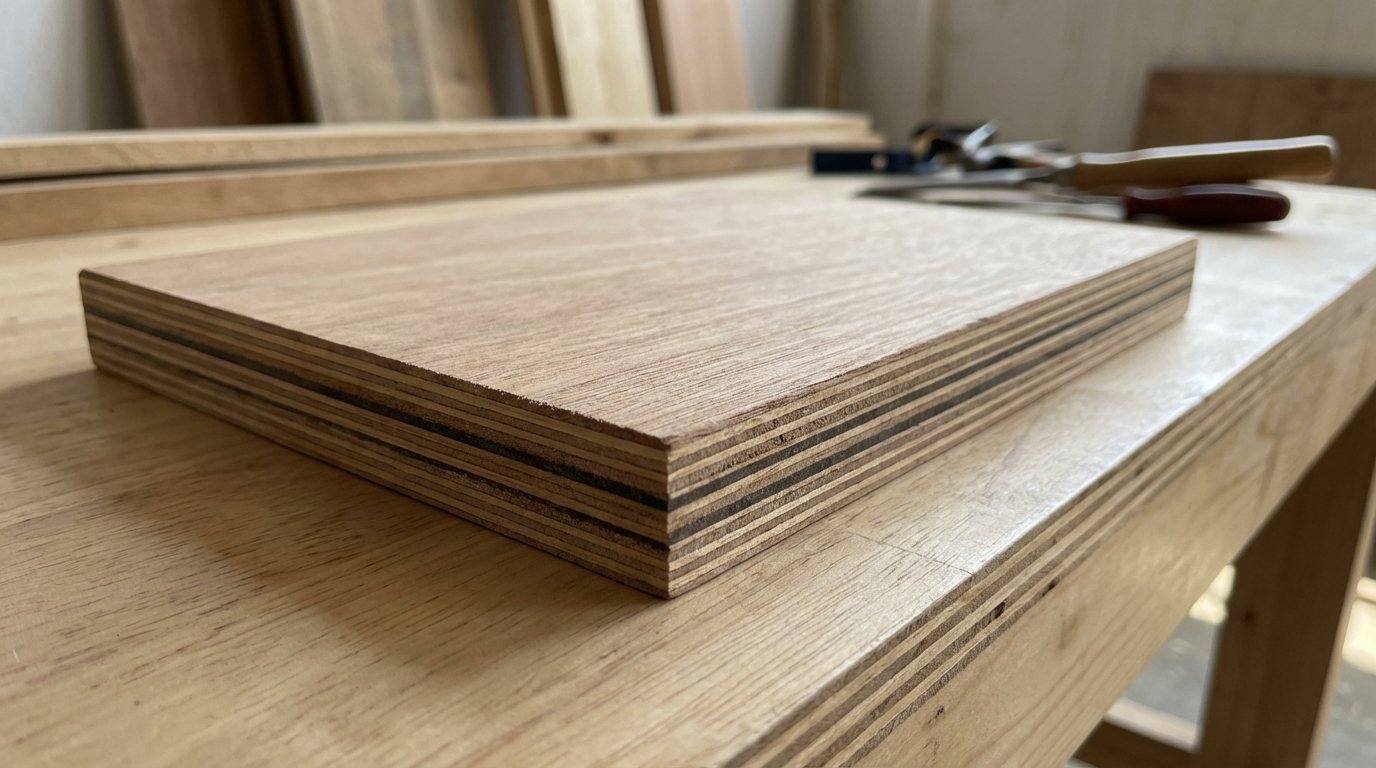
- Core inspection: Ask the dealer to show a cross-section or freshly cut edge. Look for uniform core layers without gaps, overlaps, or voids. Gaps allow water ingress regardless of adhesive quality.
- Tap test: Knock on the surface in multiple spots. Hollow sounds indicate internal voids or delamination.
- Smell test: Strong chemical odor might indicate recent manufacture (good for freshness) but also check for musty smell indicating previous water damage.
- Bend test: Gently flex smaller pieces. Excessive flexibility or cracking sounds indicate weak bonding or inferior core species.
- Weight comparison: Genuine marine plywood with hardwood core feels noticeably heavier than same-thickness commercial grade.
What Should IS 710 Marking Look Like?
Legitimate IS 710 marking includes the ISI mark (standard mark of the Bureau of Indian Standards), license number, manufacturer name, grade designation, and thickness. Markings should be clear, consistently printed, and present on multiple sheets in the batch. Inconsistent or hand-stamped markings warrant skepticism. You can verify license numbers through BIS records, though this requires some effort.
Trade-offs and Limitations
Even genuine waterproof plywood has limitations that buyers should understand before purchase:
- Cost premium: BWP/Marine typically costs 40-70% more than MR grade of same thickness. This premium is justified only where water exposure is genuine.
- Weight: Marine grade with hardwood core is significantly heavier, affecting handling, installation ease, and hardware requirements.
- Surface finish: Some marine plywood prioritizes bonding strength over surface smoothness. Additional sanding or veneer application may be needed for visible furniture faces.
- Not submersion-proof indefinitely: Even marine grade isn't designed for permanent underwater use. Boat hulls use additional coatings and maintenance.
- Edge vulnerability persists: Cut edges expose raw wood that absorbs water regardless of grade. Edge banding or sealing is mandatory for any wet-area application.
- Formaldehyde content: Phenolic resins in BWP plywood release lower formaldehyde than urea-based adhesives, but some emission exists. Ensure adequate ventilation during and after installation.
Common Buyer Mistakes and How to Avoid Them
Mistake 1: Trusting Verbal "Waterproof" Claims
Why it happens: Dealers often use "waterproof" loosely for any moisture-resistant product to justify higher prices. Buyers unfamiliar with grading systems accept these claims.
What to do instead: Always ask specifically for IS 710 certification and request written documentation. Perform boil tests on samples before bulk purchase.
Mistake 2: Using Waterproof Plywood Without Edge Sealing
Why it happens: Buyers assume the entire sheet is impervious to water after paying premium prices.
What to do instead: Budget for edge banding, PU sealer, or epoxy coating on all cut edges. This is non-negotiable for kitchen and bathroom applications.
Mistake 3: Buying Waterproof Grade for Dry Interiors
Why it happens: Fear-based selling by dealers suggesting "better safe than sorry" approach.
What to do instead: Assess actual moisture exposure realistically. Bedroom wardrobes in well-ventilated homes rarely need more than BWR grade.
Mistake 4: Ignoring Core Quality While Focusing on Grade
Why it happens: Grade certification focuses on adhesive performance, not core wood quality. Inferior core with good adhesive still produces weak plywood.
What to do instead: Inspect core for gaps, species consistency, and density. Hardwood cores (Gurjan, Eucalyptus) outperform softwood (Poplar) for structural applications.
Mistake 5: Not Acclimatizing Plywood Before Installation
Why it happens: Project timelines pressure immediate installation after delivery.
What to do instead: Store plywood flat in the installation environment for 48-72 hours minimum. This allows moisture content to equilibrate, reducing post-installation warping.
Mistake 6: Choosing Based on Price Alone
Why it happens: Significant price variation in markets creates temptation to choose cheapest "waterproof" option.
What to do instead: Lowest price often means compromised core quality, thinner veneers, or fraudulent grading. Buy from established dealers with verifiable supply chains.
Mistake 7: Neglecting Hardware Compatibility
Why it happens: Waterproof plywood gets paired with standard hardware that rusts in humid conditions.
What to do instead: Use stainless steel or marine-grade hardware for wet-area installations. Zinc-plated hinges and screws fail within 1-2 years in bathroom environments.
Mistake 8: Skipping Manufacturer Verification
Why it happens: Buyers assume all branded products are genuine without checking supply chain authenticity.
What to do instead: Verify dealer authorization through manufacturer channels. Request batch-specific documentation. Compare markings across multiple sheets for consistency.
Failure Modes and Fixes
Failure Mode 1: Edge Swelling and Delamination
Symptom: Edges become soft, swollen, and layers begin separating, especially near sinks or in bathroom cabinets.
Likely root cause: Unsealed cut edges allowing water ingress, or using MR grade in wet applications despite "waterproof" claims.
Prevention: Seal all edges with PU coating, edge banding, or epoxy before installation. Use verified BWP grade for wet zones.
If already happening: Remove affected sections if structural integrity is compromised. For minor swelling, dry thoroughly, sand smooth, apply waterproof wood filler, then seal with marine-grade coating.
Failure Mode 2: Face Veneer Bubbling
Symptom: Surface veneer lifts and bubbles, particularly in areas exposed to steam or direct water splashing.
Likely root cause: Inferior adhesive failing under heat and moisture, or genuine damage from standing water.
Prevention: Use BWP grade near cooking areas. Install proper ventilation (exhaust fans, chimney). Wipe standing water immediately.
If already happening: Small bubbles can be injected with wood glue, pressed flat with weights, and clamped until dry. Large areas require veneer replacement or laminate overlay.
Failure Mode 3: Warping and Bowing
Symptom: Flat panels develop curves or twists, causing cabinet doors to misalign and drawers to stick.
Likely root cause: Uneven moisture absorption (one face sealed, other exposed), or plywood installed without proper acclimatization.
Prevention: Apply finish to both faces equally. Ensure balanced construction (same veneer/laminate on both sides). Acclimatize before installation.
If already happening: Minor warps can sometimes be corrected by moistening the concave side, weighting flat, and drying slowly. Severe warps require panel replacement.
Failure Mode 4: Fungal Growth and Black Staining
Symptom: Dark spots, musty smell, and visible mold growth on plywood surfaces or edges.
Likely root cause: Persistent moisture without ventilation, plywood stored damp before installation, or water trapped behind cabinets.
Prevention: Ensure ventilation gaps behind cabinets. Use borer/termite-treated plywood. Check delivery for existing contamination.
If already happening: Clean with diluted bleach solution (1:10), dry thoroughly, apply anti-fungal treatment, then seal with moisture-blocking primer.
Failure Mode 5: Screw and Hardware Pull-out
Symptom: Screws loosen, hinges sag, and hardware no longer holds securely in the plywood.
Likely root cause: Softwood core with poor screw-holding, water damage weakening wood fibers around fasteners, or incorrect screw sizing.
Prevention: Use hardwood-core plywood for heavy-duty hardware zones. Pre-drill appropriately. Seal screw holes with wood glue before insertion.
If already happening: Fill damaged holes with epoxy wood filler or wooden dowels glued in place. Re-drill after curing. Consider metal threaded inserts for critical connections.
Failure Mode 6: Laminate/Veneer Peeling at Edges
Symptom: Decorative surface lifts and peels starting from edges and corners.
Likely root cause: Moisture ingress under laminate through unsealed edges, thermal cycling in kitchen environments, or poor initial adhesion.
Prevention: Apply edge banding before lamination. Use contact adhesive suitable for high-humidity environments. Ensure proper curing time.
If already happening: Lift peeling section carefully, clean both surfaces, apply fresh adhesive, press with roller, and clamp. Apply edge sealer after repair.
Quality Checks You Can Do Without Lab Tests
Before Buying: Dealer and Documentation Checks
- Ask for IS 710 certification documents specific to the batch you're purchasing.
- Request manufacturer contact for verification if dealing with unknown brands.
- Compare pricing with market rates—significantly cheaper "waterproof" plywood is likely mislabeled.
- Check multiple sheets from the batch for consistent marking, color, and core appearance.
- Ask about return policy if product fails your boil test within a reasonable period.
Physical Inspection Before Purchase
- Edge examination: Look for uniform glue lines, no gaps between plies, consistent veneer thickness throughout core.
- Surface inspection: Check for patches, fillers, or repairs that might indicate defects. Run your hand across surface feeling for unevenness.
- Corner integrity: Corners often reveal bonding quality first. Check for any lifting or separation.
- Stack inspection: Examine multiple sheets from different parts of the stack, not just the top display piece.
After Cutting: Workmanship Quality Indicators
- Clean cuts without excessive tear-out indicate good veneer and bonding.
- No internal voids or gaps visible on fresh cuts.
- Core wood color should be consistent—dark patches may indicate water damage or rot.
- Plywood should not develop visible cracks at cut edges within 24 hours of cutting (if kept dry).
After Installation: Ongoing Verification
- Check edges and joints after first monsoon season for any early swelling.
- Monitor areas near water sources for discoloration or softening.
- Test hinge screws periodically—loosening may indicate moisture damage.
- Maintain cleaning habits that don't leave standing water on surfaces.
Decision Framework: Choosing the Right Grade
| Condition/Application | Recommended Grade | What to Verify |
|---|---|---|
| Bedroom/living room furniture (dry zone) | MR or BWR | IS 303 marking, core quality, proper ventilation in room |
| Kitchen cabinets (upper units) | BWR minimum | Edge sealing, steam exposure assessment, exhaust placement |
| Kitchen sink unit (under-counter) | BWP/Marine | IS 710 certification, boil test sample, stainless hardware |
| Bathroom vanity/cabinets | BWP/Marine | IS 710 certification, edge sealing, ventilation gaps |
| Coastal location (any room) | BWR minimum (BWP for wet zones) | Marine-grade hardware, dehumidifier consideration |
| Ground floor/basement (high soil moisture) | BWR minimum | Ventilation, gap from floor, moisture barrier under cabinets |
| Outdoor furniture (under shade) | BWP/Marine | Full surface sealing, marine-grade hardware, drainage design |
| Tight budget with moderate humidity | BWR | Focus edge sealing budget here, verify adhesive quality |
Tips for Different Users
For Homeowners: Durability and Maintenance
- Do: Wipe water splashes immediately. Ensure exhaust fans work in kitchens and bathrooms. Check under-sink areas monthly for leaks. Re-seal edges if edge banding lifts.
- Don't: Let wet mops sit against cabinet bases. Ignore small water stains—they indicate ongoing problems. Store damp items directly on plywood shelves without mats.
- Request cut-piece samples from your contractor's batch and store them. If problems arise, you can test these to determine if material was defective or installation was faulty.
For Carpenters: Cutting and Installation Best Practices
- Use sharp blades—dull cutting causes tear-out and exposes more end grain to moisture.
- Seal cut edges within 24 hours of cutting, especially during monsoon season.
- Pre-drill for screws in dense marine-grade cores to prevent splitting.
- Install ventilation gaps (10-15mm) behind bathroom cabinets and under kitchen sink units.
- For hinge zones, consider hardwood blocks inlaid for better screw retention in heavy doors.
- Apply edge banding with adequate heat/pressure—cold application fails faster in humid conditions.
For Architects and Designers: Specification Clarity
- Specify grade (IS 303 or IS 710), thickness, and core species explicitly in BOQ documents.
- Include edge sealing requirements as line items to ensure contractor compliance.
- For wet zones, specify minimum 12mm thick BWP for structural panels, 6-8mm for backs.
- Note hardware specifications (stainless/marine-grade) alongside plywood specs.
- Consider specifying sample testing requirements before bulk delivery approval.
- Document ventilation requirements for bathroom and kitchen cabinetry.
For Modular Furniture Manufacturers: Quality Control
- Establish incoming material testing protocol—random boil tests per batch.
- Standardize edge sealing as part of production process, not optional finishing.
- Track supplier performance over time; document failures linked to specific batches.
- Train production staff on visual inspection criteria for incoming plywood.
- Include material grade in warranty documentation to clarify coverage scope.
- Maintain sample retention from each batch for dispute resolution.
FAQs
What is the difference between BWR and BWP plywood?
BWR (Boiling Water Resistant) and BWP (Boiling Water Proof) differ primarily in adhesive performance under sustained water exposure. BWR plywood typically survives 2-4 hours of boiling water testing before showing stress, while BWP plywood withstands 8+ hours of repeated boiling cycles without delamination. BWR uses phenol or melamine-fortified adhesives and suits kitchens and bathrooms where water exposure is intermittent. BWP uses high-grade phenol formaldehyde resin and is appropriate for applications with continuous moisture—under-sink cabinets, outdoor furniture, or construction in coastal areas. BWR follows IS 303 specifications while BWP conforms to the more stringent IS 710 standard. The price difference is typically 30-50%, so choose based on actual exposure conditions rather than generalized caution.
Is marine plywood and waterproof plywood the same thing?
Marine plywood is the highest grade of waterproof plywood, but not all waterproof plywood qualifies as marine grade. Marine plywood combines superior waterproof adhesive (phenol formaldehyde) with high-quality hardwood veneers that resist fungal decay and provide structural stability even when wet. It meets IS 710 standards which include requirements beyond just adhesive performance—veneer quality, core construction, and defect limits are stricter. "Waterproof plywood" is often used loosely in markets and may refer to BWP grade, or sometimes even BWR grade incorrectly. When you need genuine marine-grade performance—for boats, outdoor structures, or permanent wet-zone installations—specify IS 710 marine plywood explicitly and verify through sample testing.
Can MR grade plywood be used in kitchens?
MR grade plywood can be used in certain kitchen applications but carries higher failure risk compared to BWR or BWP grades. Upper cabinets away from direct water and steam exposure may perform adequately with MR grade, especially in well-ventilated kitchens with effective exhaust systems. However, cabinets near sinks, cooking zones, or dishwashers should use BWR minimum. MR grade in kitchens requires rigorous edge sealing and immediate attention to any water spills or condensation. The cost savings compared to BWR (typically 20-30%) may not justify the reduced lifespan and potential repair costs. For under-sink units, MR grade is not recommended under any circumstances—even a small leak can cause rapid delamination.
How can I tell if plywood is genuinely waterproof without lab testing?
The most reliable field test is the boil test: submerge a sample piece in boiling water for at least 2 hours (8+ hours for marine claims). After removal, genuine waterproof plywood shows no layer separation, minimal edge swelling (under 5-8% thickness increase), and remains structurally sound after drying. Visual inspection before purchase also helps—check for uniform glue lines at edges, consistent core without gaps, and clear IS 710 marking with manufacturer details and license numbers. Compare weight between sheets; marine grade with hardwood core feels noticeably heavier. Ask dealers for certification documents and cross-verify manufacturer claims through their official channels. If a dealer refuses sample provision or documentation, source from elsewhere.
Why does waterproof plywood still swell at edges?
Edge swelling occurs because "waterproof" refers to adhesive bond survival, not water absorption by the wood itself. When you cut plywood, you expose raw wood end grain that absorbs water rapidly regardless of adhesive quality. This absorbed moisture causes wood fibers to expand, creating visible swelling. The waterproof adhesive prevents layers from separating, but it doesn't prevent the wood from swelling. This is why edge sealing is mandatory for any wet-area application—PU coating, edge banding, or epoxy creates a moisture barrier on exposed cuts. Even face veneers absorb some moisture; the difference is that good waterproof plywood recovers dimensionally after drying and maintains bond integrity throughout the cycle.
What thickness of waterproof plywood should I use for kitchen cabinets?
Kitchen cabinet carcasses (sides, top, bottom, shelves) typically use 16-19mm BWR or BWP plywood for adequate structural strength and screw-holding capacity. Shutter doors also use 18-19mm for stability and to prevent warping. Back panels can use 6-8mm thickness since they don't bear load but should still be BWR grade minimum due to wall-side condensation risks. For under-sink cabinets specifically, use 18mm BWP/Marine grade throughout—this area experiences the highest moisture load and needs maximum protection. Shelves expected to hold heavy items (appliances, stacked dishes) benefit from 19mm thickness. Thinner plywood saves cost but compromises durability and increases warping risk under humidity cycling.
Does waterproof plywood require any special maintenance?
Waterproof plywood requires the same maintenance as other grades, with extra attention to moisture management in wet areas. Clean with damp cloth rather than wet mopping; standing water should be wiped immediately. Check edge sealing annually and re-seal if lifting or gaps appear. Ensure exhaust fans work properly in kitchens and bathrooms. Inspect under-sink areas monthly for plumbing leaks—even waterproof plywood has limits under continuous water exposure. Avoid placing hot vessels directly on surfaces without trivets, as heat can stress adhesive bonds. For outdoor applications, periodic re-coating with marine-grade sealant extends lifespan. The investment in waterproof grade is only protected through proper ongoing care.
Is waterproof plywood worth the extra cost for bathroom vanities?
For bathroom vanities, waterproof (BWP/Marine) grade plywood is strongly recommended and worth the cost premium. Bathrooms experience daily humidity spikes from showers, steam, and water splashing that exceed typical kitchen conditions. Vanity cabinets often sit directly on or near wet floors, and sink splashing creates constant moisture exposure. The 40-60% price premium for BWP over BWR typically translates to significantly longer lifespan—potentially 15-20 years versus 7-10 years for BWR in bathroom conditions. Given the inconvenience and expense of replacing bathroom cabinetry, investing in appropriate materials from the start proves economical. Combine with stainless steel hardware and thorough edge sealing for maximum durability.
Can I use regular waterproof plywood for exterior applications?
BWP/Marine plywood can be used for exterior applications, but with important caveats. "Exterior" plywood must handle direct rain, sun exposure, and temperature extremes that exceed what interior-rated marine plywood is designed for. For outdoor furniture under shade or semi-covered areas, marine grade performs well with proper sealing and maintenance. For fully exposed applications (garden benches, exterior cladding), additional protection through marine-grade paint, varnish, or protective coatings is essential. Ensure all edges and surfaces are completely sealed. Even then, expect shorter lifespan than interior use—periodic refinishing every 2-3 years extends durability. For permanent outdoor structures, consider marine plywood combined with additional weatherproofing systems rather than relying on plywood alone.
What certifications should I look for when buying waterproof plywood?
For genuine waterproof plywood in India, look for IS 710 certification from the Bureau of Indian Standards (BIS). The sheet should carry the ISI mark along with the manufacturer's name, license number, grade designation, and thickness. This marking should be printed consistently across sheets in the batch—hand-stamped or inconsistent marking suggests possible counterfeiting. Additionally, ask for test certificates or quality assurance documents specific to the batch. Reputable manufacturers can provide documentation showing boil test results, formaldehyde emission levels, and dimensional specifications. For premium brands, dealer authorization letters help verify supply chain authenticity. Never rely solely on verbal assurances or generic marketing terms like "waterproof" without documented certification backing.
Disclaimer: This content is provided for general informational purposes based on industry practices and publicly available information. Product specifications, standards, prices, and availability may vary by manufacturer, region, and time. Readers should independently verify details with manufacturers, dealers, or qualified professionals before making purchase or construction decisions.Want Plywood Suggestions?
Share a few details and a Duro BOIL specialist will suggest suitable brands and connect you to responsive dealers.