What is BWP plywood? Boiling Water Proof explained
What is BWP plywood? Boiling Water Proof explained: a practical India-focused guide with checklists, FAQs and quick tables to help you choose the right board
Quick Decision Summary
BWP plywood is boiling water proof grade, the toughest for moisture-heavy spots like kitchens or coastal walls.
If you're in a hurry: Pick BWP for any area facing direct water splashes, monsoons, or high humidity—it's glued with phenolic resins that hold up to boiling tests without peeling. Skip it for dry bedrooms to save costs; go MR or BWR instead. Expect 20-50% higher price than basic grades, but it cuts repair headaches in India's wet climates. Always eyeball side layers for evenness and ask for glue type upfront. (92 words)
- Choose this if: kitchens, bathrooms, coastal homes, exteriors, or heavy steam exposure.
- Avoid this if: fully dry interiors like living rooms, tight budgets, or lightweight partitions.
What This Term Actually Means
BWP stands for Boiling Water Proof plywood, the premium grade made by pressing hardwood veneers with fully waterproof phenolic glue lines. It passes intense tests where sheets boil for hours without delaminating, making it ideal for structural uses in damp conditions. Unlike lower grades, every glue line resists water penetration completely, using undiluted resins for maximum bond strength.
Where Do People Commonly Get Confused About BWP?
- Thinking it's "submersible forever"—it handles splashes and humidity but needs sealing for constant immersion.
- Mixing it with BWR (resistant but not proof)—BWP survives longer boils.
- Assuming all "marine plywood" matches—true BWP follows strict glue and veneer rules.
- Believing thicker always equals better—focus on core gaps and calibration over mm alone.
- Overlooking that "waterproof" labels often hide MR inside—always check side profile.
- Confusing it with laminates—BWP is the base board, not the finish.
India-Specific Reality Check
In monsoon-hit cities like Mumbai or Chennai, untreated lower grades swell fast during June-September rains, leading to wavy cabinets. Coastal salt air accelerates glue breakdown unless phenolic bonds hold firm. On-site storage under tarps is common, but BWP shrugs off brief wetting better. Contractor workflows favor it for kitchens where steam from tadka hits nonstop, reducing callbacks. Hot-dry summers test veneer cracks, but calibrated BWP stays flat.
Can BWP plywood handle India's monsoon humidity?
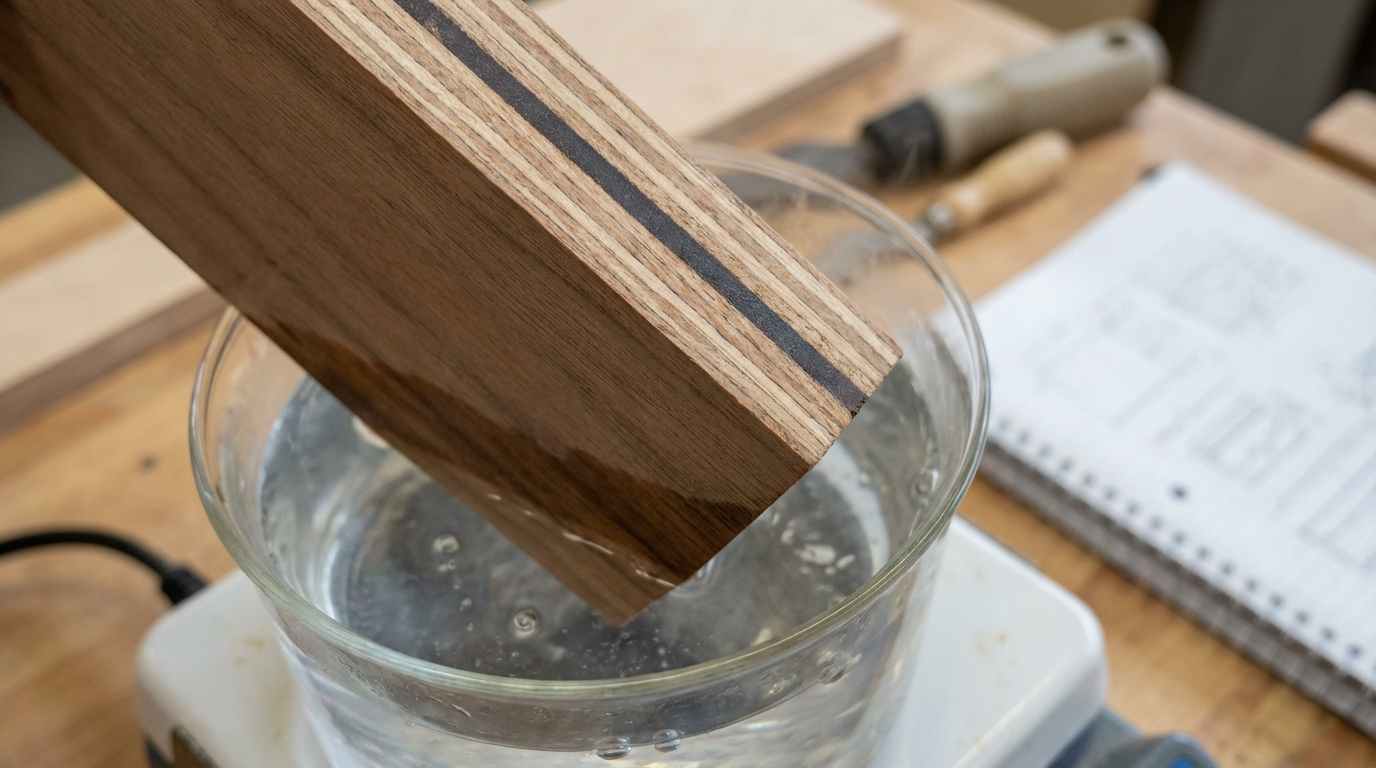
Yes, BWP excels in monsoons because its glue lines block moisture ingress even after prolonged exposure. In high-humidity zones above 80%, it prevents the bulging seen in MR grades left near windows. Nuance: unsealed edges absorb if wiped carelessly, so edge-band immediately post-cut. Next step: store sheets horizontally off-ground; test a scrap by soaking edge for 30 mins—no swelling means good batch. For Kerala-style homes, pair with termite oiling. (112 words)
Price Range and Cost Drivers (India)
BWP plywood typically ranges from ₹120-₹350 per square foot, depending on city and specs—a 19mm sheet might hit ₹4,000-₹11,000 total (8x4 ft). Thinner 6-12mm suits partitions at lower end; structural 18-25mm pushes higher.
Key drivers: thickness (doubles cost from 12 to 19mm), core (hardwood vs poplar adds 20-30%), face veneer quality, calibration (sanded evenness), finish (plain vs pre-lam). Metro surcharges (Delhi +15%, Bangalore varies), logistics from mill, and batch uniformity. Wastage from poor cutting hikes effective cost 10%.
How to ask for a quote: "19mm BWP IS-grade, hardwood core, calibrated, no gaps, per sq ft landed."
What affects BWP plywood price the most?
Thickness and core material top the list—18mm hardwood cores cost 40-60% more than poplar due to density. Regional timber availability swings Bangalore lower than Kolkata. Glue purity and veneer count add premiums for zero-gap builds. Trade-off: skimping on calibration leads to uneven laminates later. Verify by asking sheet weight (heavier signals dense core) and negotiating bulk for 10% off. Sample budget: 50 sqm kitchen frame at ₹200/sqft totals ₹10,000-₹15,000 material, excluding labor. Confirm locally as fuel hikes shift rates quarterly. (118 words)
Two-Minute Comparison That Actually Helps
| Condition | MR Grade | BWR Grade | BWP Grade |
|---|---|---|---|
| Dry interiors (bedroom) | Best value, light | Overkill | Expensive waste |
| Humid kitchens | Swells fast | Okay short-term | Top choice |
| Coastal bathrooms | Avoid | Edge-seal heavily | Handles steam/salt |
| Glue test | Urea, peels easy | Phenol mix, resists boil 2-4hrs | Pure phenol, 72hrs boil |
| Typical cost/sqft | ₹60-₹150 | ₹90-₹220 | ₹120-₹350 |
Choose by exposure: dry=MR, semi-wet=BWR, full-wet=BWP. Verify glue via supplier questions.
How to Choose in 5 Steps
- Map moisture risk: Score your site (0=dry, 10=coastal shower)—above 6 needs BWP.
- Ask glue specs: Insist on "BWP phenolic, no urea mix"—red flag if vague.
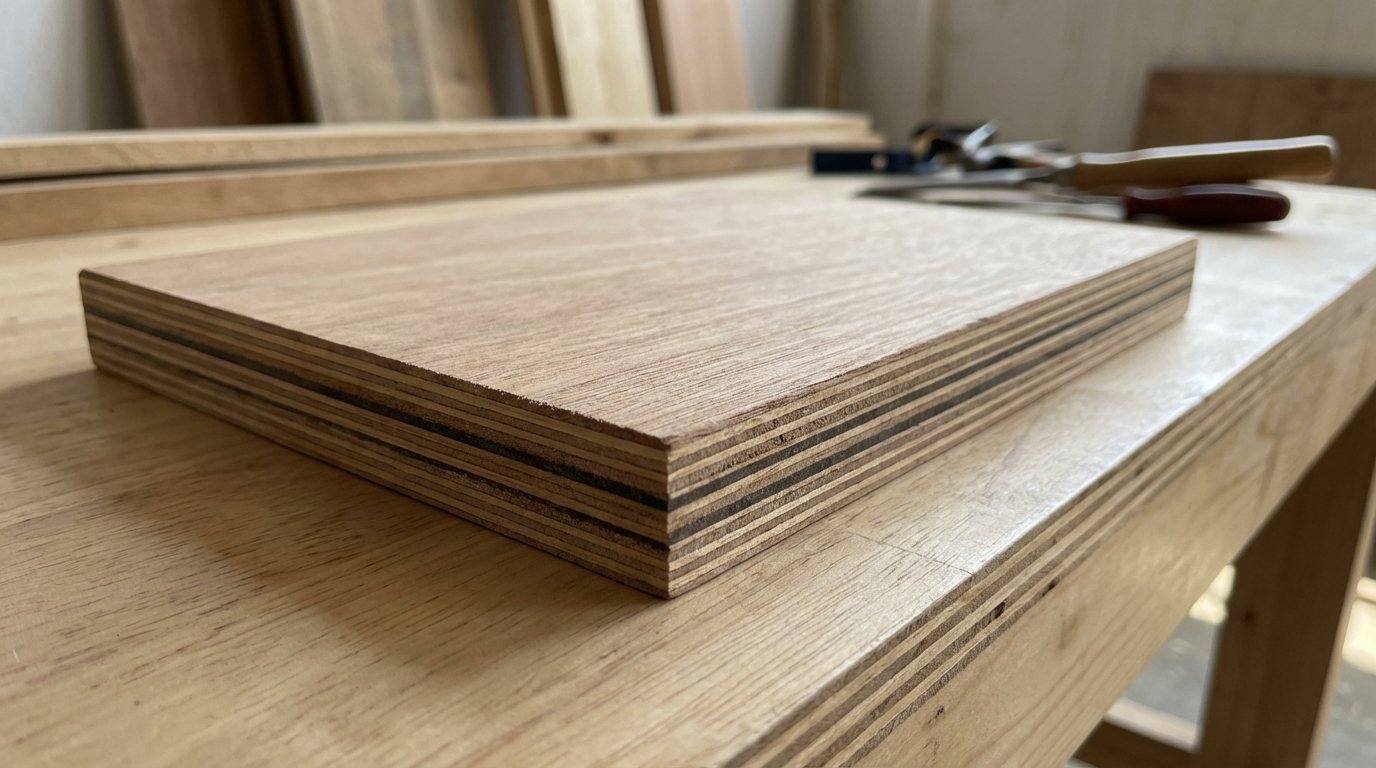
- Inspect sheet side: Even veneers, no voids/gaps wider than 1mm.
- Test scraps: Screw hold, edge soak, weight heft.
- Confirm calibration: Ruler check flatness; sanded faces for laminate grip.
Skip any: callbacks double from delam in first monsoon.
Decision Framework: Match Your Project Needs
| Project Condition | Recommended Grade | Key Verifications |
|---|---|---|
| Wet zone (kitchen sink) | BWP | Side even layers, no edge swell after soak |
| Coastal high humidity | BWP | Heavy weight, phenolic smell |
| Heavy use furniture | BWP or BWR | Screw test firm, no crumble |
| Tight budget dry area | MR | Smooth face, ISI stamp |
| High scratch risk | BWP calibrated | Sanded uniform, veneer grade A |
| Fast delivery needed | Local BWR/BWP | Stock check, no special order |
Trade-offs and Limitations
BWP costs 30-100% more than MR, weighs heavier (tougher handling), and over-spec for bone-dry spots. Glue's chemical scent lingers briefly during install. Not invincible—unsealed cuts absorb if soaked weeks. Best with pro edge-sealing; DIY risks gaps. In ultra-hot areas, veneers may check minimally without finish coat.
Is BWP plywood worth the extra cost?
Often yes for wet zones, as it avoids ₹20,000+ redo in 2 years from swelling. Dry areas? No, save for BWR. Conditions: if humidity >70% or splashes daily, ROI hits fast via zero callbacks. Weigh project life—10+ years justifies premium. Check: compare supplier scraps soaked overnight; pick non-delaminating. Architects note: spec it precisely to dodge contractor swaps. (102 words)
Quality Checks You Can Do Without Lab Tests
Before buying: Side view—even thin veneers stacked tight, no pin knots or voids. Tap for solid thud (hollow=air pockets). Heft corner—heavier than MR signals dense core. Smell: sharp phenolic, not musty wood.
After cutting: Edges perpendicular, no fuzz from poor calibration. Screw 5cm deep—holds pull without crumble.
Post-install: Wipe edges sealed? Doors align flat? No bow after humidity spike.
Red flags: chipped faces, wavy layers, lightweight feel.
How can you spot fake BWP plywood on-site?
Look for uneven side layers or visible core gaps—genuine stacks uniform. Float-test scrap: submerge edge 30 mins; no bubbling/delam. Screw shank crumbles powder? Low-grade alert. Nuance: fakes mimic stamps but fail heft (under 40kg for 19mm sheet). Next: ask "boil test hours?" and check calibration with straightedge. In crowded yards, compare 2-3 sheets side-by-side. (98 words)
Common Buyer Mistakes and How to Avoid Them
- Mistake: Buying by thickness alone. Why: Thin BWP beats thick MR. Fix: Prioritize grade first.
- Mistake: Skipping side inspection. Why: Hides voids causing screw wobble. Fix: View 5 sheets vertically.
- Mistake: Ignoring storage. Why: Ground moisture pre-swells. Fix: Stack elevated, covered.
- Mistake: No edge sealing. Why: Monsoon sips in. Fix: Laminate/PVC tape day-of-cut.
- Mistake: Trusting verbal "waterproof." Why: Sellers push MR. Fix: Demand phenolic proof.
- Mistake: Overlooking calibration. Why: Uneven laminate peels. Fix: Ruler test flatness.
- Mistake: Bulk without samples. Why: Batch variance. Fix: Test one sheet first.
- Mistake: Dry-area BWP spec. Why: Budget burn. Fix: Risk-assess zones.
- Mistake: No termite query. Why: Coastal pests. Fix: Ask preservative type.
Failure Modes and Fixes
- Symptom: Edge swelling. Cause: Unsealed cut. Prevent: Seal within hours. If happening: Sand, re-seal.
- Symptom: Delamination bubbles. Cause: Urea glue fake. Prevent: Side/heft checks. If: Warranty claim fast.
- Symptom: Screw pull-out. Cause: Voidy core. Prevent: Tap test. If: Plug with wood filler.
- Symptom: Face cracks. Cause: Poor veneer. Prevent: Smooth inspect. If: Veneer overlay.
- Symptom: Warping bow. Cause: Uneven moisture. Prevent: AC-dry install. If: Clamp flatten.
- Symptom: Termite nibbles. Cause: No treatment. Prevent: Query chemicals. If: Pro fumigate.
- Symptom: Hinge sag. Cause: Soft core. Prevent: Dense grade. If: Reinforce battens.
What causes BWP plywood to delaminate?
Mainly fake glue or prolonged submersion without sealing. Genuine phenolic holds 72-hour boils, but monsoon floods on unsealed edges penetrate. Conditions: poor storage or carpenter water-mist during cuts. Step: inspect pre-buy, seal cuts with epoxy/PVC. If delam starts, dry fully and assess—small spots patchable, full sheet replace. Carpenters: mist-cut only MR. (94 words)
Tips for Homeowners: Durability Do's and Don'ts
- Do: Wipe spills instantly, edge-seal cabinets.
- Don't: Drag cleaners across unsealed faces.
- Do: Ventilate kitchens post-cooking.
- Don't: Store wet mops against walls.
Tips for Carpenters: Working with BWP
- Cut with fine blade to avoid veneer tear.
- Pre-drill hinges—dense core resists.
- Edge-prep with sander for laminate bond.
- Handle sheets duo to prevent flex damage.
- Detail wet-zone edges: 2mm PVC minimum.
- Specify "calibrated hardwood core" in drawings.
- Call out monsoon contingencies: extra sealing.
- Layer with HDHMR for modular repeatability.
Tips for Architects: Spec'ing BWP Right
Is BWP plywood the same as marine plywood?
Usually yes—marine grade means BWP per Indian standards, built for boat-like moisture. Slight nuance: some call IS:710 "true marine" for extra veneer rigor. Use interchangeably but verify glue. Next: for boats, confirm density; homes focus boil-proof. Coastal architects spec it for verandas. Avoid if seller swaps terms vaguely. (96 words)
Can I use BWP for bathroom vanities?
Absolutely—its glue laughs at shower steam. Better than BWR which edges soften over years. Condition: seal all cuts, elevate from floor floods. Verify: scrap test in humid corner. Homeowners love zero-mildew upkeep. Pairs with quartz tops seamlessly. (92 words)
FAQs
What glue is used in BWP plywood?
BWP relies on pure phenol-formaldehyde resins, creating glue lines that resist boiling without breakdown. This synthetic bond outperforms urea types in wet cycles. Varies by batch—top makers minimize fillers for strength. Check by asking supplier; genuine has chemical tang. Carpenters note: sands clean without gum-up. In India, confirms monsoon reliability when edge-sealed properly. Always pair with matching screws to leverage density. (104 words)
Is BWP plywood termite resistant?
Typically yes, with preservatives added to glue/core during manufacture. Handles coastal pests better than untreated. Nuance: not eternal—reapply oil yearly in termite belts. Verify: inquire treatment type (borate common). If infestation signs, fumigate early. Homeowners: elevate furniture legs. Reduces callbacks 50% vs plain wood. (98 words)
How thick should BWP plywood be for cabinets?
18mm for frames/doors, 12mm shelves—balances strength vs weight. Thinner risks sag under dishes. Factors: span length, load (pots add stress). Confirm: supplier load charts or tap-test heft. Contractors favor even thicknesses to minimize waste. In humid kitchens, thicker prevents droop post-monsoon. (92 words)
Does BWP need special finishing?
Yes, laminate or veneer enhances scratch/moisture barrier. Bare BWP yellows in UV. Seal edges mandatory regardless. Steps: sand lightly, apply contact adhesive evenly. Avoids peel in steamy zones. Architects: spec pre-finished for modular. (91 words)
What's better: BWP or HDHMR for moisture?
BWP for structural wet (doors), HDHMR for panels—HDHMR edges don't swell but softer screws. Choose BWP where load-bear. Verify density. Hybrids common in India. (92 words)
Can BWP be used outdoors?
With caveats—excellent for covered verandas but paint/seal exposed faces against rain. Glue holds, veneers weather. Not for open roofs. Coastal ok if UV-coated. Test scrap outdoors first. (91 words)
How long does BWP plywood last?
15-25 years in wet use with care, outlasting BWR by double. Depends sealing, ventilation. Monsoon-proof if installed right. Track via no-swells post-year1. (92 words)
Disclaimer: This content is provided for general informational purposes based on industry practices and publicly available information. Product specifications, standards, prices, and availability may vary by manufacturer, region, and time. Readers should independently verify details with manufacturers, dealers, or qualified professionals before making purchase or construction decisions.Want Plywood Suggestions?
Share a few details and a Duro BOIL specialist will suggest suitable brands and connect you to responsive dealers.