What is MR plywood? Moisture Resistant explained
What is MR plywood? Moisture Resistant explained: a practical India-focused guide with checklists, FAQs and quick tables to help you choose the right board
Quick Decision Summary
MR plywood is interior-grade wood panel with moisture-resistant glue, ideal for humid Indian homes but not wet zones like kitchens or bathrooms.
If you’re in a hurry: Go for MR plywood for wardrobes, partitions, or false ceilings in low-moisture rooms where monsoon humidity is the main concern. It handles everyday dampness better than plain commercial plywood but skips direct water contact. Verify by checking glue line color (light brown/tan) and asking for MR-grade certification markings. Expect uniform core layers without gaps. Avoid in coastal areas or heavy-use spots—opt for BWR or BWP there. Always seal edges post-cutting to boost longevity.
- Choose this if: Dry-to-humid interiors, budget-friendly needs, light furniture like shelves or cabinets.
- Avoid this if: Bathrooms, kitchens, exteriors, or coastal high-humidity zones needing stronger water resistance.
What This Term Actually Means
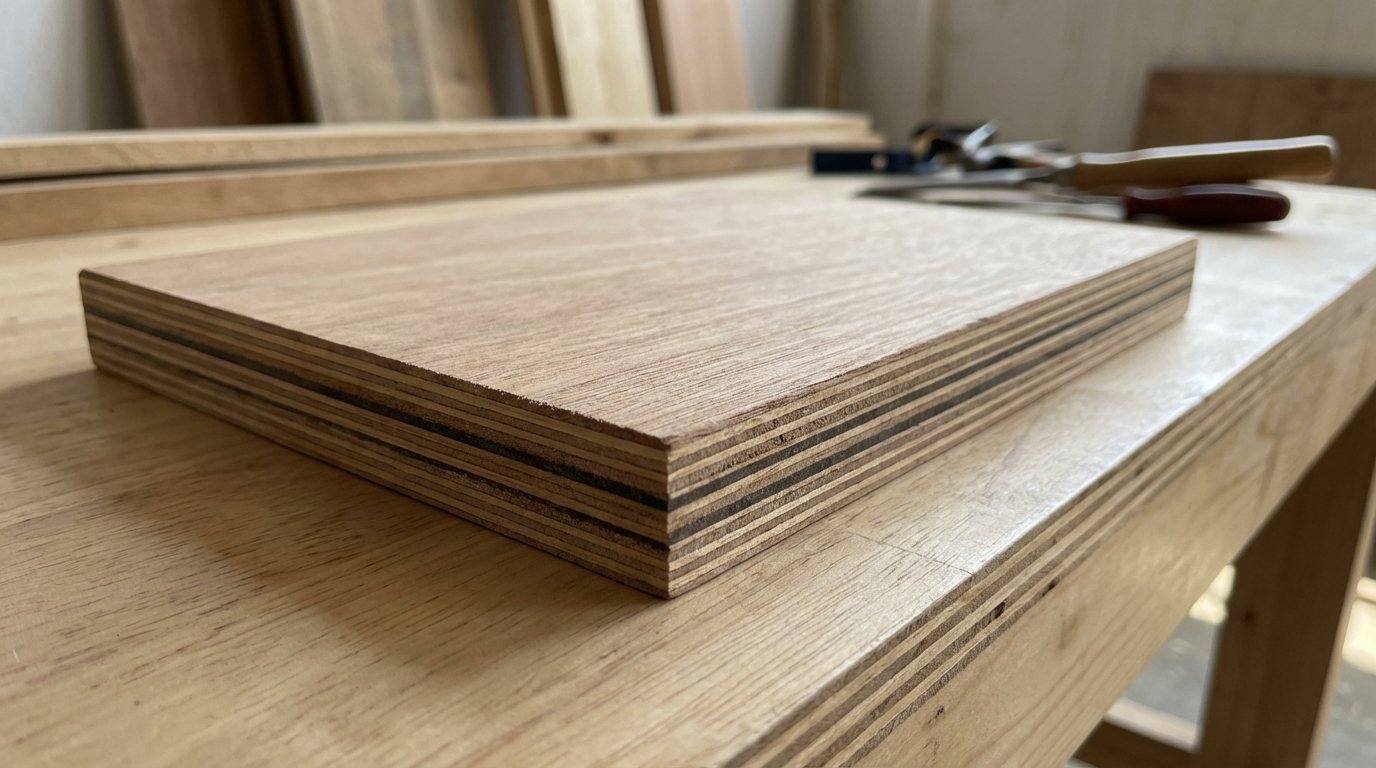
MR stands for Moisture Resistant plywood, a type of engineered wood where the glue (adhesive) between veneer layers resists breakdown from humidity and occasional splashes. It's made by bonding thin wood veneers under heat and pressure using urea-formaldehyde glue formulated for better moisture tolerance than basic commercial grades.
Where people get confused: Many mix it up with "waterproof" plywood—it's not. MR handles relative humidity up to 70-80% fine but delaminates under prolonged wetness. Others think it's only for wardrobes; it works for partitions too. Common mix-ups include assuming all brown-glue plywood is MR (check specs), or that thickness alone determines resistance (glue quality matters more). It's not structural like blockboard but flexible for paneling.
What Does MR Stand for in Plywood?
MR means Moisture Resistant, referring to the glue's ability to withstand damp conditions without immediate failure. In India, it's the entry-level upgrade from plain plywood for homes facing seasonal humidity. Nuance: Resistance varies by manufacturer quality—cheaper batches may only last one monsoon. Next step: Tap the edge to hear a solid thud (no hollow sound) and confirm even glue squeeze-out during checks.
Is MR Plywood the Same as Waterproof?
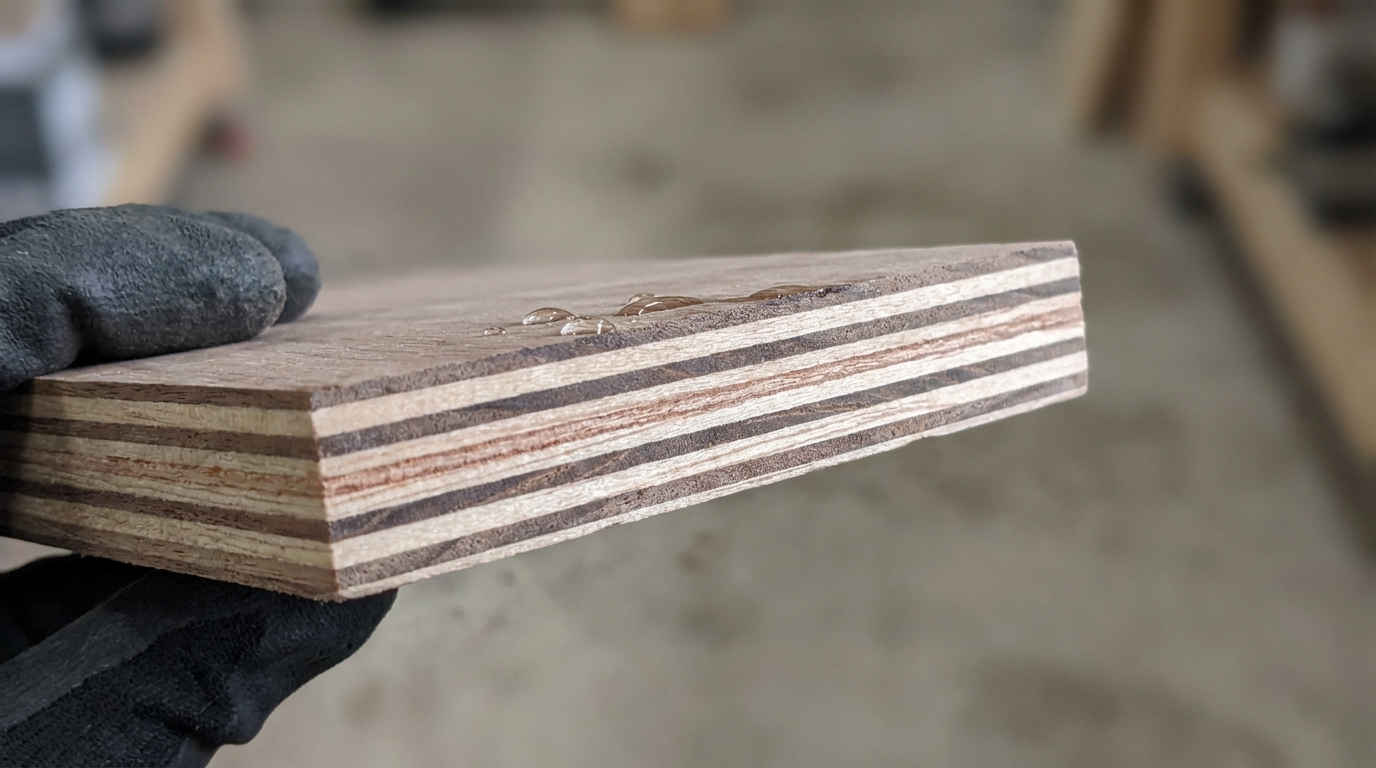
No, MR plywood resists moisture but isn't waterproof—direct water exposure causes swelling or glue failure over time. Waterproof grades like BWP endure boiling water tests. In humid Indian climates, MR suits living rooms but not baths. Trade-off: Cheaper upfront but needs edge sealing. Verify by submerging a scrap edge in water for 30 minutes—if it warps minimally, it's decent quality.
India-Specific Reality Check
In monsoon-heavy regions like Mumbai or Kerala, MR plywood shines for interiors where AC dehumidifies but open windows bring 90%+ humidity spikes. Coastal salt air accelerates core decay if unsealed, so always prime edges. Poor godown storage (stacked wet) leads to pre-delivery warping—insist on dry, covered yards. Contractor workflows favor MR for speed: cuts clean, sands easy, but termite-prone poplar cores need treatment verification.
Can MR Plywood Handle Monsoon Humidity?
Yes, typically for 2-3 months of high humidity if edges are sealed and ventilation is good, but prolonged exposure without AC risks bubbling. In North India winters, it's overkill; South India coasts demand caution. Check: Press nails into core—resistant feel means good density. Seal with putty or laminate immediately post-install.
How to Choose in 5 Steps
- Assess exposure: List rooms—dry (bedroom)? Humid (hall)? Skip if wet.
- Pick thickness: 6-12mm for shelves, 18mm+ for partitions; thicker resists sag better.
- Inspect face/back: Smooth veneer, no knots/cracks; match grain to design.
- Probe core/glue: No gaps, light glue color; tap for solidity.
- Test sample: Ask for offcut—check weight (not too light), edge straightness.
Skipping step 3 leads to veneer peeling in humid patches.
Two-Minute Comparison That Actually Helps
| Grade | Best For | Humidity Tolerance | Cost Driver |
|---|---|---|---|
| MR | Interiors, wardrobes | Moderate (monsoon ok if sealed) | Budget, thickness |
| BWR | Semi-wet like kitchens | High (short water contact) | Glue quality, face veneer |
| BWP | Marine, exteriors | Extreme (boiling resistant) | Core density, calibration |
Choose MR for dry zones under ₹60/sqft; upgrade for wet risks.
Price Range and Cost Drivers (India)
MR plywood typically ranges ₹35-₹75 per sq ft for 18mm sheets, varying by city (lower in plywood hubs like Yamunanagar, higher in metros), thickness (6mm cheaper), core wood (poplar softwood vs hardwood), and face finish (plain vs textured). Logistics add 10-20% for distant delivery. Quote checklist: Specify "MR grade, 18mm calibrated, poplar core, both-side usable, full sheet". Budget example: 100 sq ft wardrobe—₹5,000-₹8,000 material, confirm locally.
How Much Does MR Plywood Cost Per Sheet?
A standard 8x4 ft 18mm MR sheet often falls in ₹1,200-₹2,500, driven by core quality and region—cheaper inland, pricier coastal. Full sheets save vs cut sizes. Ask: "IS-marked MR, calibrated thickness?" to filter quotes.
Decision Framework: When to Pick MR Plywood
| Condition | Recommended Choice | Key Verification |
|---|---|---|
| Dry interiors (bedrooms) | MR (best value) | Smooth face, solid tap sound |
| Humid halls (monsoon) | MR if sealed | Light glue line, no core gaps |
| Coastal/high humidity | Avoid; pick BWR | Edge straightness test |
| Tight budget | MR 12-18mm | Weight check (not flimsy) |
| Heavy use/scratch risk | MR with laminate | Veneer hardness (nail scratch) |
| Fast delivery needed | Local MR stock | Godown dryness inspect |
Trade-offs and Limitations
MR offers affordability and easy workability but trades off water resistance—swells 10-15% in submersion vs BWP's 2-5%. Lighter cores dent easily under impacts. Not load-bearing alone; pair with frames. In hot-humid India, UV-unprotected faces yellow faster. Limitation: Glue off-gasses mildly initially—ventilate new installs.
Quality Checks You Can Do Without Lab Tests
Before buying: Weigh sheet (heavier = denser core), check calibration (true 18mm? ), probe knife into edge (glue bonds tight). Red flag: Overly light, wavy edges.
After cutting: Even kerf, no delam on saw line; sand test smooth.
Post-install: Edges sealed? No humidity bubbles in 1 week.
How Can You Test MR Plywood Quality at Site?
Drop test: Stack scraps—stable pile? Moisture hack: Damp cloth overnight on edge; minimal swell = good. Conditions: Fresh batch only. Next: Spec "calibrated MR" in order.
Tips for Homeowners
Durability do: Seal all edges, avoid mopping directly, use silica packs in wardrobes. Don't: Drag heavy items, expose to steam. Clean with dry cloth.
For Carpenters
Cut with fine blade to minimize tear-out; pre-drill screws near edges; reinforce humid zones with extra glue. Handle flat to prevent warp.
For Architects
Spec "MR grade, poplar core, 0.5mm veneer"; detail edge returns; pair with HDHMR for modulars. Wet-zone buffer: 300mm BWR transition.
Common Buyer Mistakes and How to Avoid Them
- Mistake 1: Assuming all brown plywood is MR. Why: Color varies. Do: Ask grade proof.
- Mistake 2: Skipping edge sealing. Why: Humidity entry. Do: Prime immediately.
- Mistake 3: Buying thin for load. Why: Sag. Do: 18mm min.
- Mistake 4: Wet-area use. Why: Delam fast. Do: Demo exposure.
- Mistake 5: Ignoring storage. Why: Pre-warp. Do: Inspect yard.
- Mistake 6: Cheap no-name. Why: Weak glue. Do: Known mills.
- Mistake 7: No calibration check. Why: Uneven finish. Do: Micrometer test.
- Mistake 8: Overlooking backs. Why: Hidden fail. Do: Both-side ok.
Failure Modes and Fixes
- Symptom: Edge swelling. Cause: Unsealed cut. Prevent: Varnish day 1. Fix: Sand, reseal.
- Symptom: Veneer peel. Cause: Poor glue. Prevent: Tap test pre-buy. Fix: Clamp, new sheet.
- Symptom: Core sag. Cause: Thin/underframe. Prevent: Frame spacing 400mm. Fix: Reinforce.
- Symptom: Bubbles post-monsoon. Cause: Humidity trap. Prevent: Vent gaps. Fix: Dry out, patch.
- Symptom: Dents easy. Cause: Soft core. Prevent: Laminate top. Fix: Filler sand.
- Symptom: Warp in storage. Cause: Uneven stack. Prevent: Flat covered. Fix: Flatten under weight.
Why Does MR Plywood Warp in Humidity?
Veneers absorb moisture unevenly, stressing glue lines. India monsoons amplify if unsealed. Prevention: Acrylic seal + dehumidifier. If happening: Unload, dry flat 48hrs, check frame alignment.
Is MR Plywood Good for Wardrobes?
Yes for humid climates if sealed—holds clothes fine, resists mustiness. Not for steam bathrooms. Verify: Uniform layers, termite treatment. Install shelves on battens.
FAQs
Can MR plywood be used outdoors?
No, direct rain or sun breaks it down fast—glue fails in weeks. Limit to covered interiors. In verandahs, use BWP with sealant. Always check exposure history before repurposing.
What's the difference between MR and commercial plywood?
Commercial uses basic glue for dry use only; MR upgrades adhesive for humidity tolerance. MR costs 20-30% more but lasts 2x in damp homes. Test: Commercial swells quicker in damp test.
How long does MR plywood last?
Typically 7-12 years in sealed interiors, less in high humidity without care. Factors: Usage, sealing, ventilation. Extend by annual edge checks and avoiding water.
Is MR plywood termite resistant?
Not inherently—depends on treatment. Poplar cores need preservatives. Ask for treated batches; inspect for chew marks. Pair with repellents in coastal areas.
Can I paint MR plywood?
Yes, sands well for paint—prime first to block moisture. Use moisture-barrier primer in humid zones. Test small area for adhesion.
What's better for kitchens: MR or BWR?
BWR for sinks/spills; MR only for cabinets away from water. Kitchen steam demands higher grade. Seal regardless.
Does MR plywood need special screws?
Standard wood screws work; pre-drill to avoid splits. Use coated for humid spots to prevent rust pull-out.
How to identify genuine MR plywood?
Look for grade stamp, even glue, calibrated edges. Avoid if overly cheap or irregular. Sample test beats labels.
Disclaimer: This content is provided for general informational purposes based on industry practices and publicly available information. Product specifications, standards, prices, and availability may vary by manufacturer, region, and time. Readers should independently verify details with manufacturers, dealers, or qualified professionals before making purchase or construction decisions.Want Plywood Suggestions?
Share a few details and a Duro BOIL specialist will suggest suitable brands and connect you to responsive dealers.