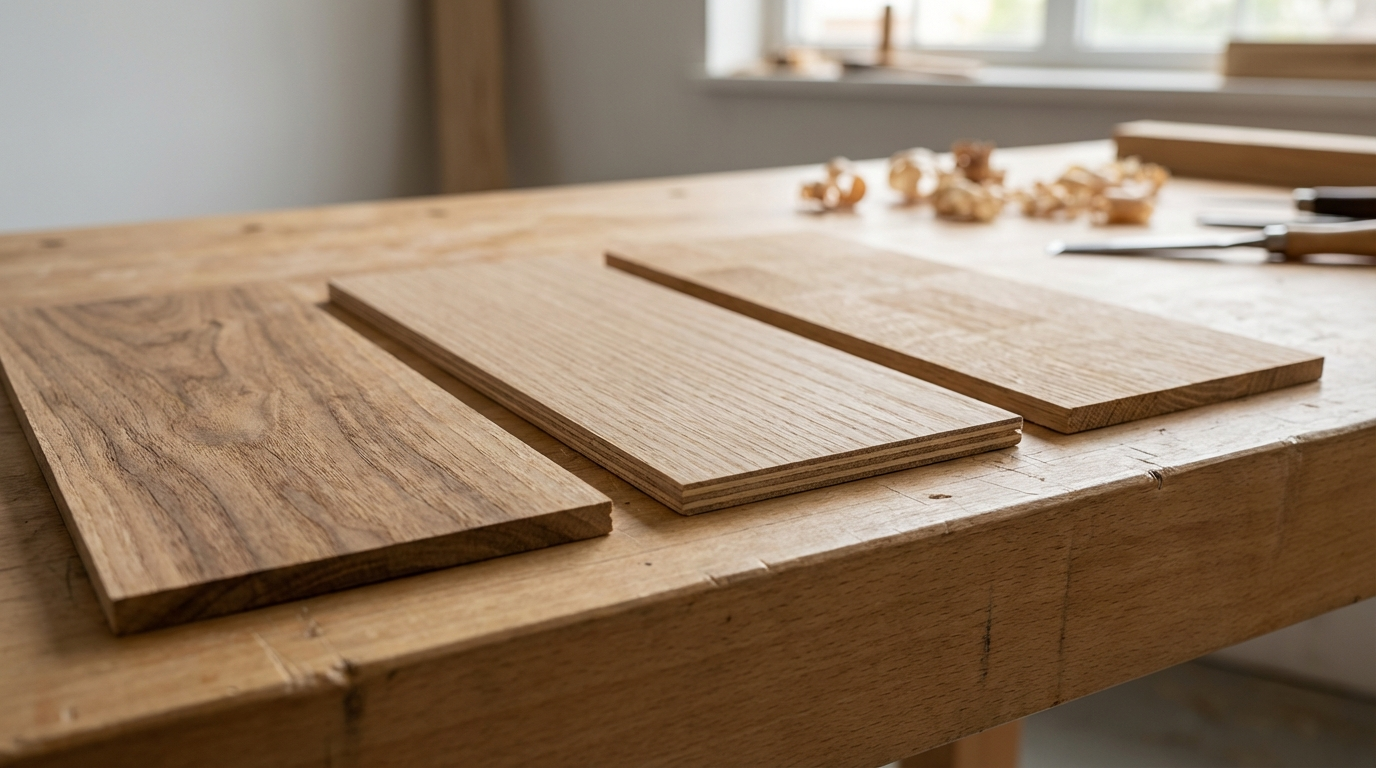
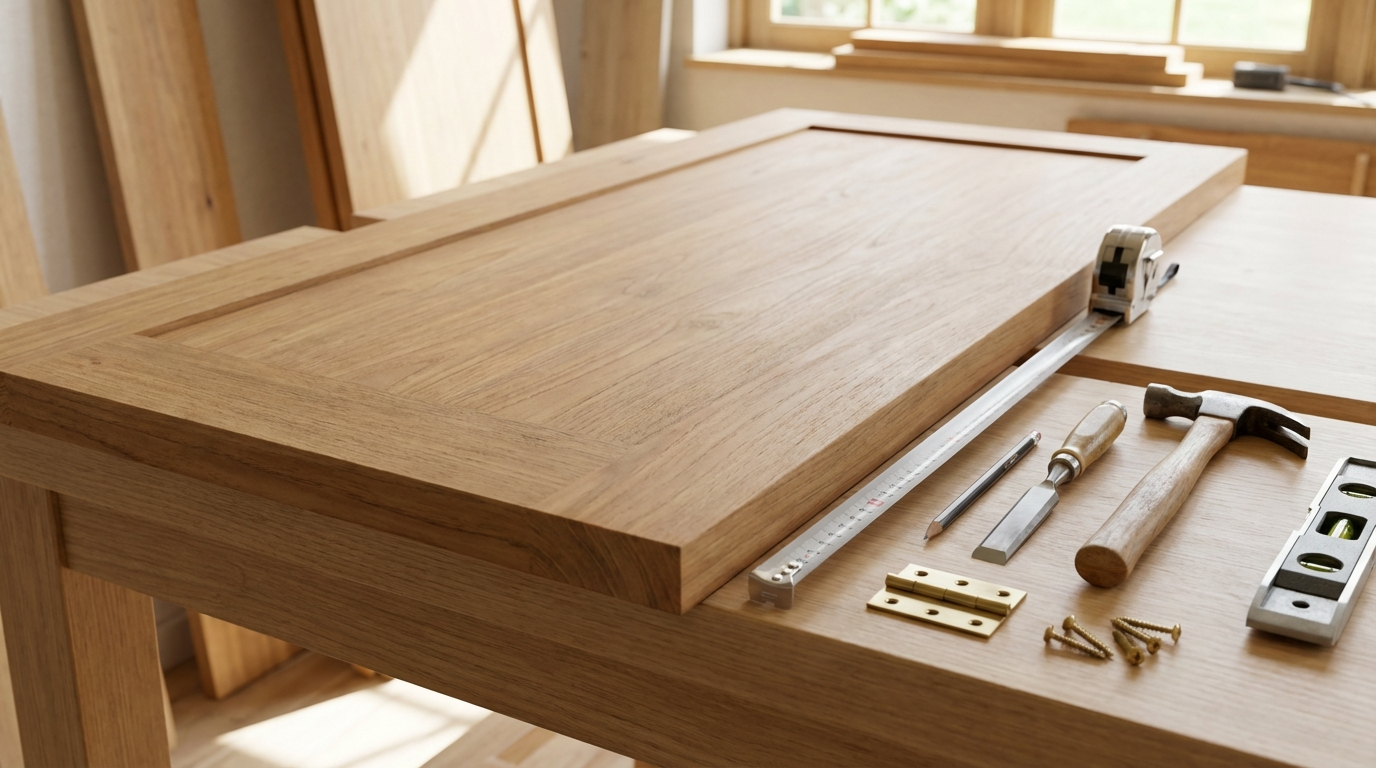
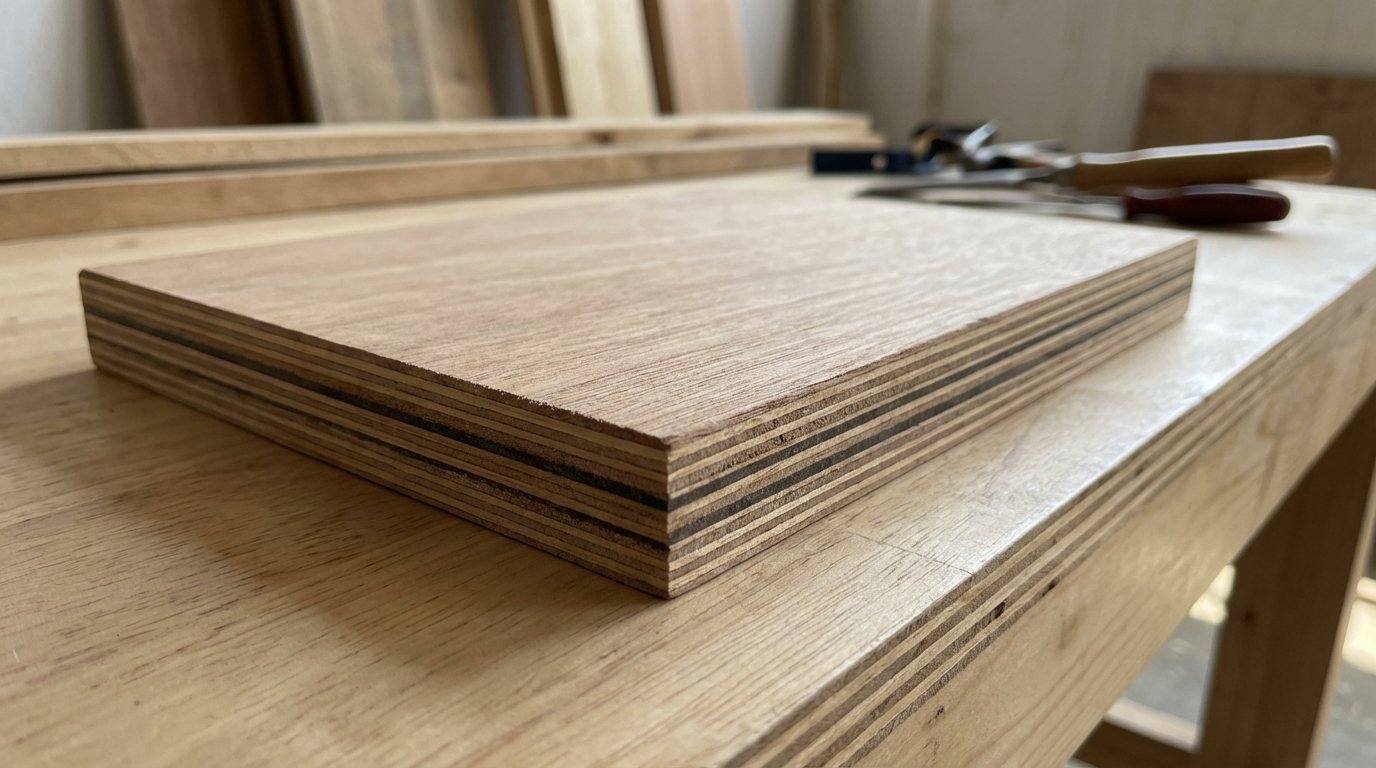
What is Waterproof MDF? BWP HDF Explained
BWP HDF (waterproof MDF) boards – what they are, how they differ from standard MDF, and why they’re ideal for moisture-prone areas like kitchens and bathrooms.
Quick Decision Summary
BWP HDF (waterproof MDF) is high-density fiberboard with boiling water-proof resins, perfect for India's humid kitchens and bathrooms.
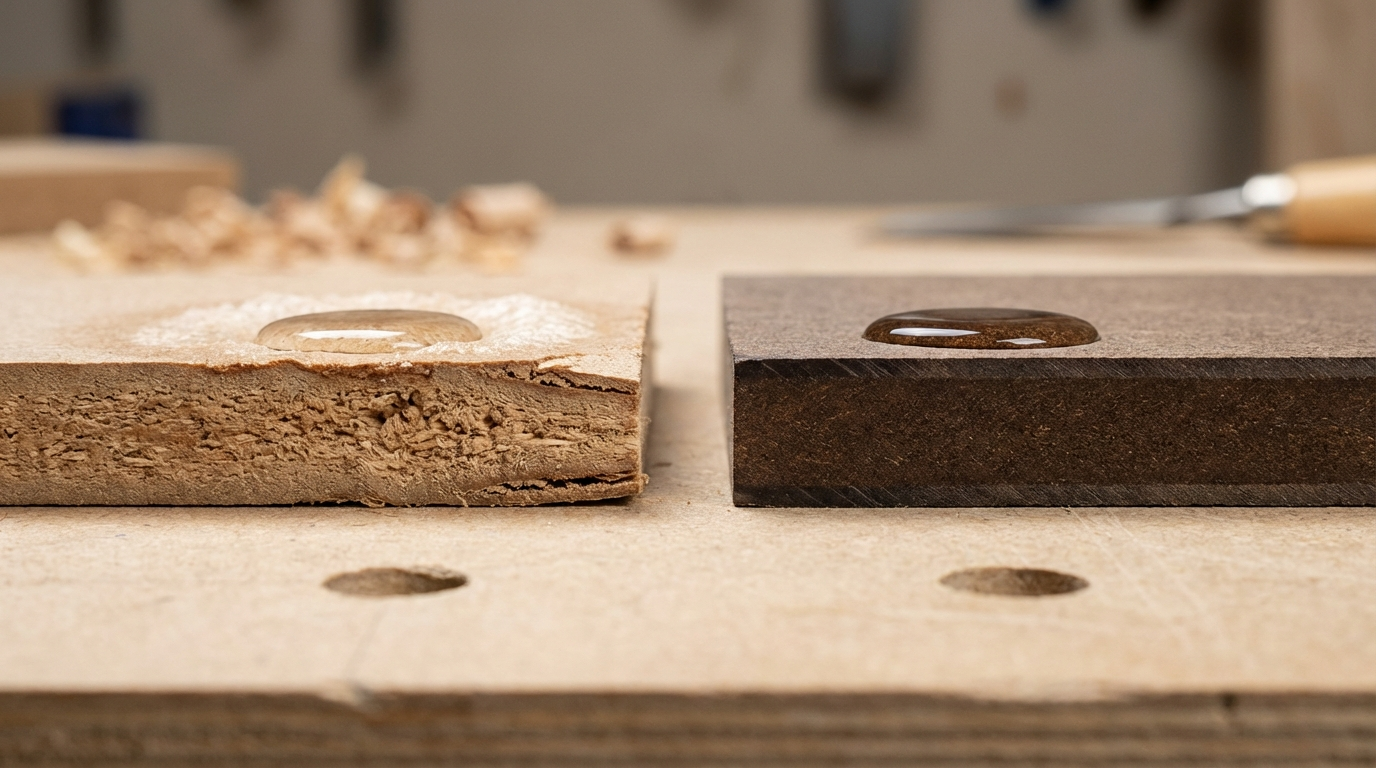
If you're in a hurry: Opt for BWP HDF over standard MDF for any moisture-exposed interior like modular cabinets or vanities. It resists swelling from spills, steam, and monsoon humidity far better due to denser fibers and phenolic glues tested for boiling submersion. Ideal thicknesses are 16-19mm for load-bearing shelves. Expect 20-50% higher cost than regular boards, but it cuts rework in coastal or high-use homes. Verify edge sealing and core uniformity before buying to avoid common failures.
- Choose this if: Building in wet zones (kitchens, bathrooms), need smooth machinability with water resistance, or face frequent spills/steam.
- Avoid this if: Dry interiors only (bedrooms), tight budget for non-load areas, or preferring plywood's natural strength over fiberboard smoothness.
What This Term/Material Actually Means
BWP HDF stands for Boiling Water Proof High Density Fiberboard. Unlike regular MDF (Medium Density Fiberboard), which uses urea-formaldehyde resins prone to moisture breakdown, BWP HDF employs advanced phenolic or melamine resins. These bind wood fibers under extreme heat and pressure, creating a board denser than 800-1000 kg/m³ that withstands boiling water cycles without delaminating or swelling excessively.
In plain terms for Indian sites: It's engineered wood that's smooth for laminates/veneers, strong for cabinets, and won't puff up from kitchen steam or bathroom splashes like cheaper boards. Thicknesses typically range 3-25mm, with 16-19mm common for furniture.
Where People Often Get Confused
Many mix up BWP HDF with MR (Moisture Resistant) MDF, which only handles brief humidity but fails in prolonged wet exposure. Others think "waterproof MDF" means fully submersible like plastic—no board is truly that without sealing. BWP grade specifically passes boil tests (72+ hours submersion), but edges must be sealed post-cutting. It's not plywood (layered veneers) but fiber-based for ultra-smooth finishes.
India-Specific Reality Check
Monsoon rains, 80-90% coastal humidity, and poor site storage turn standard MDF into swollen messes within months. BWP HDF shines here: its resins hold up against Kerala rains or Mumbai steam, reducing callbacks for carpenters. But realities bite—unprotected stacks in open godowns absorb moisture pre-install, and hasty edge banding lets water wick in. In contractor workflows, pair it with proper acclimation (48 hours indoors) and silicone seals for 10+ year life.
Why Monsoon Changes Everything for Board Selection
During June-September, humidity spikes cause 20-30% expansion in non-BWP boards. BWP HDF limits this to under 5-8%, but verify supplier storage: sheets wrapped in plastic? In coastal Gujarat or Tamil Nadu, prioritize it for vanities; inland Delhi, MR might suffice for dry zones. Next step: Ask for recent boil test demo on sample edges.
Two-Minute Comparison That Actually Helps
| Feature | BWP HDF (Waterproof) | Regular MDF | HDHMR |
|---|---|---|---|
| Density (kg/m³) | 800-1000+ | 600-800 | 850-950 |
| Water Resistance | Boiling submersion OK | Spills only, swells fast | Humidity OK, not boiling |
| Best For | Wet kitchens/bathrooms | Dry cabinets | Modular high-scratch |
| Machinability | Smooth, dustless | Smooth but fragile | Harder edges |
| India Wet Zone Fit | Excellent (monsoon-proof) | Poor | Good |
Choose BWP HDF for steam/heavy moisture; HDHMR for scratches in kids' rooms. Test by wetting a sample corner overnight.
Price Range and Cost Drivers (India)
Expect ₹70-₹160 per sq ft for 16-19mm BWP HDF in major cities, 20-40% above regular MDF. Thinner 8-12mm drops to ₹50-₹100; thicker 25mm hits ₹120+. Drivers: density/grade (FR adds 10-15%), city (Mumbai/Delhi 15% over Tier-2), sheet size (8x4ft standard), pre-lam finish (+20%). Logistics from factory adds 5-10% in remote areas.
How to quote: "16mm BWP HDF, calibrated, termite-treated, plain, 50 sheets FOT [city]." Budget example: 100 sq ft kitchen cabinetry ~₹10,000-₹18,000 material (excl. labor).
How Much More Does BWP HDF Cost Than Regular?
Typically 25-50% premium due to resins and compression, but pays off in zero swelling callbacks. In Chennai vs Lucknow, add 10-20% for transport. Confirm locally: Visit 2 suppliers, compare samples wet-tested. Next: Negotiate bulk for 10% off, specify "IS-grade compliant" without codes.
How to Choose in 5 Steps
- Assess exposure: Wet (kitchens)? BWP HDF. Dry? Save with MR.
- Pick thickness: 16mm shelves, 19mm frames—measure load.
- Inspect sample: Tap for solid thud, wet edge 24hrs no swell.
- Check calibration: +0.5mm variance max across sheet.
- Seal plan: Edge-band immediately, PVC lips for water zones.
Skip step 3? Risk core gaps post-install.
Decision Framework: Match Your Project Needs
| Condition | Recommended | Verify This |
|---|---|---|
| High moisture (kitchen) | BWP HDF 16-19mm | Boil edge test on sample |
| Coastal humidity | BWP HDF + FR | Density >900kg/m³ stamp |
| Heavy load shelves | 19-25mm BWP HDF | Deflection test: 50kg hold |
| Tight budget dry area | Regular MDF | Smooth face, no knots |
| High scratch risk | HDHMR alt | Nail scratch resistance |
| Fast delivery | Local stock BWP | Batch-fresh <3 months |
Trade-offs and Limitations
BWP HDF machines smoothly but weighs 20-30% more than MDF, straining lifts in multi-story sites. Costlier upfront, but fewer fixes. Not for direct outdoor rain—needs overhangs/seals. Harder than plywood for screws (pre-drill), and overkill for zero-moisture walls. In heat (40°C+), resins hold but pair with breathable laminates.
Common Buyer Mistakes and How to Avoid Them
- Mistake 1: Assuming all "MR" boards handle boils. Why: Labels mislead. Fix: Demand BWP spec, wet-test sample.
- Mistake 2: Skipping edge sealing. Why: Water wicks in. Fix: PVC band day-of-cut.
- Mistake 3: Buying thin for heavy loads. Why: Sags fast. Fix: 16mm min shelves.
- Mistake 4: Ignoring storage. Why: Site warping. Fix: Indoor stack flat.
- Mistake 5: No acclimation. Why: Expansion post-install. Fix: 48hrs room-condition.
- Mistake 6: Cheapest quote. Why: Inferior resins. Fix: Compare 3 samples.
- Mistake 7: Dry-area overkill. Why: Budget waste. Fix: Zone-map project.
- Mistake 8: Post-lam without core check. Why: Hides gaps. Fix: Plain inspect first.
Failure Modes and Fixes
- Symptom: Edge swelling. Cause: Unsealed cuts. Prevent: Immediate banding. If happening: Sand, reseal silicone.
- Symptom: Delamination layers. Cause: Fake grade. Prevent: Boil test. If: Warranty claim, replace.
- Symptom: Sagging shelves. Cause: Thin/underload. Prevent: 19mm+. If: Reinforce brackets.
- Symptom: Surface bubbles. Cause: Laminate mismatch. Prevent: Compatible glue. If: Scrape, re-lam.
- Symptom: Screw pull-out. Cause: Dense no pre-drill. Prevent: Pilot holes. If: Epoxy anchors.
- Symptom: Termite nibbles. Cause: No treatment. Prevent: Ask proofing. If: Fumigate, patch.
Quality Checks You Can Do Without Lab Tests
Before buying: Tap sheet—uniform thud, no hollows. Weigh corner (heavy= dense). Wet scrape edge 24hrs: minimal swell. Ask "BWP boil cycles passed?" Check calibration with straightedge (<0.5mm variance).
After cutting: Exposed core uniform, no gaps/fibers. Sand smooth easy?
Post-install: Wipe spills fast, check alignment monthly. Red flag: Damp feel or color fade.
Tips for Homeowners: Durability Do's and Don'ts
Do: Wipe spills immediately, use mild soap, ventilate bathrooms. Don't: Soak-clean, drag heavy pots, skip mats under wet areas. Expect 8-12 years in kitchens with care. Inspect edges yearly for seal cracks—touch-up silicone prevents 90% failures. Budget extra 10% for quality seals.
Tips for Carpenters: Working with BWP HDF
Cut with fine blade (60-tooth), vacuum dust. Pre-drill 3mm for screws. Edge-band hot-melt PVC within hours. Hinge zones: reinforce with blocks if heavy doors. Handle flat to avoid bends—stack vertical max 10 high.
Tips for Architects: Spec It Right
Detail: "BWP HDF 18mm, density >850kg/m³, calibrated." Wet zones: full lipping, drip edges. Finishes: Matt laminate for fingerprints. QC: 5% batch sample tests. Reduces site complaints 50%.
Tips for Modular OEMs: Scale Without Issues
Standardize 16mm cuts, auto-band lines. QC: Wet cycle samples weekly. Bulk buy reduces variance. Track returns: edge fails top complaint—double-seal prototypes.
FAQs
Is BWP HDF fully waterproof like plastic?
No board is 100% waterproof without coatings, but BWP HDF resists boiling water far better than standard types. Its phenolic resins prevent core breakdown from immersion up to tested cycles, ideal for India's steamy kitchens. Nuance: Exposed edges drink moisture if unsealed, so always band them. Practical step: Test a supplier sample by boiling a cut piece overnight—minimal change means good quality. Confirm with multiple vendors for consistency.
Can BWP HDF replace plywood in modular kitchens?
Yes for most cabinets, offering smoother laminate adhesion and less telegraphing. But plywood edges natural strength for heavy spans. In humid India, BWP HDF cuts swelling risks. Conditions: Use 18mm+ for loads. Next: Prototype a drawer—check screw hold and finish.
Is BWP HDF termite-proof?
Often treated during manufacture, but verify with supplier demos. Dense fibers + resins deter pests better than softwoods. India termite belts: Pair with soil barriers. Step: Rub sample with nail—no easy crumble, plus ask treatment cert (no specifics).
How thick should BWP HDF be for bathroom vanities?
16-19mm balances strength and weight for sinks/counters. Thinner risks flex. Coastal: Go 19mm. Check: Load-test sample with 20kg water jug—no sag.
Does BWP HDF work in outdoor verandahs?
Not directly—needs full sealing/paint and overhangs. Better for semi-covered. Monsoon direct hit fails any wood. Alt: FRP panels.
What's better: BWP HDF or BWP plywood?
HDF for smooth finishes/cheaper machining; plywood for bending strength. Wet kitchens: HDF if laminated. Verify: Wet both samples side-by-side.
Can I paint BWP HDF directly?
Yes, primer first for adhesion. Smooth surface takes enamel well. Avoid oil paints—trap moisture. Test patch for bubbles.
How to store BWP HDF sheets on site?
Vertical racks, plastic-wrapped, off-ground, shaded. Acclimate 48hrs pre-cut. Prevents pre-swell in humid depots.
Disclaimer: This content is provided for general informational purposes based on industry practices and publicly available information. Product specifications, standards, prices, and availability may vary by manufacturer, region, and time. Readers should independently verify details with manufacturers, dealers, or qualified professionals before making purchase or construction decisions.Want Plywood Suggestions?
Share a few details and a Duro BOIL specialist will suggest suitable brands and connect you to responsive dealers.