WPC Sheet: What It Is, Uses, Sizes & Buying Checklist (India 2026)
Learn what WPC sheets are used for in furniture and interiors. Compare sizes, key specs, pros/cons, and a simple checklist to buy the right WPC sheet in India.
Quick Decision Summary
Best answer in one line: WPC sheets are wood-plastic composite boards that resist water, termites, and warping—ideal for wet zones, outdoor furniture, and areas where plywood fails.
If you're in a hurry: WPC (Wood Plastic Composite) sheets combine wood fibre and plastic polymers into a board that won't swell in water, won't attract termites, and won't need constant sealing. They're heavier and costlier than plywood but last significantly longer in bathrooms, kitchens, balconies, and humid coastal homes. Choose WPC when moisture exposure is guaranteed; stick with quality plywood or MDF when staying dry and budget matters more. Always verify density by weight-feel and check edges for uniform composition before buying.
- Choose WPC if: Your application involves bathrooms, kitchens, outdoor cabinets, or coastal/high-humidity locations where swelling and termite damage are constant risks.
- Avoid WPC if: You're working on dry-zone furniture with tight budgets, need very thin sheets under 8mm, or require easy field modifications without specialised tools.
What WPC Sheet Actually Means
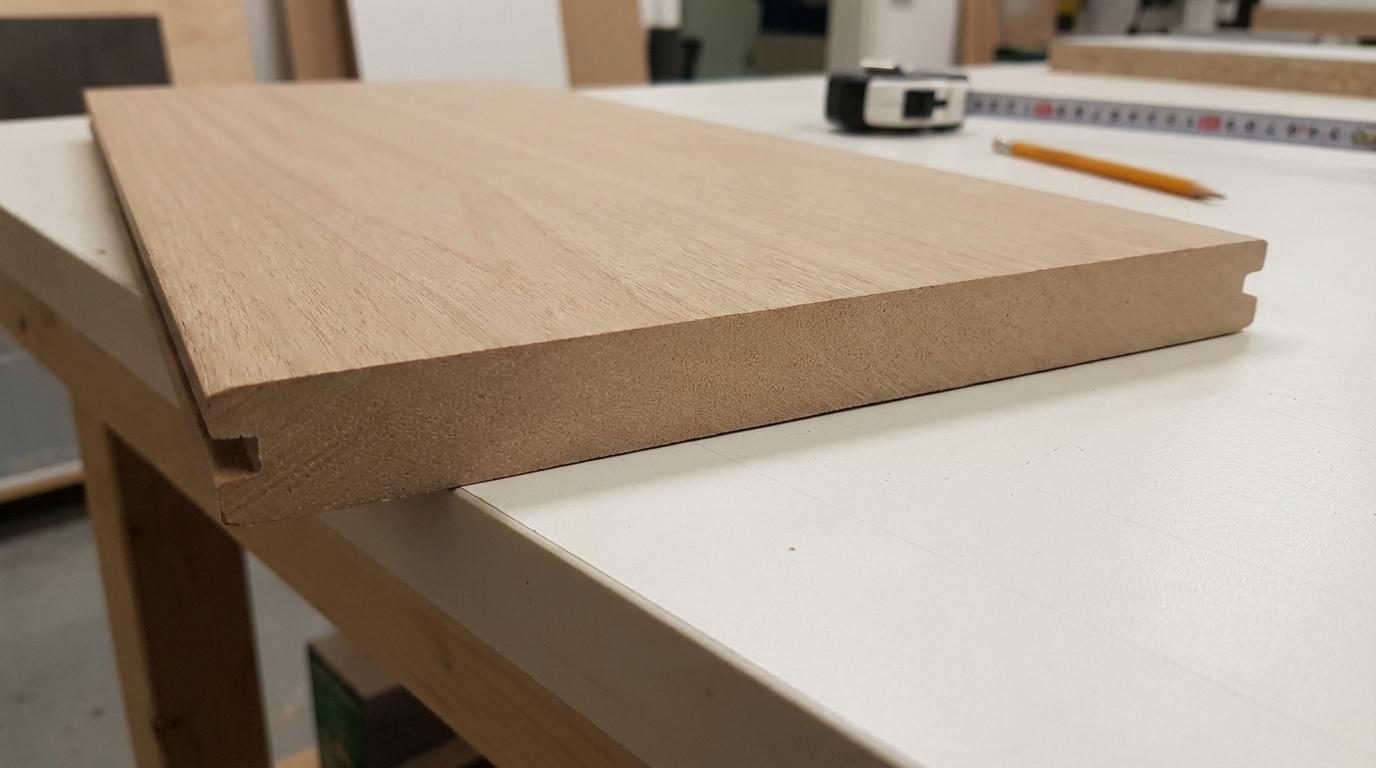
WPC stands for Wood Plastic Composite—a manufactured board made by combining wood fibres (or wood flour) with thermoplastic polymers like PVC, polyethylene, or polypropylene. The mixture is heated, extruded or pressed, and formed into sheets. The result is a material that behaves partly like wood (can be cut, routed, screwed) but with plastic's moisture and pest resistance.
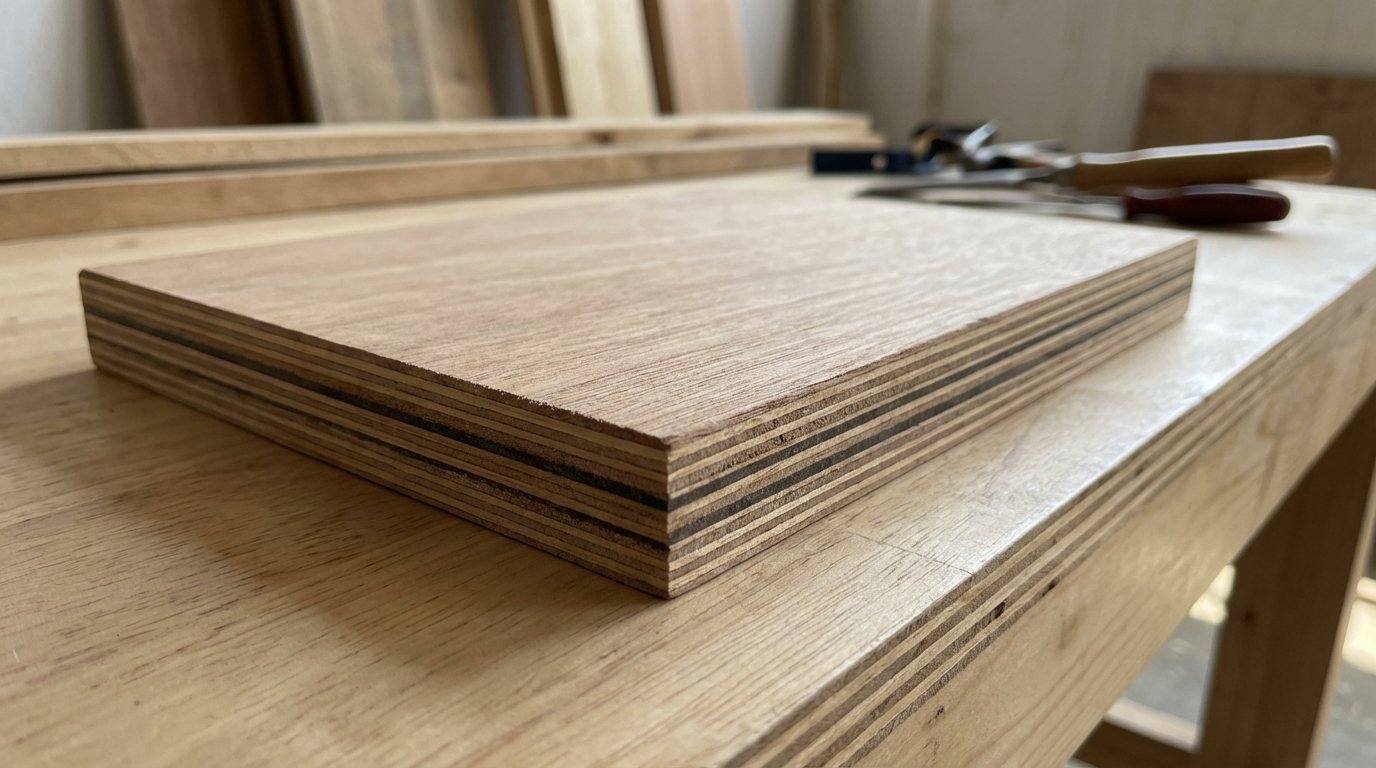
Unlike plywood, which has a layered veneer structure with adhesive bonds vulnerable to water penetration, WPC is a homogeneous material. Every millimetre through the thickness has the same composition. This uniformity is why WPC edges don't need lipping or sealing the way plywood does—water can't enter through exposed core layers because there are no layers.
Where People Get Confused About WPC
- Confusion 1: WPC equals PVC board. They're different. PVC foam boards are 100% plastic with air cells; WPC contains actual wood fibre mixed with plastic. WPC holds screws better and feels more substantial than hollow PVC.
- Confusion 2: WPC is waterproof forever without care. While highly water-resistant, WPC surfaces can still be damaged by prolonged standing water or harsh chemicals. It resists, but isn't invincible.
- Confusion 3: All WPC sheets have identical composition. The wood-to-plastic ratio varies between manufacturers (typically 30-70% wood fibre). Higher wood content means better screw-hold but slightly less moisture resistance.
- Confusion 4: WPC replaces all plywood applications. For dry zones, structural applications, or where cost efficiency matters, quality plywood often remains the better choice. WPC's strengths are specific to moisture-prone environments.
- Confusion 5: WPC and HDHMR are interchangeable. HDHMR (High Density High Moisture Resistant) is still a wood-fibre board with resin; WPC has plastic in its composition. HDHMR resists moisture better than regular MDF but not as completely as WPC.
- Confusion 6: WPC can be finished like natural wood. Surface treatments differ—WPC accepts laminate, veneer, and paint but may need specific primers. Direct polish or wood stain behaves differently than on solid wood or plywood.
India-Specific Reality Check
Indian conditions create unique challenges that explain why WPC has grown rapidly in certain applications while remaining unsuitable for others.
Monsoon and Coastal Humidity
In cities like Mumbai, Chennai, Kochi, and Kolkata, relative humidity regularly exceeds 80% for months. Plywood—even BWR grade—can absorb ambient moisture through exposed edges, causing gradual swelling. WPC's plastic component fundamentally blocks this absorption pathway. For bathroom vanities, kitchen cabinets below sinks, and balcony storage units in coastal areas, WPC offers genuine long-term stability that plywood cannot match without extensive (and often impractical) sealing maintenance.
Storage and Handling Realities
WPC sheets are significantly heavier than equivalent-thickness plywood—a standard 8x4 foot, 18mm WPC sheet weighs approximately 45-55 kg compared to 30-38 kg for commercial plywood. This affects transportation costs, on-site handling, and installation logistics. Many carpenters accustomed to plywood underestimate the physical effort and may need additional help for wall-mounted applications.
Temperature Extremes
In North Indian summers exceeding 45°C, WPC can experience minor thermal expansion. For large continuous surfaces (like full wall panelling), leaving small expansion gaps at edges prevents buckling. This is rarely an issue for furniture-scale applications but matters for architectural cladding.
Workmanship and Tool Availability
Many local carpenters lack experience with WPC. Cutting requires carbide-tipped blades (not standard wood blades), and screw pilot holes need proper sizing to avoid cracking. Finding workshops with WPC experience in tier-2 and tier-3 cities can be challenging—factor this into project planning.
Common WPC Sheet Sizes Available in India
Standard WPC sheet sizes follow plywood conventions but with some variations based on manufacturing processes:
| Dimension (feet) | Dimension (mm approx.) | Common Use |
|---|---|---|
| 8 x 4 | 2440 x 1220 | Standard furniture, wardrobes, kitchen cabinets |
| 7 x 4 | 2135 x 1220 | Smaller cabinets, some manufacturers' default |
| 6 x 4 | 1830 x 1220 | Counter heights, vanity units |
| 8 x 3 | 2440 x 915 | Narrow applications, door frames, partitions |
Available Thicknesses and Their Applications
| Thickness | Typical Application | Weight Consideration |
|---|---|---|
| 8mm | Back panels, drawer bottoms, light partitions | Manageable single-person handling |
| 12mm | Shelves with moderate load, cabinet sides | Moderate weight |
| 15mm | General cabinet construction, shutters | Two-person recommended for large pieces |
| 18mm | Heavy-duty cabinets, countertop substrates, load-bearing shelves | Two-person mandatory, consider installation sequence |
| 25mm | Countertops, heavy structural elements | Significant—plan logistics carefully |
Unlike plywood where 19mm is standard for carcass work, WPC commonly comes in 18mm, which slightly affects hardware compatibility—verify hinge cup depths and cam-lock sizing before bulk ordering.
How Does WPC Compare to Plywood and MDF for Furniture?
The comparison depends entirely on where you're using the material. No single board type wins everywhere.
| Parameter | WPC Sheet | BWR Plywood | HDHMR/MDF |
|---|---|---|---|
| Moisture Resistance | Excellent—inherent to material | Good if edges sealed; weakens over time | Moderate—fails with prolonged exposure |
| Termite Resistance | Excellent—plastic content deters pests | Requires treatment; can still be attacked | Better than plywood; still organic |
| Screw-Holding | Good with pilot holes; can crack if overdone | Excellent across grain | Moderate—needs inserts for heavy loads |
| Weight | Heavy—35-45% more than plywood | Moderate | Heavy but less than WPC |
| Edge Finishing | Minimal needed—edges uniform | Essential—core exposed | Moderate—MDF edges paint well |
| Surface Options | Laminate, veneer, paint (with primer) | All finishes work well | Paint, laminate, veneer |
| Cost (relative) | Higher than BWR plywood | Moderate | Lower for plain; varies for HDHMR |
| Repairability | Difficult—homogeneous material | Moderate—veneer/filling possible | Paint touch-up easy; structural repair hard |
Decision Based on Location and Conditions
| Application Zone | Recommended Material | Why |
|---|---|---|
| Bathroom vanity/cabinets | WPC | Constant humidity, splash exposure, no maintenance sealing needed |
| Kitchen sink cabinet base | WPC | High water-contact risk, leak vulnerability |
| Kitchen wall units | BWR plywood or WPC | Steam exposure moderate; both work if plywood edges sealed |
| Bedroom wardrobes (inland cities) | Commercial/MR plywood | Dry conditions; WPC cost not justified |
| Bedroom wardrobes (coastal cities) | BWR plywood or WPC | Ambient humidity justifies upgrade |
| Balcony/outdoor cabinets | WPC | Rain splash, humidity fluctuation, no maintenance preferred |
| Study/office furniture | MDF/HDHMR or plywood | Dry use; cost efficiency matters |
| Pooja room shelving | Plywood with veneer | Traditional look preferred; dry conditions |
Price Range and Cost Drivers (India)
WPC sheet prices vary significantly based on composition, thickness, brand positioning, and location. Treat all figures as approximate ranges requiring local verification.
Indicative Price Ranges (Per 8x4 Sheet)
| Thickness | Economy Range | Mid-Range | Premium Range |
|---|---|---|---|
| 8mm | ₹1,200–1,600 | ₹1,600–2,200 | ₹2,200–3,000 |
| 12mm | ₹1,800–2,400 | ₹2,400–3,200 | ₹3,200–4,500 |
| 18mm | ₹2,800–3,800 | ₹3,800–5,200 | ₹5,200–7,500 |
| 25mm | ₹4,000–5,500 | ₹5,500–7,500 | ₹7,500–10,000+ |
Important: These ranges reflect typical market conditions and can fluctuate by 15-25% based on location, order quantity, and timing. Always obtain current quotes.
What Drives WPC Cost Variation?
- Wood-to-plastic ratio: Higher wood content (better screw-hold, natural feel) often costs more than high-plastic variants.
- Density: Denser sheets (heavier per square foot) generally indicate better raw material quality and command higher prices.
- Surface finish: Pre-laminated or coloured WPC costs significantly more than plain sheets requiring separate finishing.
- Brand positioning: Established brands with quality-control processes price higher than unbranded or local manufacturing.
- City logistics: Metros typically have competitive pricing due to volume; remote areas face transport premiums of 10-20%.
- Order quantity: Bulk orders (20+ sheets) can negotiate 8-15% discounts from dealers.
How to Ask for a Quote Properly
When requesting WPC sheet quotes, specify these line items to get accurate, comparable pricing:
- Sheet size (8x4, 7x4, or other)
- Thickness required for each application zone
- Plain or pre-finished surface
- Quantity needed (including 8-12% wastage buffer)
- Delivery location (transport costs can add significantly)
- Whether you need cutting-to-size service
- GST inclusion status
Mini Budget Example: Small Bathroom Vanity Project
Scenario: Single bathroom vanity unit with sink cabinet, side storage, and mirror frame in Mumbai.
- WPC requirement: approximately 1.5 sheets of 18mm (₹4,500–6,500)
- WPC for back panel: 0.5 sheet of 8mm (₹800–1,100)
- Laminate finishing: ₹2,500–4,000
- Hardware (hinges, handles, channels): ₹1,500–2,500
- Labour: ₹3,000–5,000
- Approximate total: ₹12,300–19,100
Compare this to equivalent BWR plywood construction (₹9,000–14,000) to understand the premium for moisture guarantee.
Where Is WPC Sheet Commonly Used in Indian Homes?
WPC's specific strengths make it ideal for applications where other boards fail or require excessive maintenance.
Wet Zone Applications (Primary Use Case)
- Bathroom vanity cabinets: Storage under and around sinks faces constant humidity and occasional splashing. WPC eliminates the swelling and delamination common with plywood in these locations.
- Bathroom wall panelling: As an alternative to tiles in dry areas of bathrooms, WPC panels offer easier installation and future modification than tiled walls.
- Kitchen sink cabinets: The cabinet directly under the sink experiences leak risk, condensation, and cleaning-product exposure. WPC handles all three better than plywood.
- Kitchen kickboards/plinths: Floor-level exposure to mopping water makes WPC a practical choice for the bottom strip of kitchen cabinets.
- Utility/wash area cabinets: Areas near washing machines face high humidity and occasional overflow situations.
Semi-Outdoor and Balcony Applications
- Balcony storage units: Even covered balconies in India experience driving rain and humidity fluctuation. WPC survives where plywood warps.
- Covered patio furniture: Garden seating storage, barbecue stations, or outdoor kitchen counters benefit from WPC's weather tolerance.
- Shoe cabinets near entrances: Entrances exposed to monsoon moisture from wet footwear and umbrellas.
Coastal and High-Humidity Region Applications
In cities like Mumbai, Goa, Kochi, Chennai, and Kolkata, even "dry zone" furniture experiences ambient humidity that stresses plywood over time. WPC offers peace of mind for:
- Wardrobe carcasses in poorly ventilated bedrooms
- Storage in non-air-conditioned rooms
- Cabinets in ground-floor flats with rising dampness issues
Commercial Applications
- Restaurant and café kitchens: Health regulations increasingly prefer non-absorbent materials.
- Hospital and laboratory furniture: Hygiene requirements favour materials that don't harbour moisture or bacteria.
- Display counters in humid retail environments: Shops in markets or near water bodies.
What Are the Actual Advantages of WPC Over Plywood?
Understanding where WPC genuinely outperforms plywood helps make rational decisions rather than following marketing claims.
Moisture Behaviour Difference
Plywood absorbs water through exposed edges and gradually through face veneers if the finish is damaged. Even BWR (Boiling Water Resistant) grade plywood resists but doesn't completely block moisture absorption over time—the test standard involves short-term boiling, not years of bathroom humidity.
WPC's plastic component physically blocks water absorption pathways. The material doesn't swell, warp, or delaminate regardless of humidity levels. This isn't a gradual advantage—it's a fundamental material property difference.
Termite and Borer Resistance
Wood-boring pests target organic materials. While plywood treatments (boron, copper-based preservatives) reduce infestation risk, they're not permanent—treatment effectiveness decreases over years, especially at cut edges and drilled holes.
WPC's plastic content makes it fundamentally unappetizing to termites and borers. This matters significantly in ground-floor apartments, older buildings, and regions with high termite activity.
Edge Finishing Simplification
Plywood requires edge banding or lipping to hide layered cores and prevent moisture entry. This adds labour cost, material cost, and potential failure points (edge bands can peel).
WPC's homogeneous composition means cut edges look the same as the surface—they can be left exposed or simply painted. This reduces finishing time and cost while eliminating a common failure mode.
Maintenance Requirements
Plywood in wet zones needs periodic sealing checks, especially at joints and edges. Sealant failure leads to moisture entry and eventual swelling.
WPC requires only surface cleaning—no sealing maintenance, no periodic treatments, no edge-tape replacement.
Trade-offs and Limitations
Honest assessment of WPC's drawbacks is essential for appropriate material selection.
Weight Penalty
WPC is 35-45% heavier than equivalent plywood. This affects:
- Transportation costs and logistics
- Wall-mounted cabinet installation (stronger fixings needed)
- Overhead applications (ceiling-mounted storage becomes impractical)
- Carpenter fatigue during fabrication and installation
Cutting and Machining Differences
Standard woodworking blades dull quickly on WPC due to the plastic content. Carbide-tipped or TCT blades are essential. Routing edges requires slower feed rates to prevent melting. These factors mean:
- Higher tooling costs
- Need for experienced fabricators
- Potential fabrication delays if workshops aren't equipped
Screw-Holding Characteristics
While WPC holds screws adequately with proper pilot holes, it lacks plywood's natural grip from wood grain. Over-torquing cracks the material, and screw stripping is more common than with plywood. For high-stress hinge zones, consider:
- Always pre-drilling pilot holes
- Using slightly larger diameter screws
- Adding metal inserts for heavy doors
Heat Sensitivity
WPC's plastic content means it can soften or deform under sustained high temperatures. Avoid direct contact with:
- Hot cookware (use trivets on WPC countertops)
- Heat-generating appliances placed directly against WPC
- Prolonged direct sunlight on dark-coloured WPC surfaces
Cost Premium
WPC typically costs 30-60% more than comparable BWR plywood and 80-120% more than commercial plywood. This premium is justified only when moisture and termite resistance genuinely matter for your application.
Limited Structural Strength
WPC lacks the directional strength (along grain) that plywood offers. For load-bearing shelves or structural applications, thicker WPC is needed compared to plywood, further increasing weight and cost.
Repair Difficulty
Damaged WPC cannot be patched like plywood (where you can fill, sand, and veneer). Significant damage typically requires panel replacement. Surface scratches are also harder to hide than on veneered plywood.
Common Buyer Mistakes and How to Avoid Them
Mistake 1: Using WPC for Every Application
Why it happens: After learning about WPC's benefits, buyers assume it's universally superior and specify it throughout their home.
What to do instead: Reserve WPC for wet zones and high-humidity applications. For dry areas like bedrooms and living rooms, quality plywood offers better value, lighter weight, and equivalent durability.
Mistake 2: Ignoring Thickness for Load Requirements
Why it happens: Buyers apply plywood thickness logic to WPC—assuming 12mm is sufficient for shelving.
What to do instead: WPC requires thicker sheets for equivalent load-bearing. Use 18mm minimum for shelves over 60cm span; consider 25mm for heavy-load applications or add intermediate supports.
Mistake 3: Not Accounting for Weight in Installation
Why it happens: Carpenters and homeowners underestimate how much heavier WPC is until installation day.
What to do instead: Plan wall mounting with heavy-duty fixings. Use stronger wall plugs, increase fastener count, and ensure wall material can handle the load. For kitchen wall units, consider structural assessment.
Mistake 4: Using Standard Wood Blades for Cutting
Why it happens: Local carpenters use their regular equipment without blade changes.
What to do instead: Insist on TCT or carbide-tipped blades. Accept slightly higher fabrication cost rather than rough cuts, blade damage, and melted edges.
Mistake 5: Skipping Pilot Holes
Why it happens: Carpenters accustomed to plywood drive screws directly.
What to do instead: Mandate pre-drilling for every screw. Provide the carpenter with appropriately sized bits if necessary. Cracked hinge zones from skipped pilot holes cannot be easily repaired.
Mistake 6: Choosing Based on Price Alone
Why it happens: WPC looks similar across brands; buyers assume the cheapest option is adequate.
What to do instead: Check density by lifting sample pieces—heavier generally indicates better quality. Examine cut edges for uniform composition without voids or colour variation. Cheap WPC often has excessive filler content reducing durability.
Mistake 7: Expecting Wood-Like Finishing
Why it happens: Buyers or carpenters attempt polish or stain finishes meant for natural wood.
What to do instead: Plan for laminate, veneer with appropriate adhesive, or paint with suitable primer. Discuss finish options before material selection, as some looks are impractical on WPC.
Mistake 8: Ignoring Thermal Expansion
Why it happens: Large panels are installed edge-to-edge without gaps.
What to do instead: Leave 2-3mm expansion gaps at panel edges, especially for wall cladding applications. These can be hidden with trims or filled with flexible sealant—not rigid filler.
Mistake 9: Storing Sheets Improperly Before Use
Why it happens: WPC is assumed completely indestructible and left in sun or leaned against rough surfaces.
What to do instead: Store flat in shade. While moisture won't damage WPC, prolonged sun exposure can cause surface discolouration on coloured variants, and improper stacking causes warping before installation.
Mistake 10: Not Verifying Composition Claims
Why it happens: Buyers trust seller descriptions without verification.
What to do instead: Request and retain samples. Cut a small piece to verify uniformity throughout thickness. Some sellers label PVC foam boards or low-grade composites as WPC—the cut edge reveals the truth.
Failure Modes and Fixes
Failure Mode 1: Edge Cracking at Screw Points
Symptom: Visible cracks radiating from screws, especially near edges; loose hinges or handles.
Likely root cause: Screws driven without pilot holes or too close to edges; over-torquing during installation.
Prevention: Always pre-drill pilot holes 70-80% of screw diameter. Maintain minimum 15mm edge distance for screws. Use torque-controlled drivers.
If already happening: For functional repair, drill larger holes and use wall plugs or insert nuts with bolts. For visible areas, may need panel replacement. Adding metal hinge plates can reinforce damaged zones.
Failure Mode 2: Surface Delamination or Peeling
Symptom: Laminate or veneer lifting from WPC substrate; bubbling at edges.
Likely root cause: Incompatible adhesive used; insufficient surface preparation before laminating; heat exposure accelerating adhesive failure.
Prevention: Use adhesives specified for WPC/plastic substrates. Ensure surface cleaning and light scuffing before application. Keep away from heat sources.
If already happening: Carefully lift affected laminate, clean substrate and laminate back, and re-apply with appropriate contact adhesive. For persistent issues, consider applying edge strips to contain lifting.
Failure Mode 3: Sagging Shelves
Symptom: Visible downward bow in shelf centre; items rolling toward middle.
Likely root cause: Insufficient thickness for span length; excessive load concentration; lack of intermediate support.
Prevention: Use 18mm minimum for spans over 60cm. Add centre support or rear rail for shelves over 80cm. Distribute weight evenly.
If already happening: Add intermediate support bracket underneath. If sag is severe, shelf replacement may be necessary—WPC doesn't recover shape like wood.
Failure Mode 4: Warping or Bowing of Panels
Symptom: Installed panels visibly curved; doors not closing properly.
Likely root cause: Uneven finish application (one side laminated, other bare); improper storage before installation; uneven thermal exposure.
Prevention: Apply matching finish to both faces of panels. Store flat and supported. Ensure balanced exposure to light and heat.
If already happening: Minor warp can sometimes be corrected by applying balancing laminate to opposite face. Severe cases need panel replacement.
Failure Mode 5: Hinge Failure Zone
Symptom: Hinge screws loosening repeatedly; visible wear around hinge cup area.
Likely root cause: Standard 35mm cup hinges designed for plywood; excessive door weight for hinge specification; repeated stress without adequate reinforcement.
Prevention: Use heavy-duty hinges rated for heavier doors. Increase hinge count per door. Consider hinge cups designed for composite materials. Add backing plates for distribution.
If already happening: Install metal hinge reinforcement plates. Move hinges to fresh material areas if possible. Upgrade to three hinges per door if using two.
Failure Mode 6: Surface Scratching and Wear
Symptom: Visible scratches showing different colour underneath; wear patterns in high-use areas.
Likely root cause: Abrasive cleaning; dragging items across surface; insufficient surface protection for application.
Prevention: Apply durable laminate or paint finish before use. Use felt pads under items. Clean with soft cloths only. Apply protective mats in high-wear zones.
If already happening: Light scratches on painted surfaces can be touched up. Deep scratches through coloured WPC require covering with laminate or accepting the wear pattern. Prevention is significantly easier than repair.
Quality Checks You Can Do Without Lab Tests
Before Buying: At the Shop
- Weight test: Lift sheets of the same size from different brands. Noticeably lighter sheets often have excessive filler or air content. Consistent weight across a brand's stock indicates production quality.
- Edge inspection: Look at cut edges—uniform colour and texture throughout indicates proper composition. Visible layers, voids, or colour changes suggest quality issues.
- Surface flatness: Sight along the sheet surface against light. Obvious waves or dips indicate manufacturing defects or storage damage.
- Flex test: Gently flex a sheet corner—excessive flexibility suggests inadequate density. However, brittleness indicating over-hardening is equally concerning.
- Sample scratch test: Use your fingernail firmly across a sample surface. Quality WPC resists superficial scratching; soft surfaces indicate poor formulation.
- Request cross-section: Ask for a small cut piece to take home. Examine thickness consistency and composition uniformity at leisure.
Red Flags to Watch For
- Seller unwilling to provide samples or cut pieces
- Sheets significantly lighter than competing brands
- Visible surface imperfections on multiple sheets
- Cut edges showing layered or inconsistent structure
- Sheets stored vertically without support (indicates poor handling)
- Wide price gaps without clear explanation of difference
After Cutting: During Fabrication
- Cut edge quality: Clean cuts with TCT blade should show smooth, uniform material. Ragged edges or visible voids indicate composition problems.
- Drilling test: Pilot holes should produce fine dust, not chunks. Material should not crack around properly sized holes.
- Screw engagement: Test screws should grip firmly without spinning or cracking. Loose screw-hold suggests wrong formulation or over-torquing.
After Installation: Ongoing Checks
- First month door alignment: Check cabinet doors for alignment shifts—proper WPC shouldn't warp in normal use.
- Screw tightness: After 2-3 weeks, check hinge screws. Loosening indicates either installation error or material quality issues.
- Surface cleaning response: Wipe surfaces with damp cloth and mild cleaner. Quality finishes shouldn't discolour or show water marks from brief moisture contact.
- Edge condition in wet zones: After one month of bathroom use, inspect cut edges in high-humidity areas. They should remain unchanged—any visible swelling indicates the material is not genuine WPC.
Specific Guidance for Different Users
For Homeowners: Durability and Maintenance Guide
Daily care that extends WPC furniture life:
- Wipe spills immediately—while WPC resists water, prolonged puddles can affect adhesive bonds with laminate surfaces
- Use soft cloths or microfibre; avoid abrasive scrubbers that scratch surfaces
- Keep hot items (pans, irons, hair tools) off WPC surfaces—use trivets and heat pads
- Apply furniture wax on exposed WPC edges annually if unfinished
What NOT to do:
- Don't use bleach or harsh chemical cleaners—they can dull surfaces
- Don't hang excessive weight on doors—WPC hinge zones stress faster than plywood
- Don't ignore loose hinges—they worsen quickly in WPC
- Don't attempt DIY repairs with wood fillers—they don't bond properly to WPC
When to call for professional help:
- Door alignment issues that don't resolve with hinge adjustment
- Visible cracks around screw points
- Laminate lifting that keeps recurring
For Carpenters: Fabrication Best Practices
Cutting:
- Use TCT or carbide-tipped blades—standard wood blades dull quickly and produce poor cuts
- Support sheets fully during cutting to prevent vibration-induced chipping
- Cut slower than plywood; the plastic component can melt at high speeds
- Maintain blade sharpness—dull blades cause burning and rough edges
Edge preparation:
- Light sanding (180 grit) prepares edges for laminate adhesion
- Clean edges thoroughly before applying edge bands—dust prevents bonding
- Consider leaving non-visible edges unfinished to save cost and time
Fastening zones:
- Pilot holes are mandatory—not optional like with plywood
- Use 3.5mm pilot for 4mm screws; 2.5mm for 3.5mm screws
- Minimum edge distance: 15mm for small screws, 20mm for heavy-duty
- Use low-torque settings to prevent stripping or cracking
Hinge areas:
- Standard 35mm European hinges work but may need reinforcement for heavy doors
- Consider using hinge cups designed for composite materials
- Add metal backing plates for doors over 2kg
- Use three hinges instead of two for taller doors
Handling:
- WPC is significantly heavier—plan lifts with helpers
- Carry sheets vertically with two people; avoid horizontal carry by one person
- Store flat with full support; vertical storage without support causes warping
For Architects and Designers: Specification Guidance
Specifying WPC correctly:
- Define thickness requirements by span and load—don't copy plywood specifications
- Specify density range if critical (typically 1.2-1.4 g/cm³ for quality WPC)
- Include surface finish requirements in specification to prevent mismatched finishing
- Note expansion gap requirements for continuous runs over 2m
Wet zone detailing:
- While WPC resists moisture, ensure proper drainage from counter surfaces—standing water affects surface finishes
- Specify silicone sealing at wall junctions even though WPC doesn't absorb water—the sealant prevents debris accumulation
- Consider stainless steel channels at floor contact points in commercial kitchens
Finish integration:
- Specify laminate adhesive type compatible with WPC substrate
- For painted finishes, specify PU primer suitable for plastic-composite surfaces
- Veneer application requires different pressure and adhesive than plywood veneer work
Hardware coordination:
- Specify heavy-duty hinges (soft-close mechanisms add load)
- Include drawer channel specifications that account for heavier drawer sides
- Note mounting requirements for wall-hung units (fixing type and frequency)
For OEM and Modular Furniture Manufacturers: Quality Control
Incoming material checks:
- Weight-per-sheet consistency across batches
- Sample sectioning to verify thickness and composition uniformity
- Surface quality under standard lighting conditions
- Edge quality on factory-cut sheets
Production QC checkpoints:
- Screw torque settings documented and tested per batch
- Pilot hole depth consistency verification
- Laminate adhesion test (peel test on waste pieces)
- Door alignment check before packaging
Reducing returns and complaints:
- Include WPC care instructions with every product
- Use slightly larger screws than plywood specification allows
- Pre-install hinge cups at factory rather than site installation
- Apply protective film to surfaces for shipping
Cost optimization:
- Standardize on specific thicknesses to improve cutting efficiency
- Design for minimal wastage—WPC waste has little recycling value
- Consider mixed-material construction—WPC for sink-cabinet base, plywood for dry-zone bodies
Is WPC Board Good for Kitchen Cabinets?
WPC is excellent for kitchen cabinets that face water exposure—specifically sink-base cabinets, kickboards/plinths, and any cabinetry near water sources or steam. The cost premium is genuinely justified for these high-moisture zones where plywood requires constant maintenance and often fails within years.
However, for wall-mounted upper cabinets and tall units that don't face direct water contact, the decision depends on your location and kitchen ventilation. In well-ventilated kitchens in dry-climate cities like Bangalore or Hyderabad, BWR plywood with proper edge sealing serves adequately. In humid coastal cities or poorly ventilated kitchens where cooking steam lingers, WPC's maintenance-free moisture resistance provides meaningful long-term value.
The practical approach: specify WPC for the bottom row of cabinets (sink area, dishwasher surroundings, kickboards) and evaluate upper cabinets based on your specific humidity conditions and budget constraints.
Can WPC Board Be Used for Wardrobes?
WPC can technically be used for wardrobes, but it's rarely the optimal choice in terms of value. Wardrobes are typically dry-zone furniture where WPC's moisture advantages don't apply meaningfully.
The weight penalty becomes significant for large wardrobes—imagine handling and mounting multiple 18mm WPC sheets for a floor-to-ceiling wardrobe. The cost premium provides no functional benefit. Quality MR or BWR plywood with proper finishing offers equivalent durability at lower cost and weight.
Exceptions where WPC wardrobes make sense:
- Ground-floor homes with rising dampness issues affecting furniture
- Poorly ventilated coastal apartments where closets show moisture damage
- Wardrobes in bathrooms (yes, some homes have these) or attached to bathrooms with humidity transfer
- Storage in covered outdoor areas like enclosed balconies
What Is the Lifespan of WPC Furniture?
Properly manufactured and installed WPC furniture can last 15-25 years in appropriate applications without the moisture-related degradation that limits plywood lifespan in wet zones. The material itself doesn't deteriorate from humidity or termite exposure—the common failure modes are mechanical (hinge zones, screw points) rather than material degradation.
Practical factors that determine actual lifespan:
- Installation quality: Proper pilot holes and appropriate hardware extend life significantly
- Usage pattern: Heavy daily use wears mechanisms faster than material
- Surface finish quality: Laminate or paint protects against surface wear; poor finishing shortens aesthetic lifespan
- Hardware quality: Cheap hinges and channels fail long before WPC does
Compare this to BWR plywood in bathroom applications, which typically shows moisture damage within 5-8 years even with good maintenance—WPC's longer lifespan in wet zones often justifies its higher initial cost when calculated per year of service.
How Do I Know If WPC Quality Is Good?
Quality verification without laboratory testing requires multiple checks that together indicate manufacturing standards:
Physical density check: Lift similar-sized sheets from different sources. Quality WPC feels solid and heavy (approximately 1.2-1.4 g/cm³). Noticeably light sheets contain excessive filler or air, compromising durability.
Edge composition examination: Look at freshly cut edges or request a sample cut. Uniform colour and texture throughout the thickness indicates proper composition. Visible layers, colour variation, or voids suggest quality problems.
Surface hardness: Press your fingernail firmly against the surface. Quality WPC resists indentation; soft surfaces indicate poor formulation.
Flex behaviour: Gently flex a sheet—it should resist but not crack. Excessive flexibility suggests inadequate density; excessive rigidity suggests over-brittleness.
Consistency within batch: Check multiple sheets—colour, weight, and surface quality should be consistent. Visible variation indicates poor quality control.
Sample performance: Take a small sample home. Submerge in water for 24 hours—genuine WPC shows zero swelling or softening. Cut an edge with a blade—it should cut cleanly without crumbling.
WPC Sheet Buying Checklist for Indian Buyers
Use this checklist before finalizing your WPC sheet purchase:
Before Visiting Dealers
- ☐ List specific applications (sink cabinet, bathroom, balcony, etc.)
- ☐ Measure dimensions with 10-12% wastage buffer
- ☐ Determine thickness needs (18mm for cabinets, 12mm for panels, 8mm for backs)
- ☐ Decide finish approach (plain + laminate vs. pre-finished)
- ☐ Set budget range for comparison
At the Dealer
- ☐ Compare weight across brands—lift and feel
- ☐ Examine edge composition—uniform throughout?
- ☐ Check surface for waves, dips, or defects under angled light
- ☐ Ask for sample piece to take home
- ☐ Verify sheet sizes available (8x4 standard, confirm variations)
- ☐ Get quotes in writing with GST and delivery charges
- ☐ Ask about cutting-to-size service and additional charges
Sample Testing at Home
- ☐ Submerge in water for 24 hours—check for any swelling
- ☐ Cut edge with blade—clean cut without crumbling?
- ☐ Attempt screw insertion with pilot hole—does it grip?
- ☐ Compare weight and feel with any other samples obtained
Before Fabrication
- ☐ Confirm carpenter has TCT/carbide blades
- ☐ Verify carpenter has drilled WPC before (ask to see previous work)
- ☐ Ensure pilot-hole drilling is agreed upon
- ☐ Confirm hardware compatibility (hinge cup sizes, screw specifications)
- ☐ Plan finish material—adhesive compatible with WPC?
During and After Installation
- ☐ Check cut edge quality on delivered sheets
- ☐ Verify pilot holes before every screw insertion
- ☐ Confirm door alignment before final hardware tightening
- ☐ Re-check hinge tightness after one week
- ☐ Inspect wet-zone edges after one month
FAQs
What is the full form of WPC in furniture?
WPC stands for Wood Plastic Composite—a manufactured material combining wood fibres (typically 30-70% of composition) with thermoplastic polymers like PVC or polyethylene. The mixture is heated and formed into sheets that combine some woodworking properties (can be cut, drilled, screwed) with plastic's moisture and pest resistance. The wood component provides structural properties and allows better screw engagement than pure plastic, while the plastic component blocks water absorption pathways that cause traditional wood materials to swell and deteriorate. Different manufacturers use varying wood-to-plastic ratios, affecting properties like screw-holding strength and stiffness.
Is WPC stronger than plywood?
Strength comparison depends on the specific property measured. Plywood has superior tensile strength along the grain direction—it resists bending and load-bearing better than equal-thickness WPC. For shelving applications, WPC needs to be thicker than plywood to carry the same load without sagging. However, WPC significantly outperforms plywood in moisture resistance and dimensional stability—it won't swell, warp, or delaminate when wet. For screw-holding, plywood generally performs better, especially for edge-screwing, though WPC is adequate with proper pilot holes. The practical answer: plywood is stronger structurally; WPC is stronger against environmental degradation. Choose based on which strength matters for your application.
Can WPC be used outdoors?
WPC performs well in semi-outdoor and covered outdoor applications where it's protected from direct sun exposure and standing water. Balcony cabinets, covered patio furniture, entrance-area storage, and similar applications work excellently. For fully exposed outdoor applications (garden furniture in direct sun and rain), WPC's performance varies by formulation—some variants handle outdoor exposure well for years, while others show surface degradation under UV exposure. For best results in direct outdoor use, look for WPC specifically marketed for exterior applications with UV stabilizers included. Standard interior-grade WPC may discolour or become chalky with prolonged sun exposure.
How much does WPC sheet cost compared to plywood?
WPC typically costs 30-60% more than comparable BWR-grade plywood and 80-120% more than commercial-grade plywood. For an 18mm 8x4 sheet, where BWR plywood might cost ₹2,500-3,500, equivalent WPC ranges from ₹3,800-5,500 depending on brand and location. However, cost comparison should include lifetime value: WPC requires no edge banding in many applications, no sealing maintenance, and no replacement due to moisture damage. In wet zones where plywood typically needs replacement within 5-8 years, WPC's higher initial cost often delivers better value per year of service. For dry-zone applications, plywood remains more cost-effective.
Does WPC need any special maintenance?
WPC requires minimal maintenance compared to plywood, which is one of its primary advantages. Basic care includes wiping spills promptly, cleaning with soft cloths and mild cleaners, and avoiding harsh chemicals like bleach. Unlike plywood, WPC doesn't need periodic edge sealing, treatment applications, or moisture checks. However, WPC does have some maintenance considerations: protect surfaces from hot items (use trivets), avoid abrasive cleaning tools that scratch surfaces, and check hinge screws periodically as they may loosen faster than in plywood. Surface laminate or paint finish quality affects cleaning ease—quality finishes wipe clean easily, while poor finishes may show water marks.
Can I paint or laminate WPC sheets?
Yes, WPC accepts both paint and laminate finishes, but requires appropriate preparation and materials. For painting, use a primer designed for plastic or composite surfaces (standard wood primers don't bond well to WPC's plastic content). PU-based paints work better than water-based options for durability. For laminate application, ensure you're using adhesive specified as compatible with plastic-composite substrates—standard wood laminate adhesive may fail. Surface preparation matters: light sanding (180-220 grit) improves adhesion for both paint and laminate. Veneer application is possible but requires proper adhesive selection and pressure application techniques different from plywood veneering.
Why is WPC heavier than plywood?
WPC's density is higher because the manufacturing process compresses wood fibres and plastic together without the air pockets present in plywood's layered veneer structure. Additionally, plastic polymers are denser than the natural air-filled wood cell structure in veneer. A typical WPC sheet weighs 35-45% more than equivalent plywood—an 18mm 8x4 WPC sheet weighs approximately 45-55 kg versus 30-38 kg for plywood. This weight affects handling, transportation costs, and installation considerations—particularly for wall-mounted cabinets requiring stronger fixings and wall assessment. Plan for two-person handling of large WPC panels.
Is WPC environmentally friendly?
WPC's environmental profile is mixed. On the positive side, it often uses wood waste (sawdust, wood flour from processing) that would otherwise be discarded, and some manufacturers incorporate recycled plastic. The longer lifespan in wet zones means less frequent replacement and waste generation compared to plywood failing from moisture damage. However, WPC's plastic content means it's not biodegradable like pure wood products, and end-of-life disposal options are limited—it cannot be easily recycled into new products. It doesn't emit formaldehyde like some engineered boards, which improves indoor air quality. Overall, WPC is neither significantly better nor worse environmentally than plywood—the choice should be based on application suitability rather than environmental claims.
What hardware works best with WPC?
Standard furniture hardware works with WPC but selection and installation require attention. For hinges, use heavy-duty variants rated for heavier loads than you'd need for plywood—soft-close mechanisms add stress that WPC hinge zones handle less forgivingly than plywood. Consider hinges specifically designed for composite materials if available. For screws, use slightly larger diameters than plywood specifications suggest (4mm instead of 3.5mm for similar applications) and always pre-drill pilot holes. For heavy doors, consider metal hinge reinforcement plates. Drawer channels should be full-extension types mounted with appropriate pilot holes. Cam-lock fittings work but require precise hole sizing—over-drilling causes loose connections.
Can WPC be repaired if damaged?
WPC repairs are generally more difficult than plywood repairs because the homogeneous material doesn't accept patches or fillers the way layered plywood does. Surface scratches through coloured WPC are hard to hide—touch-up options are limited. Structural damage typically requires panel replacement rather than repair. However, some repairs are possible: loose screws can be addressed by drilling larger holes and using wall plugs or insert nuts; laminate lifting can be re-glued with appropriate adhesive; and minor surface scratches on painted WPC can be touched up with matching paint. For edge damage, edge-banding can cover minor chips. Prevention through proper installation and care is significantly more effective than repair attempts.
How do I store WPC sheets before use?
Store WPC sheets flat on a level surface with full support underneath to prevent warping. While WPC won't absorb moisture like plywood, it can still warp from storage stress. Avoid vertical storage without proper support—leaning sheets against walls causes bowing. Keep away from direct sunlight exposure, particularly for coloured or pre-finished sheets that can show surface discolouration with UV exposure. If storing outdoors temporarily (covered), ensure sheets are protected from rain pooling on surfaces. Stack sheets with minimal gaps; don't intersperse with plywood or MDF that might have moisture content transferring to adjacent surfaces. Use sheets within reasonable timeframes—extended storage in inconsistent conditions affects quality.
Is WPC suitable for all types of doors?
WPC works well for certain door types but isn't universally suitable. Cabinet doors, particularly in wet zones like bathrooms and kitchens, are excellent WPC applications—the moisture resistance prevents the swelling and misalignment common with plywood doors in humid conditions. For wardrobe doors in dry zones, WPC's weight becomes a disadvantage without providing meaningful benefits. For main entry doors or room doors, solid wood, engineered wood, or specialised door materials typically outperform WPC in terms of aesthetics, hardware compatibility, and structural requirements. Heavy WPC doors stress hinges more than lighter alternatives and may require more hinges per door. Evaluate each door application individually—wet zone internal doors benefit from WPC; dry zone and external doors often have better material alternatives.
Disclaimer: This content is provided for general informational purposes based on industry practices and publicly available information. Product specifications, standards, prices, and availability may vary by manufacturer, region, and time. Readers should independently verify details with manufacturers, dealers, or qualified professionals before making purchase or construction decisions.Want Plywood Suggestions?
Share a few details and a Duro BOIL specialist will suggest suitable brands and connect you to responsive dealers.